





Language errors can affect how your brand is perceived in foreign markets by creating mistrust, confusion or an unprofessional image in the eyes of international clients. If you are wondering what impact language errors have on brand perception in foreign markets, remember that a literal or poorly adapted translation can undermine the credibility of your message. Read on…
A language error can seem minor, but in an international context it can make the difference between building trust and triggering rejection. Many companies invest in expansion, marketing and sales yet neglect how they communicate in other languages. In this article you will see how mistakes in language use directly affect brand perception and what you can do about them in practice.
How language errors affect brand perception
When a company communicates in a language it does not fully master, the message can lose precision, consistency or even credibility. That has a direct impact on how the public perceives the brand.
A catalogue with literal translations, a website with grammatical errors or a poorly adapted advertising campaign do more than confuse: they signal a lack of professionalism. In foreign markets, where the client does not know your track record, the first impression depends largely on language.
For example, a Spanish company that machine-translates its website into German can end up with unnatural phrasing. Even if the product is excellent, the user may associate that carelessness with the service as a whole.
Common mistakes in international communication
Literal translations
One of the most frequent failings is carrying expressions across word for word. This usually produces messages that sound unnatural or are simply incomprehensible.
A slogan that works in Spanish can lose all its meaning in English if it is not adapted culturally. It is not just about translating, but about reinterpreting the message.
Incorrect use of register
Speaking too informally or too technically in another language can push your target audience away. Every market has its own communication norms.
A business email in French, for instance, requires a different level of formality from Spanish. Failing to respect that damages the perception of professionalism.
False friends and cultural nuances
Words that look equivalent across languages can carry different meanings. These errors create confusion and, in some cases, awkward situations.
If you want to look further at how these errors can have real consequences in business, you can read this article on the legal and business risks of mistranslating an import contract.
The direct impact on customer trust
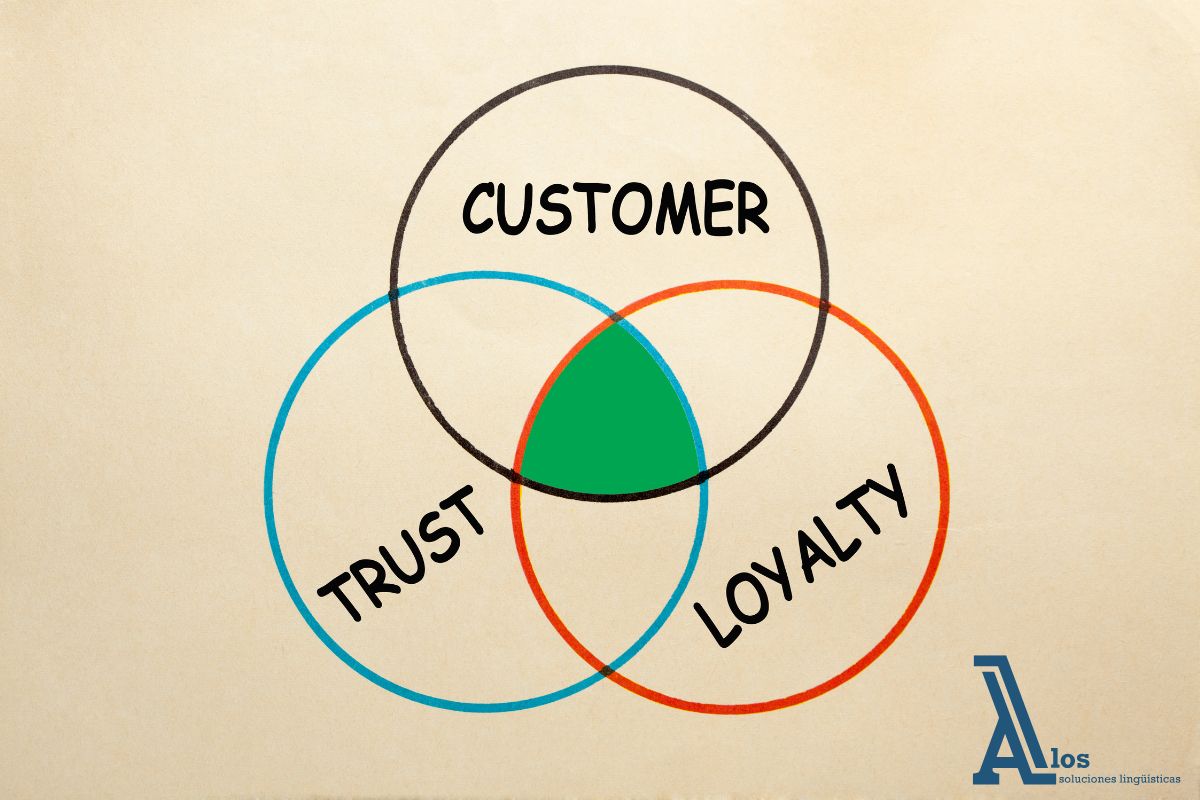
Brand perception is closely tied to trust. When a client spots language errors, they may start questioning other aspects of the business:
Is this company reliable?
Will they be just as careless with the product or service?
Will they really understand my needs?
In international markets, where there is no prior relationship, these details count more than ever. Careful communication conveys reassurance, attention to detail and commitment.
Errors, by contrast, create friction. And in a competitive environment, that friction can be enough for the client to choose someone else.
Real cases: when a mistake is costly
Many companies have learnt this lesson the hard way. From badly translated advertising campaigns to product names with negative meanings in other languages.
A common case is launching products without validating the name in the local market. What sounds attractive in one language can be inappropriate or ridiculous in another.
It also happens at international trade fairs, where materials such as brochures or presentations contain visible errors. For marketing teams producing corporate video, presentations or content for international markets, a wireless lavalier microphone guarantees clean, professional audio with no visible cables, which directly improves how the quality of the brand is perceived. In an environment where every detail counts, this can have a direct effect on the corporate image.
How to avoid errors and protect your brand image
The good news is that these problems can be solved if they are tackled strategically.
Invest in language professionals
Working with specialist translators and reviewers is key. They master not only the language but also the cultural and sector context.
Adapt, don’t translate
The approach should be localisation: adapting the message to the market. That means taking culture, tone, references and audience expectations into account.
Review every touchpoint
Translating the website is not enough. You need to review sales emails, presentations, social media and marketing materials. Every touchpoint shapes the overall perception.
Choose quality over speed
At this point, it is worth understanding the difference between a quick translation and a professional review. ALOS explains this in the article on the differences between professional and machine translation.
Train your team
If your team deals directly with international clients, language training is an investment, not an expense. It improves communication and strengthens the brand image.
Does your brand convey the same quality in every language?
We review and localise your website, materials and sales communication so that your first impression in every market is one of care and professionalism.
Ask us for a proposal →Frequently asked questions
Because language is one of the first touchpoints with the client. An error signals carelessness and can create immediate mistrust.
No. They can serve as support, but they do not replace a professional. They miss cultural nuances and do not guarantee a natural-sounding message.
All of them, but especially marketing, sales and customer service. These are the departments with the greatest direct impact on the user experience.
Language errors are not simply technical slips: they directly affect how your company is perceived in other markets. Looking after language means looking after your brand.
If your company operates internationally or wants to expand, specialist language support can make the difference. At ALOS we help you improve your communication in other languages with training and services tailored to your needs. Get in touch and take the next step with confidence.