





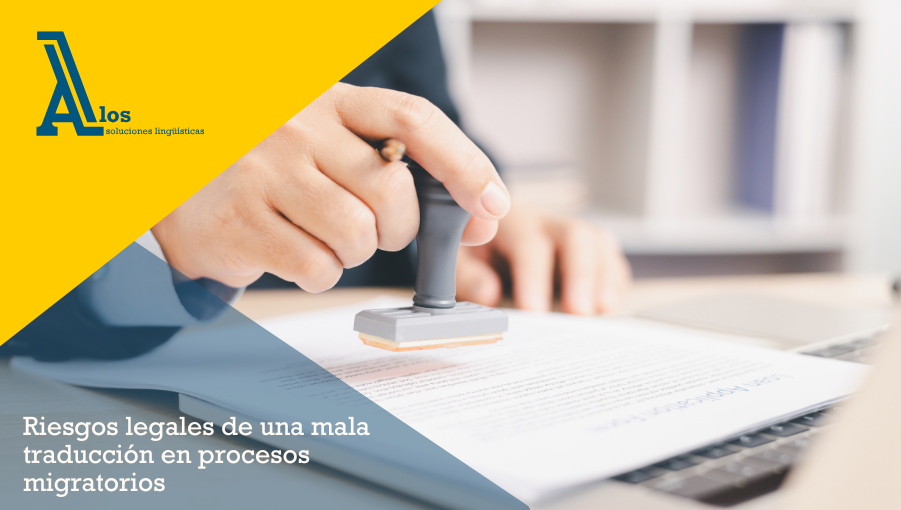
In immigration procedures, every document counts. An error in a translation may look minor, but in practice it can mean delays, refusals or even more serious legal problems. Many people underestimate this until they face a request for correction from the immigration office. In this article you will see what the risks are, how to avoid them and what to bear in mind so that your paperwork is right from the start.
Why is translation crucial in immigration procedures?
When you submit documents issued in another language to the Spanish authorities, translating them literally is not enough. The authorities need the information to be clear, precise and legally valid.
Birth certificates, criminal records or academic qualifications, for example, must state exactly the same as the original document. A poor translation can change the meaning of a key piece of data, such as dates, names or marital status.
What is more, with sensitive documents it is advisable to work with specialists who have quality control processes in place. In that respect it helps to understand what services a professional translation agency offers, since that makes it easier to judge what kind of support you need for each document and procedure.
The main legal risks of a poor translation

Refusal of the application
One of the commonest risks is the outright refusal of the application. If a document is not correctly understood or contains inconsistencies, the authorities may treat it as invalid.
For example, an incorrectly translated criminal record certificate can raise doubts about its content, which leads to the document being rejected.
Requests for correction and delays
In many cases there is no immediate refusal but a request for correction. That means the authorities ask you to put the error right within a set deadline.
This involves more waiting time, extra costs and the risk of missing key deadlines.
In procedures such as residence applications, family reunification or citizenship, these delays can directly affect the applicant’s personal and administrative planning.
When a single day means visiting several offices with your phone charged to show documents or receive urgent notifications, a fast-charging car charger makes sure you arrive at every appointment with all your devices ready.
Problems of legal interpretation
A poor translation affects not only the form but also the substance. If a document is interpreted incorrectly, it can have legal consequences.
A common case is the mistranslation of marital status, a family relationship or a court decision. When that happens, the problem is not merely documentary: it can also change the legal assessment of the file.
Loss of validity of the document
If the translation does not meet the requirements set by the relevant body, the document can lose all validity before the authorities.
That forces you to repeat the process, resubmit paperwork and take on new costs, quite apart from the strain of restarting a procedure that was already well advanced.
Common mistakes in immigration translations
Unofficial translations
Many people turn to non-specialist translators or automated tools. Although these can help you get the general sense of a text, they are not a valid solution when legal or administrative effects are involved.
Lack of terminological precision
Legal and administrative language requires exactness. Translating literally without knowing the legal context can produce significant errors, especially when the document comes from a legal system different from the Spanish one.
Inconsistencies in names and data
A frequent failing is writing names, surnames, dates or places differently from one document to another. That inconsistency can raise doubts about the authenticity of the file and trigger needless requests for correction.
How to reduce the risk from the outset
The best way to avoid problems is not to treat translation as a secondary step. In immigration procedures it is part of the core of the file.
So check in advance what type of translation you need, what level of specialisation the document calls for and whether the provider has experience with legal texts. It can also help to know how to choose a translation agency in Valencia, especially if you are looking for a professional service that combines precision, review and knowledge of the legal context.
The real impact beyond the paperwork
Translation errors are not just a technical problem. They can delay a residence permit, complicate family reunification or block a procedure that depends on very specific deadlines.
Investing in a well-done translation is therefore not an optional expense. It is a preventive decision that can head off far costlier legal and administrative problems.
Frequently asked questions
Yes. If the content is confusing, incomplete or contradictory, the authorities may refuse to accept the document or ask for it to be corrected.
No. It depends on the procedure and the type of document. That is why you should check the specific requirements before submitting the file.
Not as a formal solution. It can help you understand a text, but it does not replace a professional translation when the document has to be submitted to the authorities.
In summary
The legal risks of a poor translation in immigration procedures are real and can have significant consequences. An apparently small error can turn into delays, requests for correction or even the loss of validity of a key document.
If you are preparing documents for an immigration procedure, ALOS can help with professional language services so you submit your file with more certainty, clarity and confidence.