





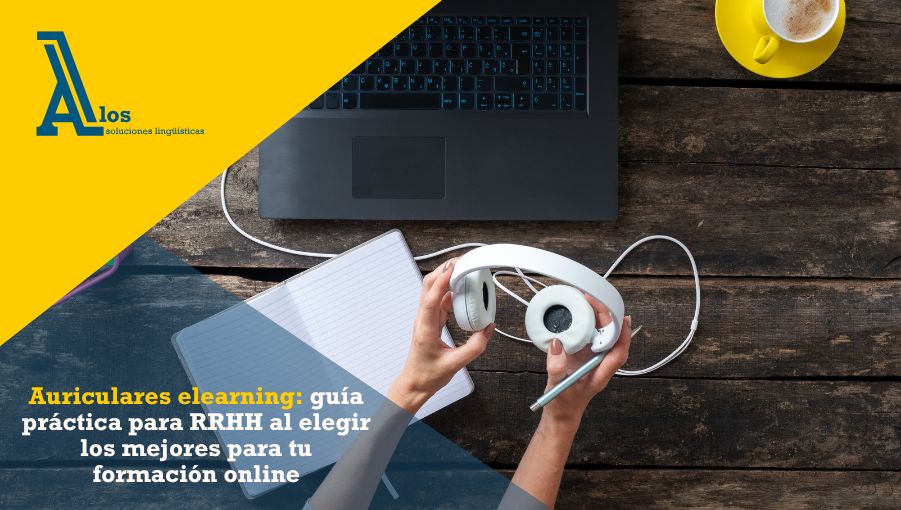
HR departments face the challenge of making sure online training is not just delivered but effective. Beyond content and platforms, the quality of the equipment employees use — headsets included — has a direct effect on attention, participation and learning outcomes. Here you will find out which criteria to weigh up and which types of headset work best in corporate e-learning programmes.
Why good headsets make a difference in e-learning
In online courses, webinars or interactive sessions, audio clarity is essential. Poor-quality headsets can cause distractions, listening fatigue and the loss of important information. That does not only affect individual performance; it can also lead to inconsistent results between teams or departments.
Choosing hardware is also part of a broader internal training strategy. A well-designed approach, where the right devices are combined with clear training objectives, improves the effectiveness of any programme. When you plan language training for your team and measure its impact, for example, it helps to consider return on investment and improvement indicators, as explained in articles on how to measure the ROI of language training in companies.
What to consider when choosing headsets for online training
Sound quality and noise cancellation
If employees follow courses from places with background noise — open-plan offices or shared areas — headsets with active noise cancellation can help them stay focused. This type reduces distractions and makes it easier to concentrate on explanations, listening exercises or discussions without interference from the physical environment.
In consistently noisy settings — open-plan offices, coworking spaces or shared home working — active noise-cancelling headsets make a real difference. They let people stay focused during training sessions without depending on an ideal environment that, in practice, hardly ever exists.
Built-in microphone for interactive sessions
Much online training is not passive: it includes discussion, speaking practice or real-time feedback sessions. In those cases, headsets should include a good microphone that picks up the voice clearly, avoiding background interference or echo that gets in the way of two-way communication.
When online training involves active participation — speaking, role-plays or live feedback — having headsets with a professional microphone avoids interruptions, repetition and wasted time in group sessions.
Wireless vs. wired
Wireless headsets offer comfort and freedom of movement for employees who switch between devices or workspaces. Their battery life and flexibility are useful on days with several sessions. Wired models, however, tend to offer a more stable connection with no latency, which can be decisive on courses where sound fidelity is critical.
In training where stability comes first — listening comprehension, languages or long sessions — wired headsets remain a reliable choice. They avoid battery, latency or disconnection problems at key moments.

Types of headset recommended for corporate e-learning
1. Active noise-cancelling headsets
Recommended for noisy or shared environments. They help maintain attention during long training sessions, especially with spoken or audio content.
2. Headsets with a good microphone
Ideal for courses that require speaking, discussion or interactive activities. They reduce interference and improve communication between participants and trainers.
3. Comfortable wireless headsets
They bring freedom of movement and comfort, supporting longer sessions without cables getting in the way or restricting working posture.
For employees who move from session to meeting to training throughout the day, comfort and battery life are key. Well-designed wireless headsets reduce fatigue and make for a more sustainable learning experience.
4. High-fidelity wired headsets
They usually deliver more stable sound with no latency, useful in training where audio precision matters — advanced listening comprehension or the analysis of complex audio cases, for example.
How to fit headsets into your training strategy
Initial assessment of your equipment
Before buying devices, look at which type of training is most common in your company and in which environments your people work (open-plan office, remote working, quiet spaces, and so on). That will help you set priorities: noise cancellation, microphone, connectivity.
Some companies opt for models certified for the platforms they use most (Teams, Zoom, Google Meet). This reduces technical incidents and makes it easier to standardise equipment across internal training programmes.
Pilot tests with small groups
Choose several models and let a representative group try them during real training sessions. Gather feedback on comfort, sound quality and ease of use to refine your final choice.
Link it to your learning objectives
Choosing headsets should not be an isolated action but part of a coherent training strategy. Linking the choice of equipment to clear learning goals and follow-up — as when managing subsidised training from HR— makes sure the investment has a real impact on skills and results.

A list of headsets useful for online training in corporate settings
Here are the most effective types of headset by use and working environment:
- Active noise-cancelling headsets: ideal for spaces with external distractions.
- Headsets with a built-in microphone: recommended when courses involve speaking.
- Wireless headsets: comfortable for long sessions or for moving between devices.
- High-fidelity wired headsets: they provide a stable connection and audio quality with no latency.
This list is designed to help you work out which type of device adds most value given the training format your team uses most.
Good practice for HR when rolling out headsets for training
- Involve employees in the choice: asking for their views and experience leads to better-informed decisions and greater acceptance of the equipment.
- Make sure they are compatible with your training platforms: check that the headsets work well with the video-conferencing tools or LMS you use.
- Link the choice to training objectives and metrics: connect the use of devices with performance and learner satisfaction indicators.
Models with active noise cancellation are the most effective at minimising distractions and improving concentration.
If the training involves speaking or interactive activities, yes; a good microphone makes for clear communication between trainers and participants.
They offer mobility and comfort, useful for employees who switch between platforms, devices or spaces during training sessions.
Choosing the right headsets is a strategic investment that can raise the effectiveness of your online training programmes, improve the learning experience and increase employee participation. For HR, this decision is part of a broader view of talent development and continuous improvement.
If you want to design a more effective eLearning programme and choose devices and teaching resources aligned with your corporate objectives, get in touch with ALOS for tailored advice and raise the quality of training in your company.