






In recent years South Korea has established itself as one of the most appealing destinations for tourists, students and professionals from all over the world. Its rich culture, advanced technology and job opportunities have caught the attention of thousands of people keen to live unique experiences in this Asian country.
One notable example is the South Korean singer Psy, known for his global hit “Gangnam Style”. After his international fame, Psy decided to return to South Korea in 2022 to set up his own record label in the Gangnam district, a sign of the appeal and the opportunities the country offers even to internationally recognised figures. Wikipedia
South Korea has also introduced immigration policies that make it easier for foreigners to enter and stay, such as specific visas for digital nomads and K-pop enthusiasts, reflecting its commitment to internationalisation and cultural exchange.
Why is South Korea such an appealing destination?
In recent years South Korea has established itself as one of the most fascinating and accessible destinations in the world for tourists, students, professionals and entrepreneurs. It is not only a country of advanced technology and global pop culture: it is also a model of development, safety and international outlook.
Innovation, quality of life and technology
Seoul, Busan and Incheon are not just vibrant, well-connected cities: they offer some of the most advanced infrastructure in Asia. Korea leads the rankings for digital connectivity, urban development, transport efficiency and access to public services. That makes it an ideal environment for foreign students and workers seeking quality of life.
Outstanding education and academic opportunities
South Korea invests heavily in education and is home to universities among the best in the world, such as Seoul National University, KAIST and Yonsei. Many of them offer programmes in English to attract international talent, with well-structured visas that make it easier for foreign students to stay.
Global culture and openness to the world
Thanks to the popularity of K-pop, K-dramas and Korean cuisine, the country has become a focus of global interest. This cultural visibility has been accompanied by more flexible immigration policies, such as the launch of the digital nomad visa and the K-ETA system, designed to simplify short trips.
“South Korea has shown that change is possible when a nation commits to education, innovation and openness to the world.”
—Ban Ki-moon, former Secretary-General of the UN
In short, South Korea is not merely an interesting place to visit but somewhere with real opportunities for professional, academic and personal growth. And it all starts with one essential step: choosing and applying for the right visa.
Types of South Korea visa in 2025
South Korea offers a range of visas tailored to different travel purposes. The main types are set out below: (IATI)
1. K-ETA (Korea Electronic Travel Authorization)
The K-ETA is an electronic authorisation that has been compulsory since 2021 for citizens of countries with a visa-waiver agreement with South Korea. In 2025 it remains one of the most widely used routes for short tourist or business stays.
Who is it for?
For citizens of countries such as Spain, Mexico, Chile and Argentina, among others, who do not need a traditional visa for short visits.
Duration:
Up to 90 days per entry. The authorisation is valid for two years and allows multiple entries into the country.
How to apply:
Entirely online, on the official website www.k-eta.go.kr.
Documents required:
A valid passport, a recent digital photograph and payment of the relevant fee (around USD 10).
Restrictions:
It does not allow you to work or to undertake long courses of study. It is only for tourism, family visits, business meetings or unpaid conferences.
2. C-3 visa (tourist / short-stay visa)
The C-3 visa is aimed at people who wish to enter South Korea for tourism or personal reasons, or to attend short events, and who cannot use the K-ETA system.
Who is it for?
People from countries without a visa-waiver agreement, or those who want a more flexible entry through a traditional visa.
Duration:
Up to 90 days per visit. It can be single or multiple entry, depending on the applicant’s history.
How to apply:
Directly at the South Korean embassy or consulate for your country of residence.
Documents required:
Application form, passport, photograph, proof of sufficient funds, travel itinerary, travel health insurance and accommodation booking or letter of invitation.
Advantage:
In some cases it is more flexible than the K-ETA and covers personal and family situations.
3. D-2 visa (student)
The D-2 visa is designed for international students who have been accepted onto higher education programmes in South Korea, including bachelor’s, master’s and doctoral degrees and academic exchange programmes.
Who is it for?
Foreign students admitted to accredited Korean universities.
Duration:
It varies with the length of the academic programme. It is commonly issued for 6 to 12 months, renewable.
How to apply:
Through the Korean embassy, presenting the letter of admission. Some universities help with the visa process.
Documents required:
Official acceptance letter, proof of funds (a minimum of USD 10,000 in many cases), medical insurance, valid passport, academic record and application form.
Additional benefits:
The possibility of working part-time legally with an additional permit. It can serve as a bridge to a work visa once your studies are over.
4. E-1 to E-7 visas (professional work)
These visas are intended for foreign professionals who have been hired to carry out specific work in South Korea, in sectors such as technology, education, research or industry.
Who is it for?
University lecturers (E-1), researchers (E-3), specialist technicians and employees of foreign companies (E-7), among others.
Duration:
Generally between one and two years, depending on the employment contract and the visa category. Renewable.
How to apply:
Through the hiring company, which must arrange the visa with the South Korean Ministry of Justice and then support the application at the relevant embassy.
Documents required:
Employment contract, official qualifications, proven work experience, CV, criminal record certificate, application form, passport and medical examinations where required.
Important:
Employer sponsorship is compulsory and the visa is tied to that contractual relationship.
5. Digital nomad visa
In response to new forms of global remote work, South Korea launched a visa for digital nomads in 2024, which has been very well received by freelancers, entrepreneurs and remote workers.
Who is it for?
People who work remotely for foreign companies and wish to live temporarily in South Korea.
Duration:
Initially valid for one year, with the possibility of an extension for a further year.
How to apply:
Through the Korean embassy or the HiKorea immigration portal (www.hikorea.go.kr).
Documents required:
An employment contract with a foreign company, proof of stable income (approximately USD 66,000 a year), international medical insurance, a valid passport and the application form.
Advantages:
It allows you to live in South Korea without working for a local company or obtaining a traditional work visa. Ideal for anyone looking for a cultural and professional experience without giving up their current job.
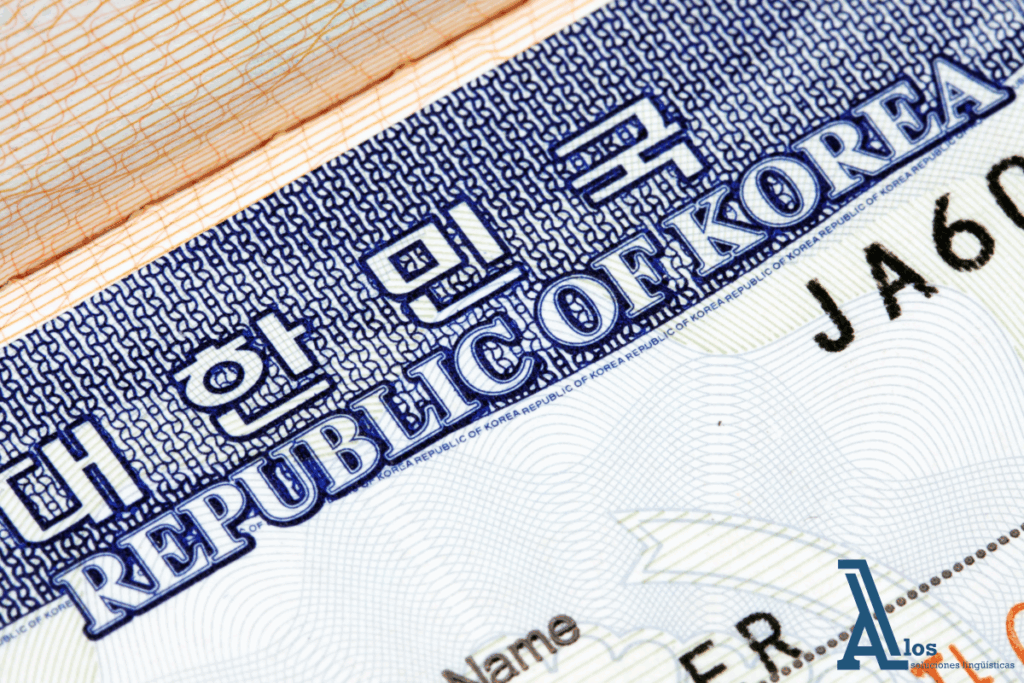
General requirements for applying for a visa
Although the specific requirements vary with the type of visa, you will generally be asked for:
- A passport valid for at least six months.
- A completed application form.
- A recent passport-sized photograph.
- Proof of financial means.
- Additional documents depending on the type of visa (letter of admission, employment contract, etc.). (IATI)
It is advisable to check with the relevant embassy or consulate for detailed, up-to-date information.
| Visa | Who is it for? | Duration | Main requirements | Where to apply |
|---|---|---|---|---|
| K-ETA | Citizens of visa-exempt countries, for tourism or business | 90 days per entry, valid for 2 years (multiple) | Valid passport, digital photo, online form, payment (~USD 10) | Official portal www.k-eta.go.kr |
| C-3 (tourism) | Visitors for tourism, personal visits or cultural events | Up to 90 days (single or multiple entry) | Passport, form, financial means, itinerary, insurance, letter of invitation | Korean embassy or consulate |
| D-2 (student) | Students accepted by Korean universities | 6 months to several years depending on the programme, renewable | Acceptance letter, proof of funds, medical insurance, academic record | Embassy or consulate / international relations offices |
| E-1 to E-7 (work) | Professionals hired by companies in South Korea | 1-2 years depending on the contract, renewable | Employment contract, CV, qualifications, experience, criminal record certificate | Korean Ministry of Justice / embassy |
| Digital nomad | Remote workers for foreign companies | 1 year, renewable up to 2 years | Contract with a foreign company, income (~USD 66,000), international medical insurance | Korean embassy or portal www.hikorea.go.kr |
How to apply for a visa step by step
| Step | Description |
|---|---|
| 1. Identify the type of visa | Decide whether you are travelling for tourism, study, work or another reason, so you can choose the right visa. |
| 2. Gather the required documents | Check the specific requirements for the visa and gather your passport, photos, letters, insurance, proofs and so on. |
| 3. Complete the application form | Download or request the official form and fill it in with your personal details and the purpose of your trip. |
| 4. Pay the relevant fees | Pay the fee for your type of visa. The amount varies by country and visa type. |
| 5. Submit the application at the embassy or consulate | Hand in all the documents at the Korean embassy or consulate for your country. |
| 6. Wait for processing | The process can take between 5 and 15 working days. Some visas may require interviews or additional documents. |
| 7. Collect the approved visa | Once approved, collect your passport with the visa stamped in it. Check that all the details are correct before you travel. |
5 keys to applying for a South Korea visa
1. Plan ahead
One of the most common mistakes when arranging a visa is leaving everything to the last minute. Korean embassies usually have waiting times of between 5 and 15 working days, but these can stretch during peak periods or where documents are incomplete.
Tip: start the process at least one month before your planned travel date. That gives you room to correct any mistakes or meet additional requests from the consulate.
2. Complete, well-organised documents
A missing compulsory document or incorrect paperwork is one of the main reasons visas are refused. Each type of visa (tourism, study, work and so on) has specific requirements and often calls for sworn translations into English or Korean.
Tip: draw up a checklist of all the required documents and make sure that they:
Are up to date (valid passport, recent certificates).
Are correctly translated if the embassy requires it.
Contain no inconsistencies (for example, differing dates between letters of invitation and flight bookings).
3. Choose the right visa
Many people apply for the wrong visa simply because they do not know better. Trying to enter Korea to study on a tourist visa, for example, can result in being refused entry to the country.
Tip: read the description of each type of visa before you start the process. If you are unsure between two categories, contact the embassy or consult a specialist immigration adviser.
4. Present a coherent and truthful profile
South Korea, like other countries, examines the purpose of the trip and the applicant’s personal situation. A clear, well-supported profile (a student accepted by a university, for instance, or a tourist with demonstrable means) builds trust and makes approval easier.
Tip: back up your application with evidence supporting your reason for travelling (letter of admission, itinerary, contracts and so on) and make sure all the information matches across every document submitted.
5. Check official sources and seek advice
Immigration rules change constantly. In some cases, such as the digital nomad visa or new post-pandemic requirements, the most reliable information will always be on government portals.
Tip: always check the official site of the Korean Ministry of Justice (www.hikorea.go.kr) or the K-ETA site (www.k-eta.go.kr). For complex cases, you can rely on professional translation and application services such as those of Alos Soluciones Lingüísticas.
South Korea awaits: apply for your visa with confidence
Applying for a South Korea visa in 2025 can open the door to unforgettable experiences: from visiting ancient temples and enjoying Korean cuisine to studying at elite universities or building a career in one of the world’s most advanced economies. It also calls for preparation, organisation and accurate paperwork.
In that process, professional support can make all the difference. At Alos Soluciones Lingüísticas, we do not just understand the language: we understand the specific requirements of international immigration procedures.
How can we help you?
Tailored language courses (Korean, English, Spanish and others) designed for travellers, students, professionals or companies with international goals.
Sworn and certified translations into English, Korean or Spanish, valid before embassies, universities and official bodies.
Review of immigration paperwork, to make sure every form is complete and correctly worded.
Language advice for cover letters, CVs and interviews if you are applying to universities or jobs in Korea.
Frequently asked questions (FAQ)
It depends on your nationality. Some countries have visa-waiver agreements with South Korea, but you still need to obtain a K-ETA. (Ivisa Viajes)
Generally up to 90 days. (Ivisa Viajes)
No, a specific work visa is required. (Ivisa Viajes)
It is an electronic travel authorisation applied for online before entering South Korea. (Ivisa Viajes)
It varies with the type of visa and the embassy or consulate, but generally between 5 and 15 working days.