






Many companies decide to implement in-company language training when they start working with international clients or when their teams need to communicate with sites in other countries. In many cases, however, the process amounts to buying a course without first reviewing internal factors that can affect the success of the programme.
Before starting a language training plan, it is worth analysing certain documents, processes and objectives within the company. In this article we look at which elements are worth reviewing before you launch the training, so that it genuinely responds to the needs of the business.
Why planning is crucial in corporate language training
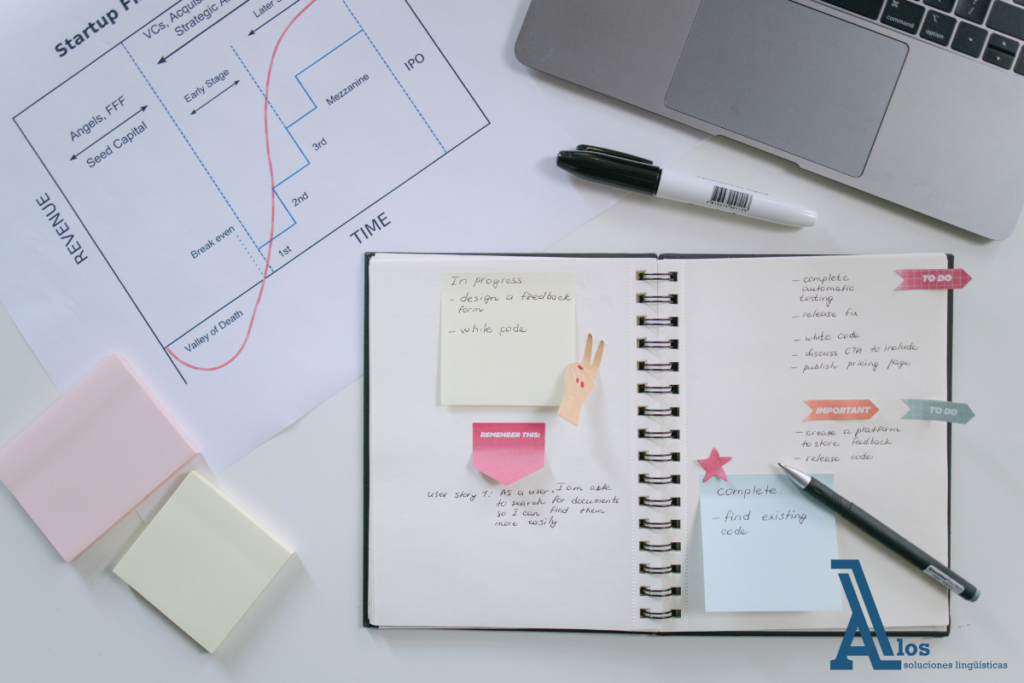
When training is rolled out without planning, familiar problems tend to appear: groups with very different levels, content that is of little use at work, or poor attendance.
This happens because the company has not clearly defined what it needs to improve or which departments will benefit most from the programme.
Reviewing certain internal documents makes it possible to design training that is better aligned with how the organisation actually operates.
Strategic documents that help define the training
One of the first steps is to review the documents that describe the company’s international strategy.
Expansion or internationalisation plans, for example, can show which markets you are operating in and which languages account for most of your communication.
That allows you to answer questions such as:
- which language should be prioritised
- which departments need a higher language level
- which communication situations arise most often
In a company exporting industrial products, for instance, the sales and technical teams usually need different language skills.
Sales and marketing documentation

Commercial materials also offer very useful clues for designing the training.
Catalogues, sales presentations or commercial proposals make it possible to identify the vocabulary and structures employees use when dealing with international clients.
When these materials are analysed before the programme starts, real examples can be built into the classes.
That way, participants do not just learn the language in general terms but practise with situations that are part of their work.
Technical manuals and internal documentation
In industrial or technology companies, technical manuals, product sheets or process documentation can be particularly relevant.
These documents usually contain specific terminology that employees need to handle when working with international suppliers or clients.
If the language training incorporates this vocabulary from the outset, participants can apply what they learn far more quickly.
This is especially useful in departments such as engineering, technical support or production.
Internal training and HR policies
Another document worth reviewing is the company’s internal training policy.
Some organisations already have defined procedures for managing training programmes: eligibility criteria, scheduling, monitoring or assessment of results.
Fitting the language training into these policies makes it easier to implement and avoids organisational friction.
It also allows the programme to be coordinated with other professional development processes.
The ALOS blog examines how to structure this kind of programme in the article at
https://alosidiomas.com/plan-formacion-idiomas-empresas/, which covers practical aspects such as planning, level groups and involving the teams.
Performance reviews and team needs
Performance reviews can also provide useful information for designing a language programme.
In many cases, team leaders identify professionals who need to improve their communication in another language in order to take on new responsibilities.
For example:
- leading international projects
- presenting results to foreign sites
- taking part in negotiations with international clients
Identifying these needs makes it possible to prioritise which profiles should take part in the training.
How to turn this information into a useful training programme
Once these documents and internal processes have been reviewed, it is much easier to design a programme that makes sense for the company.
Rather than running a generic course, the training can be structured around real day-to-day work situations.
For example:
- meetings with international clients
- sales presentations
- technical communication with suppliers
- writing professional emails
This practical approach increases participants’ motivation and improves the transfer of learning into the workplace.
Frequently asked questions
It is not compulsory, but it is advisable. Reviewing strategic, commercial or technical documentation helps to design a programme that is better aligned with the company’s real needs.
It depends on the company’s activity. Sales, technical, international management and customer service teams are the usual participants.
Yes. Many programmes use the company’s own documents to work on terminology and specific professional situations.
Ideally, HR managers, the managers of the departments involved and the language training provider.
In-company language training can bring considerable value to companies working in international environments. Its impact, however, depends largely on how it is planned.
Reviewing strategic documents, commercial materials, technical manuals or internal training policies makes it possible to design a programme that is far more useful to the teams.
If your company is considering language training to improve its international communication, at ALOS we can help you analyse your needs and create a programme tailored to your activity and your teams.