





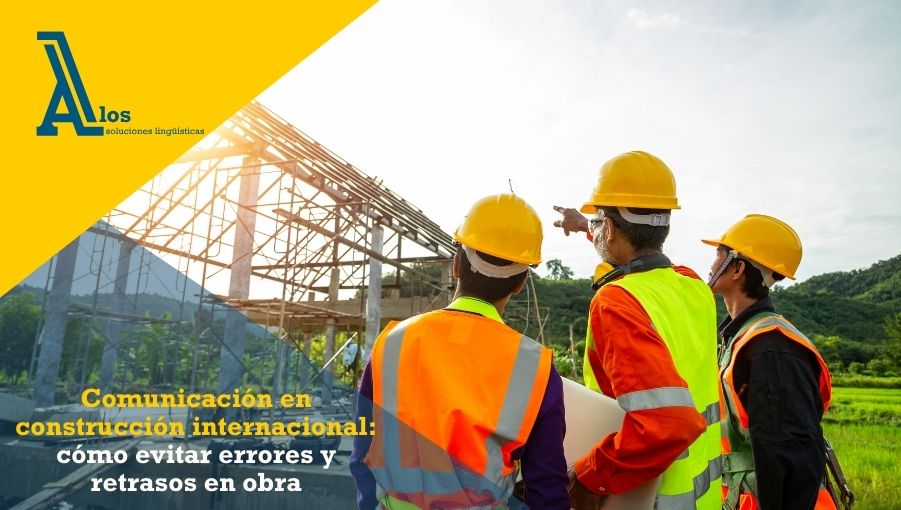
On many construction projects, materials arrive from different countries, suppliers speak other languages and technical specifications are written in English. When communication is unclear, delays, cost overruns and contractual disputes follow. In this article you will see how to improve communication in international construction and which practical measures you can apply so that your team works more safely and effectively.
Why international communication has a direct effect on the works
An international project brings together architects, engineering firms, materials suppliers, manufacturers and technical teams from different countries. Each of them uses specific terminology and its own processes.
A badly worded email, a misread specification or an unclear meeting can translate into:
- Incorrect deliveries of materials.
- Execution errors caused by misreading the drawings.
- Scope changes that are not properly documented.
- Contractual disputes that could have been avoided.
In construction, these failures are not minor: they hit deadlines, certifications and margins directly. Communication is therefore not just a linguistic matter but an operational and strategic one.
Real situations where international projects go wrong
Misreading technical documentation
Data sheets, manuals and specifications routinely arrive in English. If the site team’s command of the language is not strong enough, they may misread requirements such as tolerances, finishes or installation conditions.
Confusing terms such as load-bearing wall and finishing layer can lead to incorrect technical decisions. That means not only delays, but extra costs for putting the work right.
Meetings with foreign suppliers
Video calls with international manufacturers tend to be fast and highly technical. If the project manager is not comfortable communicating in English, they will avoid asking questions or confirm things they are not entirely sure about.
Developing specific skills for this kind of setting is essential. It is useful here to work on the competences covered in our article on English for negotiations and business meetings, which explains how to structure your contributions, ask for clarification and close agreements precisely.
Unclear emails
In written communication, ambiguity is one of the biggest risks. Overly general phrasing or literal translations can create misunderstandings.
A common example is confirming a deadline without specifying the conditions, which can lead to disputes later on. Clarity, structure and the right use of technical terminology are essential.

Keys to better communication in international construction
Language training designed for the sector
A general English course is not enough. The team needs to work on technical vocabulary, professional email writing, reading documentation and simulations of real meetings.
Training also has to be aligned with the project’s objectives and with each employee’s role. A site technician does not need the same approach as a sales manager or a project director.
If you are considering a training programme, it helps to look at how to structure a language training plan for companies so that it has real impact, adapting the content to specific workplace situations.
Internal communication protocols
Beyond language itself, it is worth setting internal standards:
- Templates for technical emails.
- Protocols for confirming scope changes.
- Written summaries after key meetings.
- Internal glossaries of frequent technical terms.
Consulting drawings, data sheets or supplier emails directly on site calls for a device that can take the environment. A rugged tablet gives you access to technical documentation anywhere on the project without worrying about knocks, dust or damp.
These measures reduce reliance on the individual level of each worker and bring consistency to the team as a whole.
Simulating real scenarios
One of the most effective ways to improve is to work on real situations: preparing a meeting with a supplier, drafting a response to a non-conformity or presenting a design change.
Guided practice lets people spot mistakes before they show up in a critical setting, and builds confidence in communication.
Ongoing assessment of progress
One-off training is not enough. It is important to measure whether the team has improved its ability to:
- Understand technical documentation in another language.
- Write clear, well-structured communications.
- Take an active part in international meetings.
This assessment allows you to adjust the training and make sure it really translates into operational improvements.

The concrete benefits of good international communication
When the team commands the language and applies clear protocols, the results show:
- Fewer errors in orders and specifications.
- Fewer delays caused by misunderstandings.
- More confidence when negotiating with suppliers.
- A better professional image with international clients.
- A real capacity to take on projects outside the local market.
In construction, where margins can be tight, avoiding communication errors is a clear competitive advantage.
How to tell whether your company needs to improve
Some common warning signs:
- The same person is always relied on to translate or communicate in English.
- Decisions are delayed because of linguistic uncertainty.
- Misunderstandings with foreign suppliers are frequent.
- The team avoids speaking up in international meetings.
If any of these sound familiar, there is probably room for improvement.
Investing in language skills is not an isolated expense but a tool for protecting profitability and opening up new business opportunities.
Not always. If technicians, buyers or site managers deal with international suppliers, they also need basic skills to avoid bottlenecks.
It depends on the role, but for technical meetings and supplier management an upper-intermediate or advanced level is usually advisable, especially in comprehension and professional communication.
English is the most common language, but on some projects it can be useful to work on others, depending on the markets the company operates in.
With a well-structured programme geared to real situations, progress can start to show within a few months, particularly in confidence and clarity.
Communication in international construction cannot be left to chance. Every email, every meeting and every technical specification has a direct bearing on the outcome of the project. Improving your team’s language skills is a strategic decision that reduces risk and strengthens your company’s position in international markets.
If you want to design language training tailored to the construction sector and focused on real site situations, ALOS can help you build a bespoke programme. Get in touch with us and take the step towards clearer, more professional and more effective communication.