





The global expansion of companies and digital projects has turned translation into a strategic necessity. Many organisations and professionals now ask whether artificial intelligence (AI) tools can already replace human translators, or whether there are still situations in which a professional’s accuracy, context and cultural sensitivity cannot be replaced. In this article we look at how to get the most out of each approach and when professional translation is the right call.
What does AI translation offer and what are its limits?
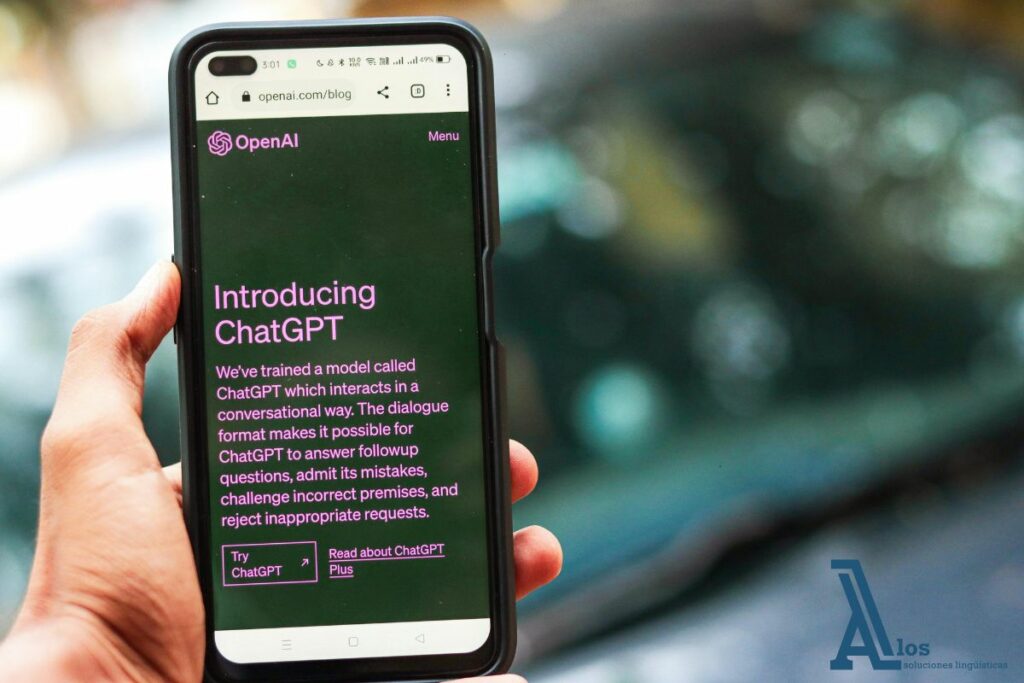
AI-based tools, such as machine translation assistants, have advanced considerably in recent years. They produce translations in seconds and at minimal cost, which makes them useful for quick drafts or for grasping the general sense of a text.
However, artificial intelligence does not always capture the cultural nuance, tone or context of a message, especially in complex, creative or sensitive texts. In content that uses humour, irony or idiomatic expressions, for example, AI can produce literal results that fail to reflect what was actually meant. In those cases, a human translator remains essential.
The same applies when you translate content with strategic goals, such as web pages designed to rank in different markets. Multilingual SEO is not about translating word for word, but about adapting keywords, structures and messages so that they work in each language and culture. Relying on machine translation alone can damage your rankings, which is why AI is usually combined with professional review to achieve effective results.
Human translators: accuracy and cultural adaptation
A professional translator brings something AI cannot replicate: linguistic judgement, cultural sensitivity and brand consistency. This matters especially in texts that represent a company, such as marketing campaigns, legal documents or technical manuals.
In the translation of commercial and advertising content, for instance, the point is not simply to carry messages across languages, but to adapt them so that they connect with the target audience. A mistranslated slogan can have disastrous consequences for a brand’s reputation, as real cases in international marketing show. Professional translation weighs not only the words, but the impact they will have on different audiences.
What is more, in sectors with specific terminology — medical, legal or technical — a specialist translator makes sure the message is conveyed precisely, with no ambiguity that could cause misunderstandings or affect the safety of the reader or user.
When to use AI translation and when to use a human translator
The choice between AI and a human translator depends on the type of content and the purpose of the translation. Here are some typical scenarios:
When AI is useful:
- For internal drafts or communications that are not published officially.
- To grasp the general meaning of straightforward texts.
- In situations where speed matters and context is not critical.
When professional translation is necessary:
- For content that represents your brand to clients or partners.
- In legal, technical or medical documents where there is no room for error.
- When preparing materials that will form part of a global communication strategy or multilingual SEO.
This distinction allows AI to act as a complementary tool, cutting time in the early stage, while human judgement supervises and corrects the final result to ensure quality, consistency and natural language in the target language.
How modern companies combine both approaches
Professional translation teams already use AI tools to speed up processes, but always with human review at the end. This practice, known as machine translation post-editing, combines speed with accuracy, maximising efficiency without sacrificing quality.
And in settings where multilingual content forms part of a digital strategy, it is common to keep brand glossaries and translation memories up to date, which helps both AI and human translators to stay consistent across every project.
Useful links to explore further
To learn more about how digital content translation can make a difference to your international communication, take a look at this article on translating content for social media and cultural localisation across different audiences.
And if you want to understand how to use translation to boost your rankings in global markets, this post on multilingual SEO and translation for content rankings offers practical ideas.
Frequently asked questions
No. Although AI tools are increasingly powerful, they still lack the cultural sensitivity, judgement and contextual adaptation that a translation professional provides.
Not always. Free platforms can compromise sensitive data, so for confidential documents it is advisable to work with professional translators or services that guarantee privacy.
It depends on the volume and complexity of the text. Simple texts may take minutes, but material with specific terminology or an advanced communicative purpose usually requires more time and expert judgement.
Yes. Using AI to produce a draft can save time, as long as a human translator then reviews and adapts the final text.
AI translation and human translation are not mutually exclusive: they are complementary tools. For content that requires accuracy, cultural adaptation or commercial impact, professional input remains essential. AI can speed up processes, but it never replaces the deep understanding of an expert translator.
If you need high-quality translations, tailored to your target audience and backed by professional judgement, get in touch with ALOS Soluciones Lingüísticas. We can advise you on your multilingual projects and offer translation solutions built around your needs.