





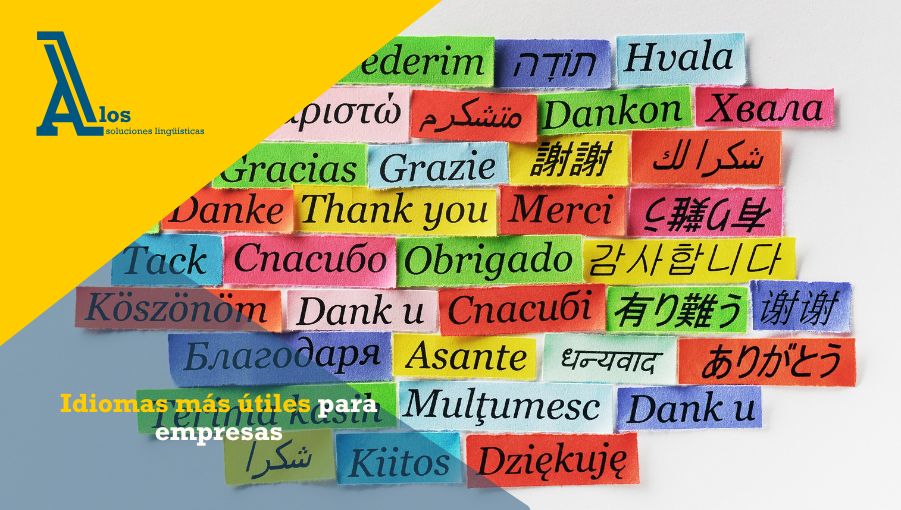
In today’s recruitment processes, language skills are no longer a nice-to-have but a necessity for many organisations. They have a direct bearing on a company’s ability to enter new markets and communicate effectively with international clients and partners. In this article you will find out which languages are having the greatest impact on employment and how companies can build them into their strategy to become more competitive.

English: the baseline requirement for skilled jobs
English remains the lingua franca of the corporate world. In companies with multicultural teams or international ties, both internal and external communication routinely take place in English. That is why having people with a solid command of the language is essential for project management, global customer service and negotiating with overseas partners.
What level do companies look for?
Most ask for at least a B2 level during recruitment, but the focus today goes beyond official certificates: what counts is the ability to communicate for real in professional situations such as presentations, calls and negotiations.
Many organisations also use in-house training programmes to raise the level across their workforce, with practice built around specific workplace scenarios. In our article on the corporate language training plan, for instance, we explain how to design programmes that answer real business needs rather than theoretical levels alone.
When we look at the languages companies want most, the difference usually lies not in general level but in professional vocabulary.
Working with a Business English textbook helps reinforce the phrases that come up in meetings, negotiations, emails and presentations. Resources of this kind bring the language into the real business context, which is where it truly makes a difference.
French: a competitive edge in European markets
Although less widespread than English, French remains a strategic language for companies working with France, Belgium, Switzerland or francophone African countries. In sectors such as logistics, foreign trade and manufacturing, a good command of French can smooth commercial agreements and improve relations with French-speaking clients and suppliers.
A practical example
Picture a company with clients in Wallonia, Belgium. Having staff who can communicate in French allows for a more personal service and can be decisive when closing contracts or responding to tenders in that country.
If you want to go deeper into choosing languages according to the sector you serve, our article French, German or Portuguese: which language should you choose for your sector? sets out useful criteria for making training decisions that fit your market strategy.
German: specialising in technical sectors
German is another language in high demand at companies trading with Germany, Austria or Switzerland. These countries are key partners in engineering, the automotive industry, advanced manufacturing and technology research.
Why is German so valuable?
- Shortage of qualified people: there are far fewer candidates with a command of German than of English or French, so those who have it stand out.
- Technical precision: many terms and processes in engineering and technology involve specific vocabulary that is conveyed better in German.
- Internal opportunities: at German multinationals, the language can be a factor in promotion or internal mobility.
For these reasons, companies with heavy technical activity find German to be a tool for both communication efficiency and competitiveness.
How languages and employment connect in business
Beyond the CV, speaking languages changes the way a company operates. A multilingual workforce is better able to:
- Open new markets without depending solely on interpreters or outside agents.
- Reduce misunderstandings in negotiations and technical documentation.
- Improve the corporate image in the eyes of international clients.
It is not simply about learning vocabulary but about weaving foreign languages into concrete work situations. That can be achieved through contextualised training, simulated international meetings or targeted professional writing exercises.

Which language should your sector prioritise?
There is no single universal answer, but a few practical pointers can help you decide:
- Technology companies or global consultancies: English as a solid foundation.
- Organisations trading in Western Europe: combine English with French.
- Manufacturing or engineering with German ties: English plus German.
The key is to look at your target markets and align your language training with your organisation’s business plan.
How to structure an effective language training plan
Many companies recognise the need for training but do not always structure it in a way that produces measurable results. Some recommended steps:
- Assess the team’s real level with reliable tools.
- Set concrete, applicable objectives (for example, being able to hold meetings in the target language).
- Build training into day-to-day work so that learning stays practical.
Well-designed programmes combine theory with situational practice, which helps transfer what is learnt to the real working environment.
If you want to learn more about measuring the impact of training and stopping it from being seen as just another cost, you can read our article on how to measure the impact of language training in your company.
Frequently asked questions
In most sectors, at least an upper intermediate level (B2) is expected, especially in English. For additional languages such as French or German, the level required may vary with the specific duties of the role.
Many companies value official certificates, but what matters most in practice is the ability to communicate effectively in real working situations.
Beyond communication, it improves international competitiveness, talent retention and the ability to take on global projects with more autonomy and quality.
Languages are a strategic asset for companies, not just an individual skill. In 2025 English remains indispensable, while French and German can offer a competitive edge in specific sectors and markets.
If your organisation wants to strengthen its international position or develop internal talent, at ALOS we offer language training programmes tailored to real business needs. Get in touch and we will design a solution to suit your company.