





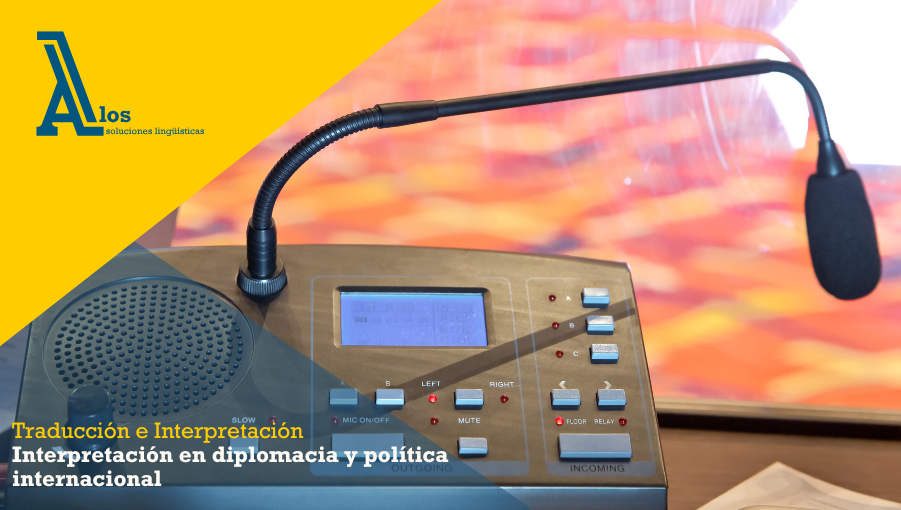
What if a single misinterpreted word set off an international crisis? Extreme as it sounds, the scenario is not fiction. In diplomacy and international politics, where every word counts, interpreting plays a vital role. Whether at a summit of world leaders, a bilateral meeting or a session at the UN, interpreters are the invisible bridges that allow dialogue between different cultures, ideologies and languages.
Interpreting is the process of rendering a message orally from one language into another in real time, enabling communication between people who share no common language. There are several modes, such as simultaneous, consecutive and liaison interpreting, each suited to different settings and needs. For more on this, see our article Interpreting explained: the key differences from translation and why professionals make all the difference.
In the international arena, the interpreter’s role is essential if conversations are to flow without ambiguity. Good interpreting conveys not only words but nuance, intention and emotion, preserving the spirit of the original message. Indeed, according to an article by Language Connections, government interpreters perform a service essential to humanity by demonstrating how important language is in maintaining civil international relations between countries.
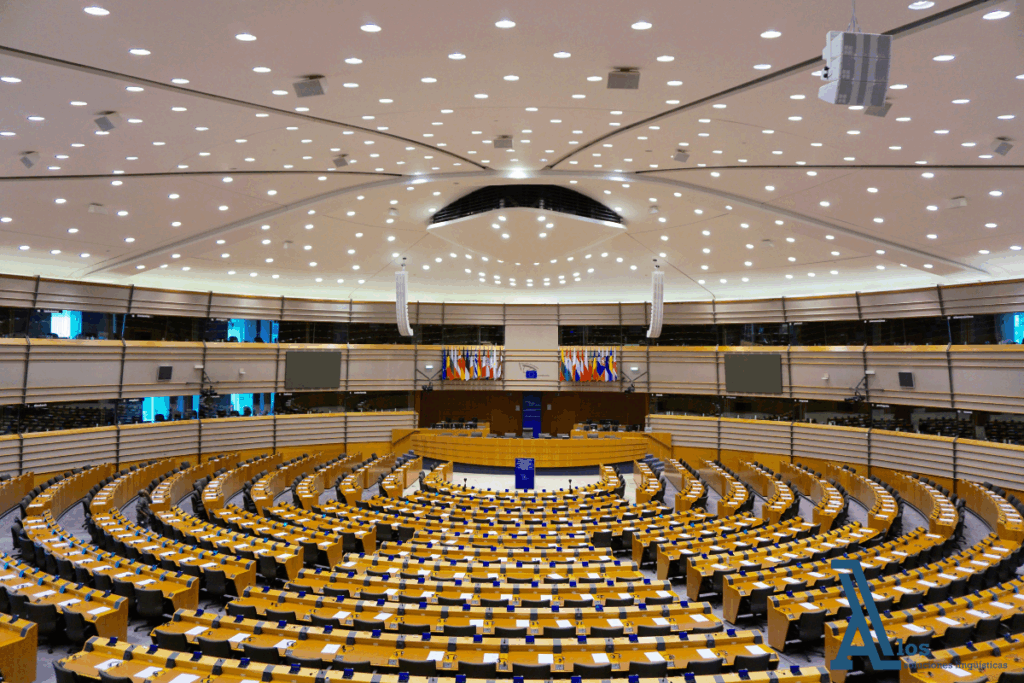
Moments when interpreting was decisive
- One of the most frequently cited cases dates from 1945, when the Japanese government’s response to the Potsdam Declaration was misinterpreted. The word “mokusatsu”, which can mean both “no comment” and “treat with contempt”, was understood by the Allies as a flat refusal. That misunderstanding helped justify the use of nuclear weapons on Hiroshima and Nagasaki.
- A more recent example came during the Brexit negotiations, where European Union interpreters were crucial in ensuring that each word was correctly understood by both sides. A misreading of legal clauses or technical terms could have altered the final terms of the deal.
- Equally significant is the role of interpreting in international bodies such as the UN or the International Court of Justice. In these settings, where sensitive matters such as human rights or armed conflict are handled, an inaccurate interpretation can have far-reaching legal and diplomatic consequences.
The need for professional interpreting services
In international politics there is no room for ambiguity. An interpreting error can be far more than a simple misunderstanding: it can change the meaning of a statement, strain bilateral relations or jeopardise the outcome of an international negotiation. That is why hiring professional interpreters should be seen not as a cost but as an investment in communicative and reputational security.
The complexity of the interpreter’s work is often underestimated. It is not simply a matter of “speaking two languages”, but of conveying ideas accurately in real time, under pressure, before critical audiences and with complete fidelity to the original message. The interpreter must also have a full grasp of the context: what is the political tone of the meeting? what legal nuance does a term carry? what diplomatic implications could a poorly chosen word have?
A professional interpreting service guarantees not only linguistic fidelity but also institutional respect, confidentiality and adaptation to protocol. This matters particularly at international conferences, diplomatic summits, trials, arbitrations or press conferences with global coverage. Choosing an underqualified interpreter is a risk that affects not only the content of the message but the image and credibility of the body or company represented.
That is why working with trained, specialised interpreters is a strategic decision. Their role, discreet as it is, is essential to guaranteeing fluency, trust and understanding between parties who might otherwise be left halfway. In international settings, where the consequences of an error can escalate rapidly, the interpreter’s professionalism is a shield against communicative chaos.
Investing in a professional interpreting service is in fact a way of guaranteeing effective and secure international communication. We at Alos therefore invite you to discover our professional interpreting services. Our team of professional interpreters is ready to help you cross any language border.
English: the lingua franca of modern diplomacy
The European Union (EU) interprets and translates into 24 official languages. This ensures that communication between the EU institutions and the citizens of every member state is accessible and equitable. In today’s context, however, English has established itself as the lingua franca of international politics and diplomacy. Most international summits, treaties, multilateral legal documents and high-level meetings are conducted in English or with English as the working language.
This does not mean that other languages lose their relevance, quite the opposite, but a command of English is now all but essential for any professional in law, diplomacy or international relations.
That is why, at Alos, we encourage not just language learning but specialist language training for legal and diplomatic contexts. Our courses are designed so that legal and diplomatic professionals can operate with confidence in an international environment.
A strategic tool for global cooperation
Interpreting has ceased to be a purely technical function and has become a structural element in the architecture of modern diplomacy. In a world where crises are transnational, from armed conflict to pandemics or climate change, cooperation between countries is not an option: it is a necessity. And cooperation is only possible where there is understanding. This is where the interpreter comes in as the invisible mediator of global dialogue.
The impact of interpreting cuts across every dimension: linguistic, political, legal, cultural and human. Thanks to interpreters, heads of state can negotiate treaties, lawyers can defend rights in international forums, multilateral bodies can coordinate aid efforts and journalists can access the original version of a key statement. Without their professional work, many of the diplomatic achievements of recent decades would simply not have been possible.
Interpreting is also a tool of fairness and linguistic democracy. It allows every international actor, whatever their mother tongue, to take part on an equal footing in the conversations that shape the planet’s future. In that sense, professionalising the role of the interpreter is not a luxury: it is a commitment to a fairer, more inclusive and more effective diplomacy.
For this reason, in an ever more complex and interdependent international landscape, interpreting should not be seen as an optional extra, but as a strategic pillar of international cooperation. Training and valuing interpreters is, ultimately, a way of strengthening the channels of dialogue, easing tensions between cultures and building bridges where others raise walls.
Frequently asked questions (FAQs)
A translator works with written texts; an interpreter works with spoken discourse in real time.
It can cause serious misunderstandings, diplomatic disputes or legal consequences.
A degree in translation and interpreting, strong languages, specialisation in international relations and a knowledge of culture and diplomatic protocol.
Because it is the common language in 90% of international forums. Mastering it opens professional and academic doors.
At Alos we offer specific language training for lawyers, with programmes adapted to legal and diplomatic settings.