





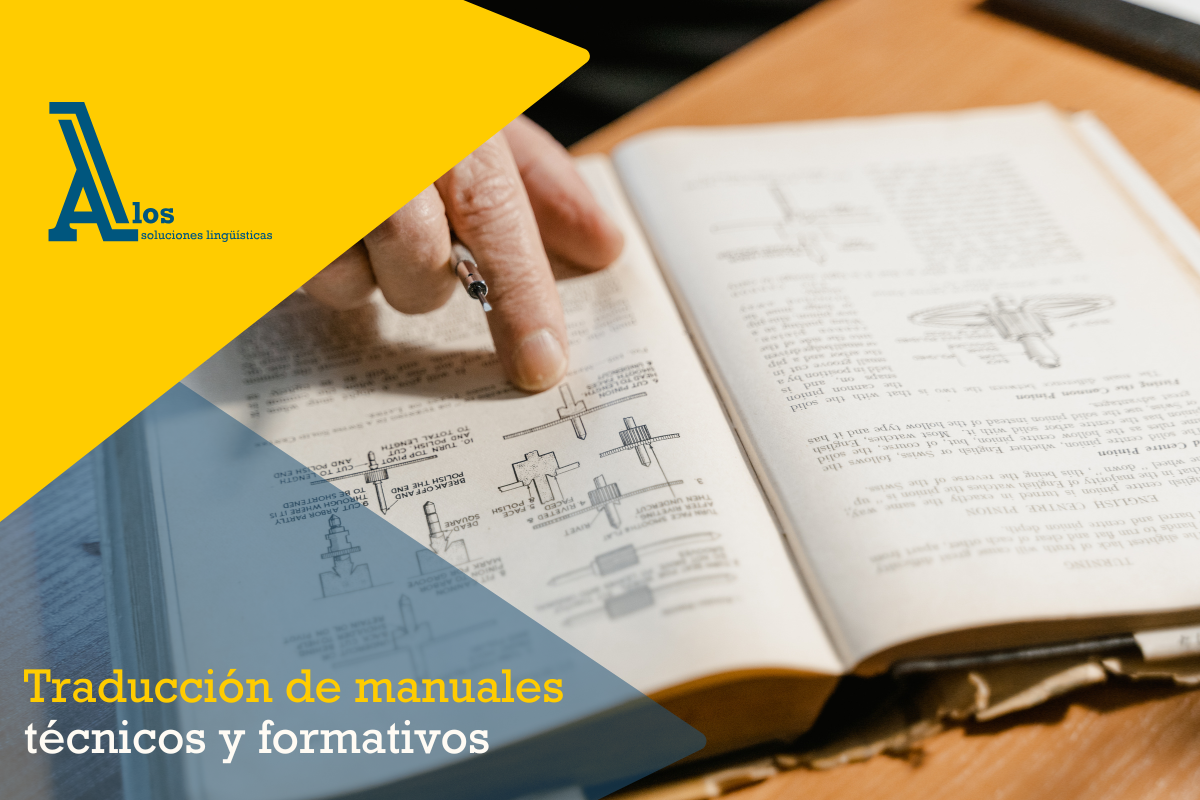
What would a mistake caused by a misread instruction cost your company? Imagine an operator misinterpreting a critical instruction. Or a safety protocol losing precision as it moves from one language to another. It may sound far-fetched, but it happens more often than we think. In a technical or industrial setting, a single ambiguous word can cost millions or, worse still, human lives.
Technical and training manuals are not just any document. They are the foundation on which the safe and efficient running of many operations rests: from fitting a part on an assembly line to handling chemicals or diagnosing a medical device. Their translation must therefore be approached with the same rigour used to design machinery or define a protocol.
One of the most striking cases was the accident involving the Mars Climate Orbiter spacecraft in 1999. NASA lost the craft because of a confusion between measurement systems: one team used imperial units (pounds) and another the metric system (newtons). The result? The probe disintegrated as it entered the Martian atmosphere. It was not a linguistic error as such, but it was a failure of technical interpretation, and one that cost 125 million dollars.
Extreme as it is, the example reveals an inescapable truth: in technical environments, precision is not a virtue, it is an obligation. And when information crosses language borders, translation becomes a key link in making sure everything works as it should.
Why technical and training manuals must be translated correctly
Translating a technical or training manual is neither a superficial nor a purely linguistic task. It means transferring critical information that defines how a machine is used, how a product is handled or how a procedure is carried out. The smallest error in translating a warning, a unit of measurement or an operating instruction can lead to workplace accidents, technical failures or production stoppages.
In many regulated industries, moreover, properly translated documentation is a legal requirement. International standards such as ISO, the FDA or CE marking require safety, operating and maintenance manuals to be available in the language of the country where the product is sold. Failing to comply can mean anything from financial penalties to a product recall.
Accurate translation also improves operational efficiency. When staff clearly understand the instructions from day one, errors drop, training is faster and overall productivity improves. In that sense, investing in quality technical translation is not a cost but a strategy for optimising resources and minimising risk.
Operational safety: translation can save lives
In industrial, medical or technology environments, safety depends largely on the correct reading of technical instructions. A poorly translated manual can mislead an operator, technician or engineer into carrying out an inappropriate or dangerous procedure. Where high-voltage equipment, heavy machinery or chemicals are involved, a misunderstanding is not a simple slip: it can have serious, even fatal consequences.
There are many documented cases in which translation errors contributed directly to accidents. From valves opened incorrectly to emergency protocols carried out wrongly, the origin of the failure often lies in a badly translated document. Instructions must be clear, consistent and perfectly understandable in the end user’s language. That cannot be guaranteed by machine translation or by a translator with no knowledge of the technical sector concerned.
This is why companies that put safety first invest in professional translations validated by experts. That protects staff and assets and also demonstrates an ethical and legal commitment to occupational risk prevention. Translating a manual correctly may not look heroic, but in practice it can be the difference between a safe workplace and a tragedy waiting to happen.
What should an effective technical translation include?
Translating a technical or training manual effectively goes well beyond swapping words between languages. It calls for specialist knowledge of the technical field, a command of the target language and a meticulous focus on accuracy, consistency and usability. An effective technical translation must convey exactly the same functional and operational information as the original document, with no room for ambiguity.
These documents also tend to contain a great deal of specific terminology, diagrams, step-by-step instructions and structured formats (tables, lists, symbols, warnings). Any error or alteration to these elements can change the meaning or the operation of the procedure. The process must therefore include review stages, quality control and, in the most critical cases, validation by industry experts.
The table below sets out the key elements that every professional technical translation should include to guarantee an effective, safe result:
| Element | Description |
|---|---|
| Specialist terminology | Correct, consistent use of the technical terms of the sector. |
| Terminological consistency | Uniform use of words and expressions throughout the document. |
| Cultural and regulatory adaptation | Adjustment to local regulations, units of measurement and regional technical language. |
| Faithful format and layout | Respect for the original visual structure: diagrams, tables, symbols, iconography. |
| Linguistic quality control | Detailed review by a second linguist or technical reviewer. |
| Technical validation | Final review by an expert in the specific field (engineering, medicine, etc.). |
| Use of CAT tools | Computer-assisted translation software to ensure consistency and save costs on future versions. |
As you can see, translating technical manuals correctly is a complex process that has to be handled with precision and professionalism. It is not just about translating well: it is about translating in a way that is functional, safe and aligned with each organisation’s operational and legal objectives.
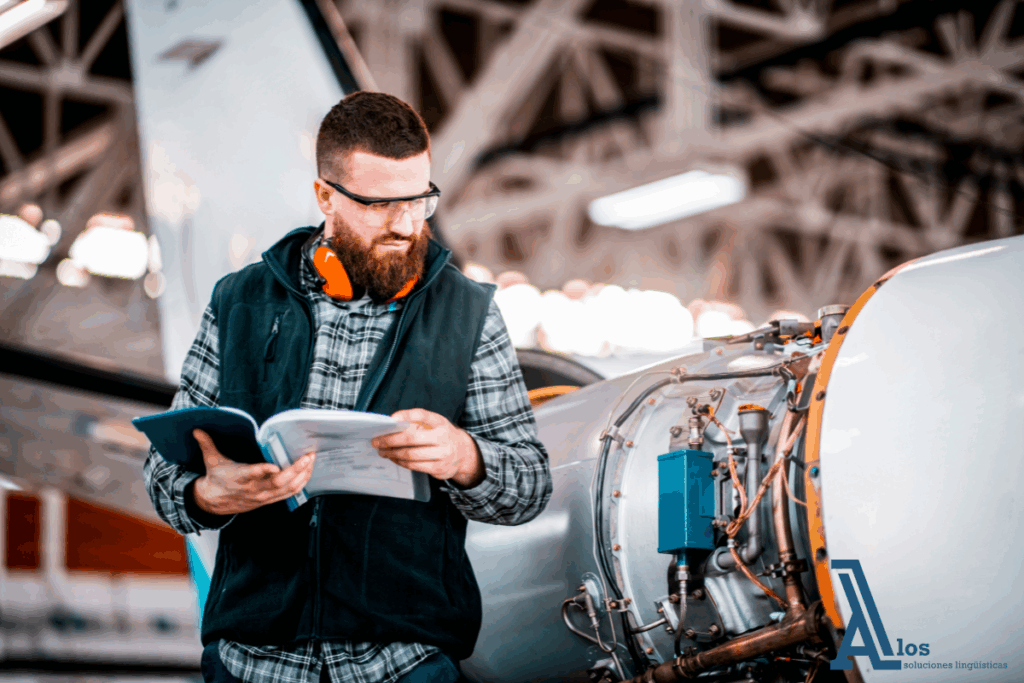
Multilingual training: the key to productivity
In increasingly diverse, global workplaces, delivering technical and operational training in several languages has become an essential competitive advantage. It is not enough for employees to receive instructions: they must understand them completely. This matters especially in sectors where a misreading can cause errors, accidents or rework. Multilingual training ensures that every worker, whatever their mother tongue, receives the same level of knowledge and preparation.
What is more, when training is properly translated and culturally adapted, learning time falls, information retention improves and staff integration is strengthened. That translates directly into greater operational efficiency, lower turnover and a safer, more collaborative working environment.
Key benefits of multilingual training
- Fewer errors in operational processes.
- Shorter onboarding time for new employees.
- Better retention of technical knowledge.
- Higher productivity and quality of work.
- Stricter compliance with safety regulations.
- Inclusion and motivation of international staff.
- Better communication between multicultural teams.
How to choose a good technical translation provider
Choosing the right provider to translate your technical manuals is no small decision: it is a strategic investment that directly affects your company’s safety, efficiency and professional image. Not every translator is equipped to handle highly specialised texts where accuracy is critical and errors cannot be allowed. This section sets out the essential criteria for selecting a genuinely reliable, competent technical translation service.
- Specialisation: Make sure they have experience in your sector (medical, industrial, legal, etc.).
- References and case studies: Have they worked with companies like yours?
- Quality control: Do they use technical reviewers? Do they offer expert validation?
- Computer-assisted translation (CAT tools): These ensure consistency and cut turnaround times.
- Certifications: ISO 17100 for translation services, for example.
A basic technical glossary for safe translations
Below is a mini glossary of terms that appear frequently in technical and training manuals and that often cause errors when translated without specific knowledge. It can help you spot correct translations and understand how much technical context matters.
| Term in Spanish | English translation | Description / technical note |
|---|---|---|
| Presión máxima | Maximum pressure | Refers to the safe operating limit of a system or piece of equipment. |
| Liberar presión | Release pressure | Easily confused with “reduce pressure”, which does not imply full release. A common error. |
| A prueba de fallos | Fail-safe | A system designed to remain safe in the event of an error or technical failure. |
| Parada de emergencia | Emergency stop | A button or protocol that immediately halts equipment for safety reasons. |
| Manual de mantenimiento | Maintenance manual | A document setting out inspections, cleaning, adjustments and replacements. |
| Bloqueo / Etiquetado | Lockout / Tagout (LOTO) | Safety procedure for isolating energy sources before technical work is carried out. |
| Riesgo eléctrico | Electrical hazard | Marks areas or tasks where electric shock or short circuits are possible. |
| Ciclo de operación | Operating cycle | The complete running sequence of a machine or system. |
| Desmontar | Disassemble | To separate the components of a piece of equipment; not to be confused with “take apart” in technical contexts. |
| Equipo de protección personal (EPP) | Personal protective equipment (PPE) | Items such as helmets, gloves, goggles or harnesses used to prevent workplace risks. |
Translation that protects and empowers: your best investment
In short, translating technical and training manuals correctly is not only a matter of communication: it is a strategy for safety, efficiency and compliance. Companies all over the world have learned, sometimes the hard way, that a small error can have a very large impact.
See also our related articles:
- Subsidised language training. Boost your company’s competitiveness
- Language training for specific purposes: a success among professionals and companies in 2025
- Common mistakes in managing subsidised language training and how to avoid them
- The costliest translation errors in history and how to avoid them in your company
Investing in professional translation really means investing in the health of your operations and the safety of your employees. Are you ready to translate without risk?
Frequently asked questions (FAQ)
Because these tools understand neither the context nor the specialist terminology. An error in an instruction or a warning can cause operational failures or safety risks.
Yes. A good technical translator not only has a command of the language but understands how the sector works, its logic and its specific vocabulary (engineering, medicine, electronics and so on).
We recommend reviewing them at least once a year, or whenever the original content is updated, regulations change or new products are launched.
Yes. A professional provider should offer full localisation of the document, including visual elements, symbols, captions and formats.
English, German, French, Portuguese and Chinese tend to be the most requested, although it depends on each company’s target market. It is important to choose a translator who is a native speaker of the target language.
Yes. Many companies opt for an additional internal review. A professional provider should be willing to incorporate the client’s comments and specific technical adjustments.