





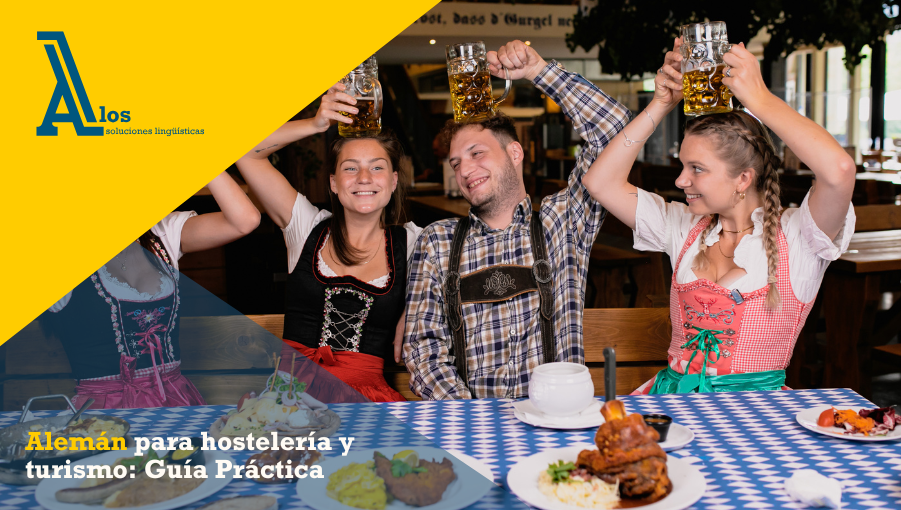
Did you know that speaking German could multiply your job opportunities in the tourism sector? Every year, millions of German speakers travel the world in search of new cultural experiences, unforgettable landscapes and, of course, quality service. Germany, together with Austria and part of Switzerland, represents a tourist market of more than 130 million trips abroad a year. In Spain, for example, German tourists are consistently among the top visitors both in numbers and in average spend per stay.
Beyond the figures, though, there is one aspect that many hospitality and tourism professionals overlook: language. English may still be the sector’s lingua franca, but a command of German can make the difference between correct service and an unforgettable experience. Speaking the customer’s language builds trust, closeness and a far greater willingness to come back and recommend you.
German is also particularly valued professionally. Whether on a hotel reception desk, in a restaurant, at a travel agency or on guided tours, knowing the key phrases in German not only improves service but also increases your chances of finding work and moving up. This article is a practical, motivating guide to help you discover the power of German in hospitality and tourism.
Why learn German in the tourism sector?
Learning German is not just a linguistic decision, it is a commercial strategy. German-speaking tourists are known for valuing good treatment, organisation and clear communication. These guests appreciate being served in their own language, something that does not always happen in destinations where English or French dominate as a second language.
In practice, a command of German translates into:
- Higher customer satisfaction.
- A better reputation for your establishment.
- Differentiation from the competition.
- Job opportunities in companies geared to the German market.
- A better chance of tips and positive recommendations.
Essential vocabulary for each area
German for hospitality and tourism can be divided into different areas, depending on the type of interaction. Below is a table of basic, practical expressions for various situations:
| AREA | PHRASES IN GERMAN | TRANSLATION |
|---|---|---|
| Hotel reception | “Willkommen im Hotel!” | Welcome to the hotel! |
| Kann ich Ihnen helfen? | Can I help you? | |
| “Haben Sie eine Reservierung?” | Do you have a reservation? | |
| Ich brauche Ihren Reisepass, bitte | I need your passport, please | |
| “Ihr Zimmer ist im zweiten Stock.” | Your room is on the second floor. | |
| Ihr Zimmer ist fertig | Your room is ready | |
| Genießen Sie Ihren Aufenthalt | Enjoy your stay | |
| Food and drink | “Möchten Sie die Speisekarte?” | Would you like the menu? |
| Haben Sie irgendwelche Allergien? | Do you have any allergies? | |
| “Was möchten Sie trinken?” | What would you like to drink? | |
| “Guten Appetit!” | Enjoy your meal! | |
| Möchten Sie noch etwas? | Would you like anything else? | |
| Das Restaurant ist bis 22:00 Uhr geöffnet | The restaurant is open until 22:00. | |
| Tourist information | “Wie kann ich Ihnen helfen?” | How can I help you? |
| “Die Stadtführung beginnt um zehn Uhr.” | The guided tour starts at ten o’clock. | |
| “Hier ist ein Stadtplan.” | Here is a map of the city. |
| German | English |
|---|---|
| Willkommen | Welcome |
| Guten Morgen | Good morning |
| Guten Tag | Good afternoon |
| Guten Abend | Good evening |
Learning strategies for busy professionals
Time is a limited resource, especially in the service industry. Here are some practical, efficient ways to fit German into your routine:
- Daily micro-learning: Spend 10 minutes a day learning 3 new expressions. You can use apps such as Duolingo, Babbel or Anki.
- Label your surroundings: Put sticky notes on everyday objects at work with their German name (“Tisch” for table, “Glas” for glass).
- Role-play with colleagues: Practise real scenes (check-in, taking an order, etc.) in pairs or small groups.
- Passive listening: Listen to German podcasts or music while you do repetitive tasks.
- Sector-specific courses: There are dedicated “Deutsch für Tourismus” courses offered by institutions such as the Goethe-Institut.
Recommended resources to get started (and keep going)
To stop the learning becoming frustrating, here is a selection of specific resources:
- Mobile apps:
- Duolingo German: Ideal for beginners with little time.
- Anki: Spaced repetition for memorising vocabulary.
- Websites and platforms:
- Goethe-Institut: Official courses, free and paid.
- DW Learn German: Free material by level and topic.
- Books:
- “Alemán para hostelería y turismo” by Edelsa.
- “Deutsch im Hotel” by Klett Verlag.
- YouTube and podcasts:
- Learn German with Jenny (YouTube): Themed videos with practical examples.
- Slow German (podcast): Listening practice with cultural and tourism topics.
German, your best ally in hospitality and tourism
Mastering German in hospitality and tourism makes you not only a more capable professional but a cultural ambassador. By speaking the visitor’s language you convey interest, respect and professionalism. It is a clear sign that your service goes beyond the functional: it aims at excellence.
And remember: you do not need to be an expert or hold a C1. With just a repertoire of key phrases, decent pronunciation and a smile, you can transform the guest’s experience and enrich your own. Every “Guten Tag” you say can be the start of a valuable connection.
So do not hesitate: invest in German. Because in tourism, every language you speak is another door opening onto the world.
See also our related articles:
- The 10 hardest languages for Spanish speakers: challenges and benefits
- Subsidised language training. Boost your company’s competitiveness
- What the STAR technique is and how to use it to shine in job interviews
Frequently asked questions (FAQ)
Learning German for tourism improves direct communication with German-speaking visitors, increases customer satisfaction and opens up more job opportunities.
Although it has a reputation for being difficult, basic tourism German is easy to pick up with steady practice and specialised resources.
The key ones cover greetings, bookings, customer service, requests for information and the everyday situations that come up in hotels and restaurants.
Platforms such as Deutsche Welle, Busuu and Babbel offer specialised courses that make learning practical and effective.
Yes. Studies show that serving visitors in their mother tongue increases their satisfaction and loyalty by as much as 30%.
With regular practice and the right materials, you can acquire useful basic skills in around three months.