





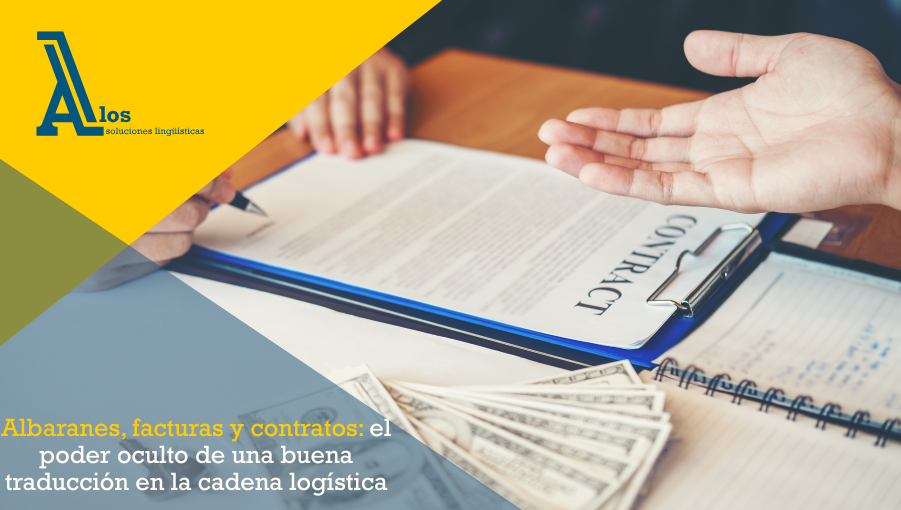
In international trade, professional translation in logistics matters as much as accuracy in the paperwork itself: it is not optional, it is strategic. One emblematic case was Merrill Lynch, one of the world’s leading investment banks, which lost 500 million dollars in a legal dispute with a South Korean company. The cause? A badly translated clause in a contract that allowed the other party to terminate the agreement under conditions that had not been foreseen. The error had consequences for both the balance sheet and the bank’s reputation. (Source)
Errors of this kind show how fundamental professional translation is in logistics, a practice that goes far beyond a command of languages: it calls for technical, legal and operational knowledge applied to the sector. According to the European Parliament, language barriers remain one of the main obstacles to the internationalisation of small and medium-sized companies.
Bodies such as the World Customs Organization also warn that language errors in documents such as delivery notes or invoices can lead to an entire consignment being rejected at the border. Professional translation in logistics is an investment that protects your company’s global operations. The European Parliament notes that language barriers limit the expansion of smaller companies into international markets, and the World Customs Organization has warned that unclear documentation can mean penalties and goods being held at the border. The lesson is clear: without professional translation, documentary errors are expensive.
1. Legal precision in international contracts
Logistics contracts contain complex legal terms that vary from one jurisdiction to another. Translating a clause incorrectly can change the terms of the agreement completely.
| Original term (English) | Mistaken translation | Correct translation |
|---|---|---|
| Force majeure | Violent force | Act of God / force majeure |
| Indemnity clause | Payment clause | Indemnity clause |
| Limitation of liability | Warranty limit | Limitation of liability |
A misread clause can lead to long disputes, cost overruns or even the collapse of a commercial agreement.
2. Compliance with customs rules and local regulations
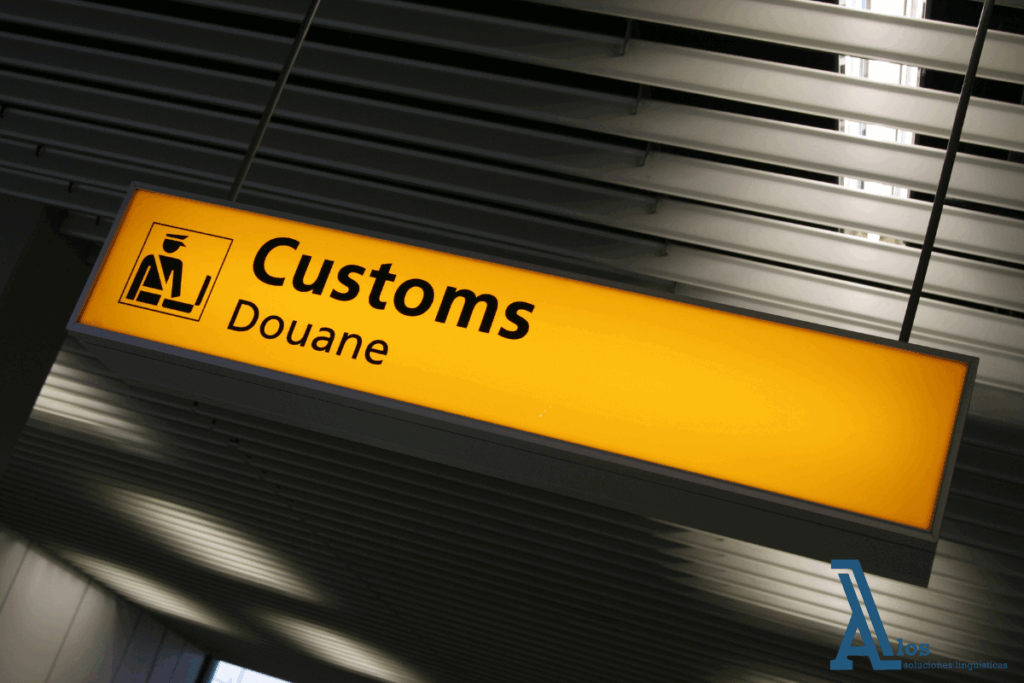
Every country has its own documentary requirements and language formats. One word out of place can lead to a customs hold, a special inspection or a direct penalty.
| Documentary error | Consequence at the border |
| Product description mistranslated | Goods held |
| Invoice with inconsistent values | Administrative fine |
| Missing translated certificate | Shipment returned |
A translator who specialises in international logistics knows these risks and how to mitigate them.
3. Reducing human error and inefficient automation
Tools such as Google Translate can be useful for general texts, but not for legal or technical documents.
| Feature | Machine translation | Professional translation |
| Accuracy with technical terms | Low | High |
| Human review | No | Yes |
| Legal and cultural adaptation | None | Detailed |
| Risk of costly errors | High | Low |
4. Better communication between international parties
Accurate document translation ensures that everyone understands what they have to do, when and how. That avoids unnecessary calls, misinterpretations and delays.
Benefits:
- Fewer queries
- Clearer orders
- Greater customer satisfaction
5. Alignment with international standards (ISO, BASC)
Certified companies must present accurate multilingual documentation. A faulty translation can put certification at risk, affect audits or generate non-conformities.
Types of document that require professional translation
| Document | Does it require professional translation? |
| Sales contracts | Yes |
| Commercial invoices | Yes |
| Delivery notes / packing lists | Yes |
| Certificates of origin | Yes |
| Transport documents | Yes |
| Letters of credit | Yes |
| Technical and operating manuals | Yes |
Translation as a preventive tool
A clear translation prevents conflict. In agreements where the parties do not share a language, a precisely translated document can avoid the misreadings that lead to contractual disputes.
Translation and transport insurance
The terms of a policy must be translated correctly. Terms such as “general average” or “marine peril” need exact interpretation for the cover to apply properly.
Languages and internal training
Translation also affects internal communication: operating, safety, training and procedure manuals must be adapted for all staff.
Integration with technology: ERP and TMS
Logistics systems need translated interfaces and reports so that users in different regions work in the same way.
Multilingualism as a competitive advantage
A good translation builds trust with international partners. In markets such as China or the Middle East, linguistic precision signals professionalism.
New demands from global e-commerce
E-commerce has multiplied the volume of international transactions and created new language needs. When a company sells on Amazon, Alibaba or its own online shop, the documents that accompany the shipment (invoice, delivery note, returns conditions) must be understandable for the end customer and valid for customs. A badly translated label can mean that the goods are refused by the buyer or held for inspection. Returns caused by misunderstandings in the paperwork are also a growing drain on the profitability of e-commerce operations. Having professional translators who understand the terminology and documentary flows of digital trade is a key differentiator for international retailers.
Translation in logistics tender documents
Companies bidding in international tenders for logistics services (multimodal transport, warehousing or customs) have to submit documented proposals in several languages. These documents contain technical terms, certifications, guarantees and contractual commitments. An incorrect translation can lead to outright exclusion from the process or to misunderstandings in the performance of the awarded contract. Working with translators who are experts in technical proposals and contractual conditions therefore significantly increases the chances of success in international tenders, especially in sectors such as energy, construction and public transport.
Emerging languages and new trade routes
The map of international trade is changing. New logistics corridors such as the Digital Silk Road and the alliances between Latin America and South-East Asia are driving demand for less traditional languages such as Vietnamese, Thai, Russian and Korean. Companies that want to position themselves strategically in these markets need to plan ahead and provide professionally translated documentation in those languages. Having translations in emerging languages can open doors in markets with less competition and high growth rates.
The importance of cultural localisation in translation
Beyond literal translation, cultural localisation means adapting units of measurement, date formats, idiomatic expressions and even legal references to the target culture. In logistics, a document that says “50 lb box” may be misunderstood if the destination country works in kilograms. A date in MM/DD/YYYY format can be read as DD/MM/YYYY, seriously disrupting the delivery schedule. Professional localisation removes these risks and ensures the document is understood exactly as intended.
Translation as part of the documentary quality system
Leading logistics companies no longer see translation as an isolated task, but as part of a quality document management system. That means building translation into workflows and using translation memories, terminology databases and internal procedures that guarantee linguistic consistency across every document. This approach also makes internal audits, process validation and continuous improvement in communication with global clients and partners much easier.
International logistics depends as much on documents as on vehicles. If the paperwork is wrong or ambiguous, everything stops. Professional translation is not an added cost, it is an investment that has a direct effect on:
- Reduced legal risk
- Regulatory compliance
- Better reputation
- Faster operations
- Loyalty among international clients
- Access to new markets
- Adaptation to sustainable trends
- Success in international tenders
- Competitive positioning in emerging languages
If your company needs to guarantee accuracy in contracts, invoices or any logistics document, a team of professional translators is not an option but a necessity. At Alos Soluciones Lingüísticas, we offer specialist technical, legal and commercial translation services adapted to the logistics sector. Our team combines linguistic knowledge with real experience in international trade to help you avoid costly errors and ensure your documentation meets the highest standards. Do not leave something as critical as your company’s documentary communication in inexpert hands. Trust professionals. Trust Alos.
Frequently asked questions (FAQ)
No. Automatic tools do not recognise technical terms or legal nuances. It can be very risky.
English, French, German, Chinese, Portuguese and Arabic, depending on the destination.
Yes. At Alos Soluciones Lingüísticas we offer both services with a logistics and technical focus.
All those that have legal value or must be presented to customs or to international clients.
Yes. Professional services include review, traceability and technical consistency.