





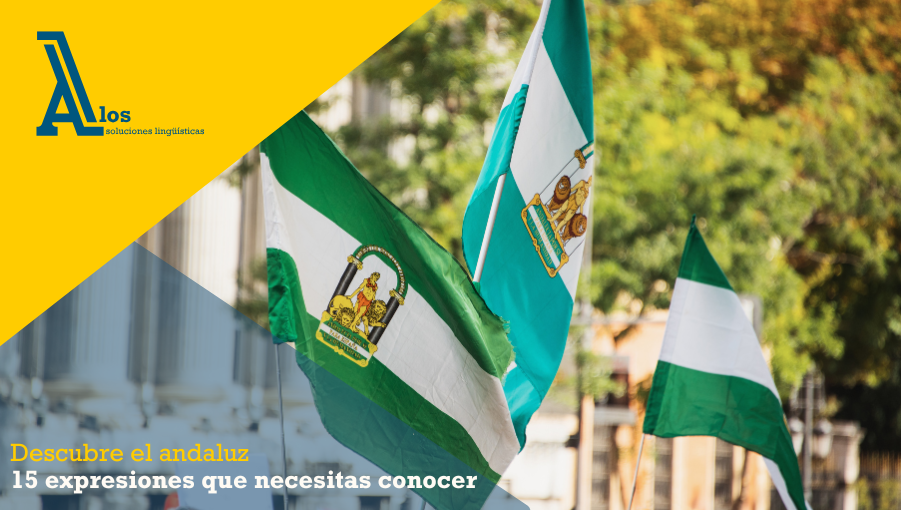
Think you know Spanish? Wait until you set foot in Andalusia. If you are planning a trip to the south of Spain, immersing yourself in Andalusian culture is a must. Beyond its rich history and stunning landscapes, the way people speak in Andalusia offers a unique window onto the region’s identity. Knowing a few local expressions will not only enrich your visit, it will also let you connect far more deeply with the people who live there. Here are some of the Andalusian expressions you need to know.
As well as being one of the most visited regions in Spain, Andalusia has a linguistic character as vibrant as its people. Andalusian speech is full of unique turns of phrase, affectionate diminutives and a musicality that turns any conversation into a small work of art. It is not just about understanding what people say, but about catching the soul behind every word. So if you want to feel part of the south, starting with the way it speaks is the best first step.
Andalusian: a linguistic melody with a history
The Andalusian dialect is one of the most distinctive varieties of peninsular Spanish. Its origins go back to the late Middle Ages, when the Christian reconquest brought Castilian to the south of the peninsula. It mixed there with local languages and Arabic influences, giving rise to a unique way of speaking that took shape between the sixteenth and seventeenth centuries..
Over the centuries, Andalusian has evolved and taken on phonetic features such as seseo, ceceo and the aspiration of the final “s”. These traits not only set it apart from other varieties of Spanish, they also influenced the Spanish spoken in Latin America, thanks to Andalusian emigration during the colonial period.
Today Andalusian is celebrated for its expressive richness and musicality. It has sometimes been the target of stereotypes, but it is increasingly recognised and valued as an integral part of Spain’s cultural heritage.
Public figures who speak Andalusian without apology
Speaking Andalusian is not only a linguistic matter, it is also a cultural and sometimes even a political act. For years, many people felt pressure to “soften” their accent to sound more serious, more “neutral” or more acceptable. Yet more and more artists, broadcasters and public figures have decided to break with that stigma and show themselves exactly as they are: proud of their land and of the way they speak. Here are a few of them:
- Dani Rovira: this comedian and actor from Málaga became known nationally with his way of speaking and has never given it up, not even in more formal projects. His accent is part of his personal brand.
- Antonio Banderas: the actor from Málaga has triumphed in Hollywood, but he returns to his native accent whenever he can. In interviews he says that Andalusian gives character to the way he communicates and he is happy to show it with pride.
- Juan y Medio: the Andalusian television presenter par excellence has spoken Andalusian without apology on public television for decades. His naturalness has been key to normalising the dialect in prime-time spaces.
- María Peláe: the singer-songwriter from Málaga not only sings in Andalusian, she also uses her accent in interviews and on social media, openly defending the richness of Andalusian speech. She has said on several occasions: “I am not going to change the way I speak to sound more serious. Andalusian is professional too.”
15 Andalusian expressions you should know
| Expression | Phonetic transcription | Meaning |
|---|---|---|
| ¡Fite! | /ˈfi.te/ | Look at that! An expression of surprise or attention |
| Chuminá | /ʧu.miˈna/ | Nonsense, something of no importance |
| A jierro | /a ˈxje.ro/ | With great effort or determination |
| No ni ná | /no ni ˈna/ | Of course! An emphatic yes |
| Illo | /ˈi.ʊo/ | Lad. A way of calling out to someone |
| Está to flama | /esˈta to ˈfla.ma/ | It is great, really good |
| Apollardao | /a.po.ʊaɾˈðao/ | Dazed or absent-minded |
| Estar esmayao | /es.maˈja.o/ | To be absolutely starving |
| Jartible | /xaɾˈti.βle/ | A tiresome or pushy person |
| Aliquindoi | /a.li.kinˈdoi/ | To be on the alert. It comes from the English “look and do it” |
| Estar eslomao | /es.loˈmao/ | Worn out, exhausted |
| Revenío | /re.βeˈni.o/ | Food that is no longer fresh |
| Bulla | /ˈbu.ʊa/ | Hurry |
| Perita | /peˈɾi.ta/ | Great, lovely |
| Fullero | /fuˈʊe.ɾo/ | To be a cheat |
Celebrate linguistic diversity
Andalusia does not only have art, it has a voice. And that voice is like no other. Speaking Andalusian should be no cause for mockery or correction. Quite the opposite: it is a symbol of identity, creativity and cultural memory. Every seseo, every “illo”, every “ozú” tells a story.
In Spain we live alongside immense linguistic richness: Catalan, Galician, Basque, Asturleonese… and yes, Andalusian too, which may not be officially recognised as a language but deserves the same respect. Because there is no “incorrect” way of speaking when you speak authentically.
So whether you are Andalusian or simply learning how people speak there, speak it with pride. Spread its expressions, use them, value them. Because embracing linguistic diversity also means embracing who we are as a society.
“Andalusian is not speaking badly, it is speaking differently. It is a form of Spanish with enormous expressive richness that deserves respect and study.” – Juan Gutiérrez Cuadrado, philologist
Frequently asked questions (FAQs)
Andalusian is a dialectal variety of Spanish with its own accent, rhythm and expressions.
Yes. The accent of Seville is not the same as that of Cádiz, Granada or Almería. There are many varieties.
Because it is part of the cultural heritage and linguistic identity of millions of people. It deserves to be valued like any other form of expression.
Not at all. Andalusian is a legitimate form of Spanish. More and more professionals and public figures use it with pride in the media, in business and in academia.
A very important one. Many features of Latin American Spanish (such as seseo or the aspiration of the “s”) come from the influence of the Andalusian settlers who emigrated to the Americas from the sixteenth century onwards.