





Language is one of the most complex and diverse expressions of human culture. While languages such as English, Spanish or Mandarin are spoken by hundreds of millions of people, there are others whose features are so peculiar that they challenge our understanding of how human communication works.
Linguistic diversity and the world’s rarest languages
Linguistic diversity is one of humanity’s greatest cultural treasures. Of the roughly 7,000 languages spoken on the planet today, many are in danger of disappearing, while others stand out for features so peculiar that they fascinate linguists and language lovers alike. According to figures from UNESCO, more than 40% of the world’s languages are at risk of vanishing, and with them a whole universe of knowledge, traditions and unique ways of perceiving reality.
A language’s singularity can show itself in many ways: from phonetic systems that are impossible for non-native speakers to grammatical structures that defy what we take to be universal in human language. According to a study published in the journal Science, geography, isolation and cultural history are decisive factors in the evolution of these extraordinary languages. A textbook example is the Silbo Gomero, a whistled language from the Canary Islands that was declared Intangible Cultural Heritage of Humanity by UNESCO in 2009 and can carry complex messages across valleys and mountains through whistles that imitate Spanish.
The languages we look at below represent genuine linguistic challenges, whether for their complex phonetics, their unconventional grammar or their unique writing systems. Often spoken by small communities, they reflect different world views and are irreplaceable windows onto alternative ways of categorising and understanding the world.
1. Pirahã: the language with no numbers or colours
Pirahã, spoken by fewer than 400 members of the tribe of the same name in the Brazilian Amazon, is considered by many linguists to be the strangest language in the world. It challenges several principles once thought to be universal in human language.
What makes Pirahã truly extraordinary is that:
- It has no terms for numbers or counting. Speakers use approximate terms such as “few” or “many”.
- It has no specific words for colours, using descriptions based on comparisons with natural elements instead.
- It has one of the smallest phonetic inventories in the world, with just 10 phonemes (8 consonants and 2 vowels).
- Its grammatical structure reportedly lacks recursion, a feature Noam Chomsky considered universal in all human languages.
The absence of these elements has sparked intense academic debate about the relationship between language, culture and cognition. Can Pirahã speakers conceive of precise numbers, or is their perception fundamentally different? The question is still being investigated by neurolinguists and cognitive anthropologists.
2. !Xóõ (Taa): the champion of clicks
!Xóõ (also known as Taa) is spoken by around 3,000 people in Botswana and Namibia. It belongs to the Khoisan family of languages and holds the record for the most complex phonetic system in the world according to the Guinness Book of Records.
Its most striking features are:
- It has the largest documented phonetic inventory, with 164 distinct consonant sounds and 44 vowels.
- It includes 83 different clicks, sounds produced by creating a partial vacuum in the mouth and then releasing it sharply.
- Transcribing these sounds with the IPA (International Phonetic Alphabet) is extremely complex and requires numerous diacritics and special symbols.
The clicks, written with symbols such as !, ǀ, ǁ, ǂ and ǃ, are practically impossible for adult non-native speakers to master. For Westerners, the !Xóõ click system is so complex that many linguists need years of practice simply to identify the different sounds correctly.
3. Sentinelese: the most isolated language on the planet
Spoken only on the small island of North Sentinel in the Indian Ocean, Sentinelese is arguably the most isolated language in the world. The tribe that speaks it, the Sentinelese, fiercely rejects any contact with the outside world and has even attacked people who try to approach the island.
Because of this extreme isolation:
- It is one of the few languages in the world of which not a single word or grammatical structure is known with certainty.
- Linguists have not been able to determine which language family it belongs to.
- It is a unique case study in how languages evolve in complete isolation.
The tragic incident of 2018, when an American missionary was killed trying to contact the tribe, underlines the total isolation in which they live and the importance of respecting their decision to remain without contact with the outside world.
4. Silbo Gomero: the whistled language
Silbo Gomero is not technically an independent language but a whistled adaptation of the Spanish spoken on La Gomera in the Canary Islands. Its extraordinary nature nevertheless earns it a place on this list.
This communication system, recognised by UNESCO as Intangible Cultural Heritage of Humanity, has unique features:
- It turns the vowels and consonants of Spanish into whistles that can be heard up to 5 km away across ravines and valleys.
- It reduces the phonemes of Spanish to 2 whistled vowels and 4 whistled consonants, distinguished by pitch and continuity.
- It is one of the few whistled languages in the world still taught in local schools as a compulsory subject.
According to a study published in the journal PLOS ONE, the brains of fluent Silbo Gomero speakers process these whistles in the same areas dedicated to spoken language, which confirms its status as a true linguistic system.
5. Khoisan: the oldest language family
More than a specific language, Khoisan is a language family that includes roughly 30 languages spoken in southern Africa, among them the !Xóõ mentioned above. Genetic studies suggest that speakers of Khoisan languages descend from one of the oldest human populations on the planet.
The distinctive features of these languages include:
- Extensive use of clicks as consonants, a trait that is practically unique in the world.
- Complex tonal systems that can distinguish up to 4 different tones.
- A grammatical structure that frequently uses SOV (subject-object-verb) order.
Linguists estimate that the Khoisan languages diverged more than 25,000 years ago, making them the oldest linguistic group in the world whose languages are still spoken.
6. Rotokas: the smallest alphabet in the world
Rotokas, spoken by some 4,000 people on the island of Bougainville (Papua New Guinea), has the smallest alphabet of any written language in the world according to the Guinness Book of Records.
Its most surprising features are:
- It uses only 12 letters (A, E, G, I, K, O, P, R, S, T, U, V) to represent its 11 phonemes.
- It distinguishes just 6 consonants, making it the language with the fewest consonants in the world.
- Despite its phonological simplicity, it has a complex grammatical system with numerous suffixes and markers.
This extreme phonetic simplification contrasts with the general tendency of Papuan languages, which usually have relatively complex phonological systems. Studies by the Papua New Guinea Institute of Linguistics suggest that this phonetic reduction may be due to historical processes specific to the island.
Interested in learning more about these languages, or do you need specialist translation services?
7. Archi: the language with the most verb forms
Archi is spoken by fewer than 1,000 people in a small mountainous region of Dagestan, Russia. It belongs to the Northeast Caucasian family and is known for its extraordinary morphological complexity.
The features that make Archi unique include:
- A verb system that can generate up to 1,502,839 distinct forms for a single verb, according to calculations by Prof. A. E. Kibrik, one of the leading experts on the language.
- A phonetic inventory that includes 26 uvular and pharyngeal consonants that are hard for non-natives to pronounce.
- An extraordinarily complex system of grammatical cases with more than 15 different cases.
Archi verb morphology encodes information about the subject, the direct object, the indirect object, grammatical gender, number, tense and aspect, all in a single word.
8. Chalcatongo Mixtec: the language with no word for “no”
Chalcatongo Mixtec, spoken by around 6,000 people in the state of Oaxaca, Mexico, belongs to the Otomanguean family and is one of the few languages in the world without a specific word for “no”.
Its most notable peculiarities are:
- The absence of a specific word for negation, which is expressed through complex grammatical constructions depending on the context.
- A tonal system with three distinct tones (high, mid and low) that can combine to form contour tones.
- Extensive use of noun classifiers that categorise nouns according to their physical properties.
The lack of a single word for “no” was documented by the linguist Kenneth L. Pike and has been studied by the National Institute of Indigenous Languages of Mexico, since it challenges the supposed universality of simple lexical negation.
9. Ubykh: the extinct language with the most consonants
Although officially extinct since 1992, when its last native speaker, Tevfik Esenç, died, Ubykh deserves a place on this list for its extraordinary consonant system. The language, native to the western Caucasus, was spoken mainly in Turkey after its speakers were expelled from their ancestral lands.
Ubykh had:
- A phonetic inventory with 84 distinct consonants, the largest documented in any non-Khoisan language.
- Barely 2 or 3 vowels, depending on the linguistic analysis.
- A complex verbal morphology with dozens of prefixes and suffixes.
Thanks to the work of the French linguist Georges Dumézil, who worked extensively with Esenç, there is substantial documentation of Ubykh, so this extraordinary linguistic system can still be studied.
10. Yupik: the language with kilometre-long words
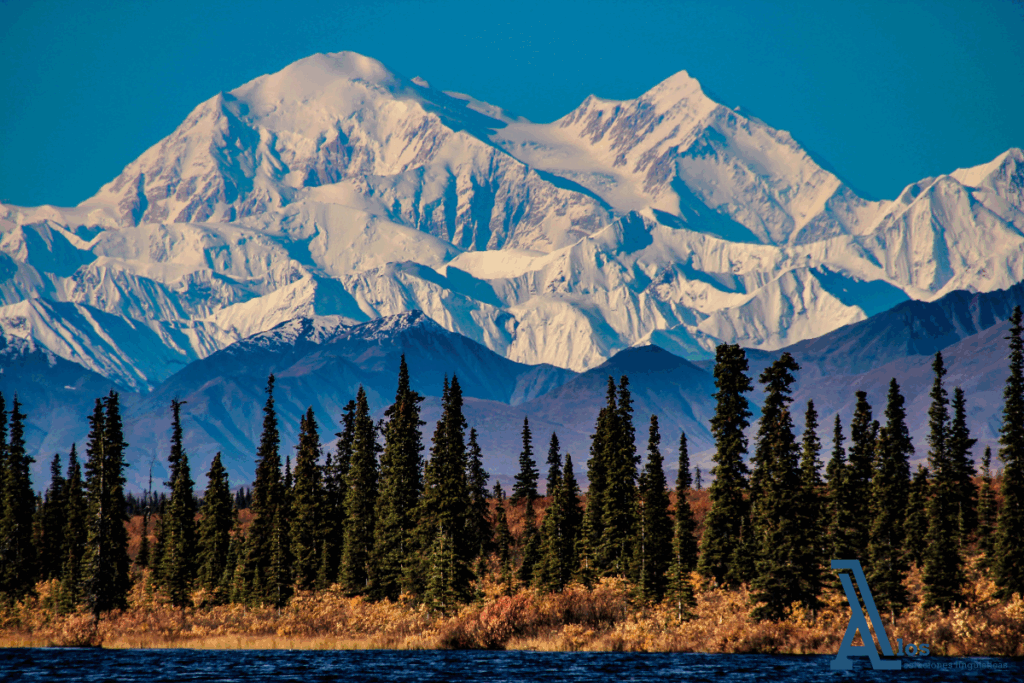
Yupik, spoken by around 10,000 people in Alaska and the far east of Siberia, belongs to the Eskimo-Aleut family and is known for its extraordinary ability to form extremely long, complex words.
Its most striking features include:
- An extreme system of agglutination that allows the formation of words that work as complete sentences.
- Specific terms for more than 20 different types of snow and ice, reflecting how important these distinctions are in an Arctic environment.
- A grammatical structure that makes extensive use of suffixes (more than 400) to express concepts that other languages need whole sentences for.
A famous example is “tuntussuqatarniksaitengqiggtuq”, which means “He had not yet said again that he was going to hunt reindeer” in Central Yupik. The word contains one root and multiple suffixes that modify its meaning. According to the Alaska Native Language Center, this ability to create complex words reflects a holistic view of the world.
11. Hopi: the language with no concept of time
Hopi, spoken by the tribe of the same name in Arizona (USA), is famous for its peculiar treatment of time. According to the controversial Sapir-Whorf hypothesis, developed by Benjamin Lee Whorf after studying this language, Hopi conceptualises time in a radically different way from Indo-European languages.
The most interesting features of Hopi include:
- The absence of terms referring to time as an absolute, uniform dimension.
- A verb system that marks not chronological time but the validity of statements (whether they are factual, expected, habitual and so on).
- The absence of words equating time with space, such as “a long time” or “a short period”.
Later research has qualified some of Whorf’s more extreme claims, but linguists at the Cognitive Linguistics Laboratory of the University of Arizona confirm that Hopi conceptualises time in a significantly different way from Western languages.
12. Nǁng: the language on the brink of extinction
Nǁng, formerly spoken in South Africa, is one of the most endangered languages in the world. It currently has fewer than 5 fluent speakers, all elderly, which places it in the “critically endangered” category under UNESCO’s classification.
This Khoisan language is characterised by:
- A complex system of clicks that includes the rare bilabial click, produced by smacking the lips.
- A tonal grammar that uses up to 4 different tones to distinguish meanings.
- A specialised lexicon for traditional life in the Kalahari Desert, with precise terms for plants, animals and survival techniques.
Efforts to document and preserve Nǁng are being led by the Centre for Endangered Languages at the University of Cape Town, working with the last speakers. This work is essentially a race against time to record one of the oldest and most extraordinary linguistic systems in the world before it disappears forever.
Rare languages: a legacy we must preserve
The extraordinary diversity of human languages is a reminder of our species’ creativity and adaptability. Each of these 12 languages represents a unique way of perceiving, categorising and expressing reality. From Pirahã, which challenges our notions of linguistic universals, to Nǁng, struggling to survive with barely a handful of speakers, these linguistic systems are genuine cultural treasures that deserve to be studied and preserved.
As the experts at the Institute of Evolutionary Linguisticspoint out, the loss of a language is not simply the disappearance of a communication system but the extinction of a whole conceptual universe, of unique forms of knowledge and of cultural connections built up over thousands of years. When a language dies, we irretrievably lose alternative perspectives on the human condition and on the world around us. If you would like to go deeper into the importance of linguistic preservation, we recommend our articles on:
❓ Frequently asked questions (FAQ)
A language may be considered rare for its grammatical complexity, its small number of speakers, its unique phonetic features or because it is a constructed language built for specific purposes.
Preserving these languages is crucial to maintaining the world’s cultural and linguistic diversity. Each language offers a unique perspective and holds valuable knowledge from the communities that speak it.
There are online resources, university courses and organisations devoted to the study and preservation of rare languages. You can also contact us for information about our specialist courses.