





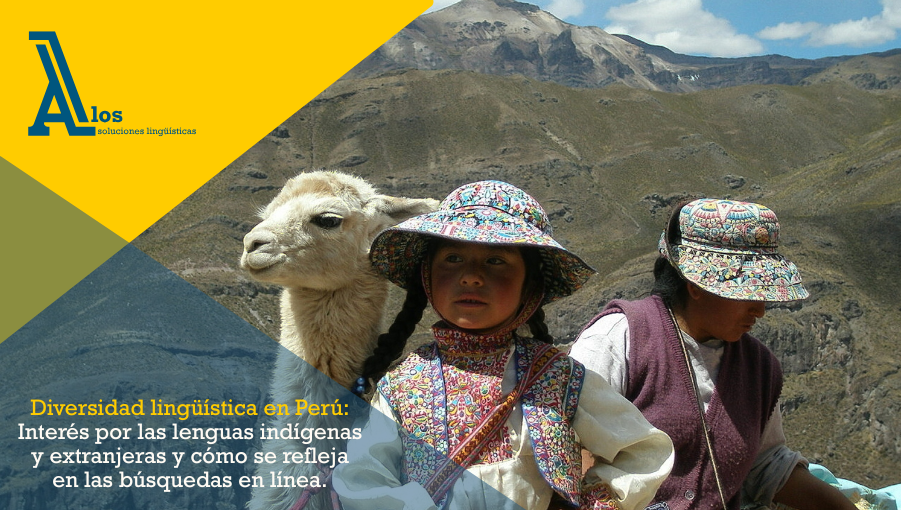
Peru has one of the richest and most complex linguistic landscapes in the world, and it is diverse not only geographically and culturally but also in language terms. According to figures from the Ministry of Culture, 48 indigenous languages are spoken in Peru, among them Quechua, Aymara and a range of Amazonian languages. This wealth makes the country a privileged place in which to study and reflect on how cultures interact and how they express themselves in speech.
What is striking is that, despite this diversity, many of these languages are endangered. Technology, however, has begun to play a key part in preserving them. Platforms such as Google, social media and learning apps have fuelled growing interest in indigenous languages. Searches for foreign languages such as English, Portuguese and French have risen too, reflecting a society that is increasingly connected to the wider world. That shift is a clear sign of how linguistic diversity in Peru is evolving.
On Google Trends (GT), for example, search volume for “aprender quechua” (learning Quechua) peaks around national holidays, while queries such as “cursos de inglés online” (online English courses) stay steady all year. The pattern reveals a dual interest: on the one hand the need to connect with the global world through foreign languages, on the other the wish to reconnect with one’s roots through indigenous languages.
Peru’s language landscape
Spanish is the most widely spoken language in the country, but it is not the only one recognised officially. The Political Constitution of Peru establishes that Quechua, Aymara and the other indigenous languages are also official in the areas where they predominate. Peru is therefore a multilingual state with a complex sociolinguistic reality that calls for inclusive policies.
The LOM (Lenguas Originarias del Mundo, the world’s indigenous languages) present on Peruvian territory belong to 19 language families. That complexity makes Peru one of the richest countries in Latin America in terms of linguistic diversity. The abbreviation PE (Peru) is also used in international records to identify this singularity.
In many regions of the country, particularly in Amazonia and the Andes, there are communities where indigenous languages are the main means of everyday communication. This is a cultural asset, but it is also a challenge for public services, which have to adapt to these linguistic realities.
Indigenous languages: history, use and revitalisation
Today, Quechua is the indigenous language with the largest number of speakers in Peru. Even so, it faces discrimination, a shortage of teaching materials and a linguistic drift towards Spanish. The same applies to Aymara and to Amazonian languages such as Asháninka, Shipibo-Konibo and Awajún.
The MINEDU (Peru’s Ministry of Education) has developed intercultural bilingual education programmes to preserve these languages. Some UCB (universities with bilingual chairs) are also promoting the formal study of Quechua and other languages.
As for internet searches, interest in learning Quechua is growing steadily, above all among university students. There has also been an upturn in topics such as “nombres en aimara” (Aymara names) or “palabras bonitas en shipibo” (beautiful words in Shipibo).
Some regional governments are running competitions, workshops and social media campaigns to encourage everyday use of indigenous languages. Communities are also producing bilingual audiovisual content and educational podcasts in their mother tongue, which strengthens the process of cultural revitalisation.
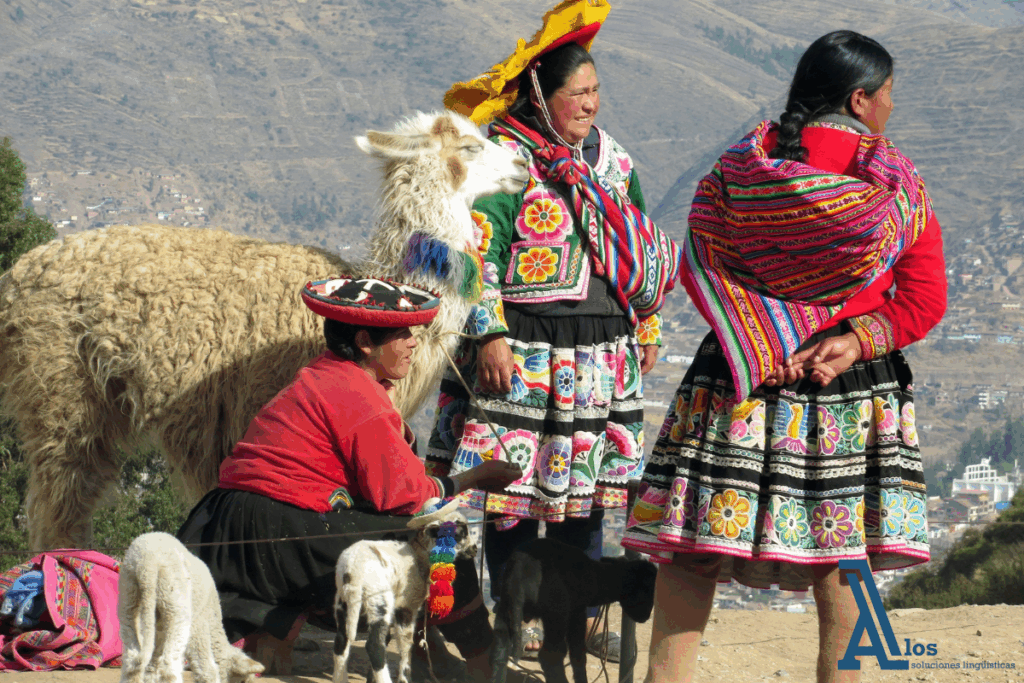
Foreign languages in Peru
Foreign languages have a strong presence too. ING (English) remains the foreign language most in demand in Peru, followed by PTG (Portuguese), especially in border regions such as Madre de Dios. French (FR) and Mandarin have also gained ground thanks to cultural exchanges and educational agreements.
Schools, universities and online platforms offer a wide range of courses. Indeed, the searches “aprender inglés desde cero” (learning English from scratch) and “cursos gratuitos de portugués” (free Portuguese courses) are among the most frequent.
This reflects a Peru that is looking outwards and recognises how important it is to speak other languages in order to improve job prospects and academic mobility.
In business, many companies ask for staff with a command of English for customer service and international management roles. Scholarship programmes such as Pronabec also offer incentives to candidates who have mastered a second language.
What does Google say? Search trend analysis
Tools such as GT (Google Trends) let us examine Peruvians’ digital interest in different languages. The click-through rate (CTR) of educational advertising related to Quechua, for instance, has grown by 25% over the past two years.
Comparing data from SEMrush and Ahrefs, searches for Quechua or Aymara show clear seasonality: they rise around national holidays or the Day of Indigenous Peoples. Foreign languages such as English and Portuguese, by contrast, show constant demand.
The regions most active in searches for indigenous languages are Cusco, Puno and Loreto. For foreign languages, Lima, Arequipa and Trujillo stand out.
Another interesting observation is that people searching for indigenous languages tend to be linked to activism, academia and education, whereas those searching for foreign languages are usually driven by economic, employment or migration motives.
“I carry Peru deep inside me because I was born there, grew up there, was educated there, and lived those experiences of childhood and youth that shaped my personality and forged my vocation, and because there I loved, hated, enjoyed, suffered and dreamed“
-Mario Vargas Llosa
The role of technology in linguistic diversity
Technology now plays an essential part in preserving and teaching languages. Mobile apps, machine translation and AI (artificial intelligence) resources allow people to learn from anywhere.
Thanks to advances in NLP (natural language processing), Quechua dictionaries can now be digitised and texts translated automatically. There are even projects digitising stories and legends in indigenous languages for children.
These developments open up new opportunities for communities to take ownership of technology and use it to revitalise their language and culture.
Platforms such as TikTok, YouTube and Spotify have also become spaces where native speakers share educational and cultural content in their indigenous languages, reaching a global audience and fostering linguistic pride.
Education, culture and language policy
Intercultural bilingual education is a policy that seeks to balance the learning of Spanish with the preservation of indigenous languages. In rural areas, teaching materials are produced in the local languages.
Cultural tourism has also generated growing interest in languages such as Quechua. International visitors are looking for authentic experiences, which has encouraged communities to recover their language as an asset. Non-profit organisations, together with local government, are likewise driving projects that promote everyday use of these languages in public life.
Nationally, there are proposals to introduce indigenous language courses in schools in large cities such as Lima and Arequipa, with the aim of building cultural empathy and broadening collective awareness of the country’s linguistic wealth.
In short, linguistic diversity in Peru is a living expression of its cultural heritage, its social challenges and its aspirations for the future. Online search trends show a society in transition, one that values both connection with the wider world through foreign languages and the recovery of its indigenous languages. Backing that diversity means backing a more inclusive, wiser country that is connected to its own identity.
Services from Alos Soluciones Lingüísticas
At Alos Soluciones Lingüísticaswe actively support the preservation and promotion of linguistic diversity. We offer specialist services for individuals, institutions and companies that want to communicate effectively, accurately and inclusively. Our services include:
- Technical, legal, academic and commercial translation in more than 20 international languages.
- Tailored language courses (online or in person) adapted to different levels and needs.
- Advice on intercultural education projects and the development of multilingual content.
Do get in touch to find out more about our services or to request a quotation. For more information, click here:
Frequently asked questions (FAQs)
Young people are central as agents of cultural revitalisation. Many lead digital initiatives, create content on social media and encourage their peers to learn indigenous languages.
Yes. Some Peruvian universities and programmes run by the Ministry of Culture and MINEDU offer specialist certification and training for translators and interpreters working in indigenous languages.
Cultural tourism encourages the use of Quechua and other languages, since visitors are looking for authentic experiences. That prompts communities to recover and teach their language as part of what they offer visitors.
Amazonian languages tend to have less documentation, fewer speakers and a smaller presence in education policy. Geographical isolation also makes them harder to preserve and spread.
Learning English, Portuguese or French can significantly widen job prospects, access to scholarships and the chance to start a business in sectors such as tourism, trade or technology.