





Argentina attracts more and more people looking for a change of life, whether for work, study or simply to enjoy its culture and unique landscapes. If you are considering the move, it is essential to understand visas for Argentina, as they are the legal gateway to living in the country. With a welcoming population and a rich cultural tradition, it is no surprise that international figures have chosen to make Argentina their new home.
The country also stands out for its geographical diversity, from the peaks of the Andes to the Atlantic beaches and the glaciers of Patagonia. That variety means quality of life can be tailored to different preferences, from urban living to constant contact with nature. For anyone ready to take the plunge, however, understanding the legal requirements and visas is essential to a successful move.
Argentina has a long tradition of immigration, reflected in its diverse and cosmopolitan society. The Argentine government has now simplified several immigration procedures and offers different types of visa so that foreign nationals can live in the country legally. Source: Migraciones Argentina).
Why live in Argentina? What makes the country an ideal destination
Argentina has become an increasingly appealing destination for foreign nationals seeking a better quality of life, new opportunities and an enriching cultural experience. Here are some of the key reasons to consider living there:
1. Cultural and artistic richness
Argentina is famous for its vibrant cultural scene, which includes tango, theatre, literature and film. Cities such as Buenos Aires are known as “the Paris of South America” thanks to their architecture, historic cafés and constant cultural events that enrich everyday life.
2. Natural and scenic diversity
From the mighty Iguazú Falls to the glaciers of Patagonia, Argentina offers an impressive range of natural landscapes. For anyone who loves the outdoors, the country is a paradise for hiking, skiing, fishing and adventure tourism.
3. Affordable cost of living
Although it depends on the city, the cost of living in Argentina is generally lower than in many European or North American capitals. That allows for a comfortable standard of living, with access to services, housing and leisure at reasonable prices.
4. The warmth and hospitality of its people
Argentinians are known for their friendliness and sense of community, which makes it easier for foreign nationals to integrate and make new friends. The social culture is open and passionate, and many people feel at home quickly.
5. Accessible education and healthcare
Argentina has a free, high-quality public education system and both public and private healthcare offering good medical care, key factors for families looking for stability and wellbeing.
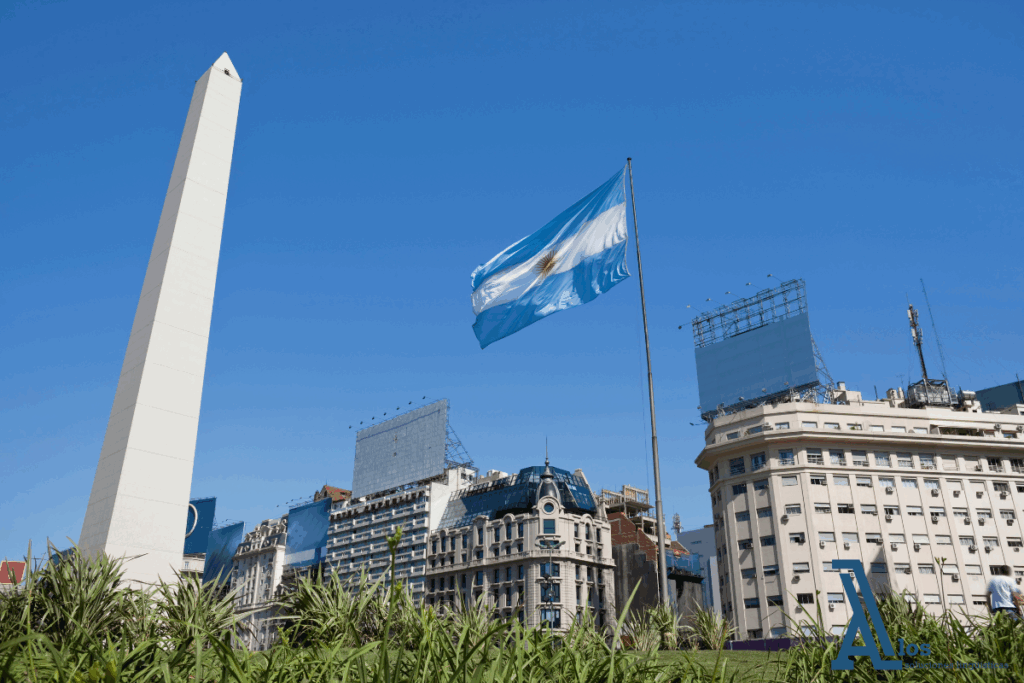
Types of visa for living in Argentina
When you decide to live in Argentina, choosing the right visa is key to making your stay legal and comfortable. Below we explain the main types available in detail:
1. Temporary residence visa
This is the most common visa for foreign nationals who want to live in Argentina for a limited period, generally one to two years, with the option to renew. It is granted for various reasons, such as work, study, family reunification or investment.
Main requirements:
- Valid passport.
- Evidence of the reason for the stay (employment contract, academic enrolment, proof of investment, etc.).
- Criminal record certificates from your country of origin and from Argentina.
- Proof of financial means or an employment contract.
- The application is made at Argentine consulates or directly at the immigration office (Migraciones).
This visa allows you to work and access basic services, and it can later serve as the basis for applying for permanent residence.
2. Work visa
For people who have a formal job offer in Argentina or want to carry out economic activities under Argentine employment rules. An employment contract approved by the Ministry of Labour is required.
Key requirements:
- A signed and registered employment contract.
- Personal documentation (passport, criminal record certificate).
- In some cases, qualifications or professional certificates showing you are trained for the post.
- Family members can be included so that you can live together.
This visa authorises you to work legally and to access the associated social benefits.
3. Student visa
For those coming to Argentina to study at universities, institutes or on specialist courses. It is generally granted for the duration of the academic programme.
Common requirements:
- Letter of acceptance or enrolment from the educational institution.
- Valid passport.
- Proof of financial means to support yourself during your stay.
- Medical insurance or health certificate.
The visa allows you to study and, in some cases, to work part-time in line with the rules in force.
4. Investor visa
Designed for foreign nationals planning to make a significant financial investment in Argentina, whether in businesses, property or productive projects.
Essential requirements:
- Documentation evidencing the investment (contracts, financial statements).
- Proof of funds.
- An investment plan and/or evidence of economic impact in the country.
This visa allows you to live and work within the scope of the investment activity and can open the door to permanent residence.
5. Permanent residence
After living in Argentina on temporary residence for at least two years, foreign nationals can apply for permanent residence.
Advantages:
- Allows you to live in the country indefinitely.
- Full access to employment, social services and political rights (except voting).
- Easier mobility within Mercosur countries.
It requires up-to-date documentation, proof of residence and a clean legal record.
Summary table of visa types for Argentina
| Type of visa | Duration | Main requirements | Main permissions | Renewal / permanent residence |
|---|---|---|---|---|
| Temporary residence | 1-2 years | Passport, evidence of purpose (work, study, investment), criminal record certificate, financial means | Live, work, study | Renewable; basis for permanent residence |
| Work | As per contract | Approved employment contract, passport, criminal record certificate | Work legally and reside | Renewable; route to permanent residence |
| Student | Duration of studies | Letter of acceptance, financial means, passport | Study, possible part-time work | Renewable according to the programme |
| Investor | As per project | Documents evidencing the investment and funds | Residence and business activity | Renewable; may lead to permanent residence |
| Permanent residence | Indefinite | Prior temporary residence, legal documents | Indefinite residence, work, services | Not applicable (permanent) |
5 key points for applying for a visa in Argentina
1. Identify the right type of visa for your situation
Before starting any procedure, it is essential to choose the visa that best fits the reason for your stay in Argentina. The main types are the temporary residence, work, student, investor and permanent residence visas. Each has different requirements and benefits, so knowing them will help you avoid mistakes and speed up the process.
2. Prepare your documents in advance and make sure they are legalised
Most visas require specific documents such as a valid passport, criminal record certificates from both your country of origin and Argentina, medical certificates and, in some cases, employment contracts or proof of academic enrolment. All these documents have to be apostilled or legalised and, if they are not in Spanish, translated by an official translator. This step is crucial to avoid refusals or delays.
3. Allow for the time and cost of the procedure
The application process can vary between consulates and immigration offices in Argentina, with timescales ranging from a few weeks to several months. Costs also differ depending on the type of visa, usually between 150 and 400 US dollars, not including possible additional expenses for legalisations and translations. Planning ahead will let you handle everything without setbacks.
4. Meet the specific requirements for each visa
Some visas have additional requirements you have to meet. The work visa, for example, requires an employment contract approved by the Ministry of Labour, while the student visa calls for an official letter from the educational institution. Make sure you check the specific requirements for your own case in detail.
5. Find out about including family members and renewal options
Many visas allow the applicant to include immediate family members in the application, making it easier to live together. It is also important to know the timescales and conditions for renewing a temporary visa, as well as the requirements for applying for permanent residence once the minimum period of stay has been completed. That will give you stability and continuity in your life in Argentina.
Documentation commonly required for a visa application in Argentina
| Document | Description | Notes |
|---|---|---|
| Valid passport | Official identity document | Must be valid for at least 6 months |
| Criminal record certificate | Police certificate from your country of origin and from Argentina | Must be apostilled and translated into Spanish where applicable |
| Medical certificate | Health report or medical certificate | A specific medical examination may be required |
| Proof of financial means | Evidence of solvency or an employment contract | Contract, bank statements, letters of sponsorship |
| Letter of acceptance or contract | Document justifying the reason for residence (work, study, investment) | Must be official and valid |
| Official translation | Certified translation of documents not written in Spanish | Compulsory for documents in another language |
Tips for everyday life in Argentina
Moving to a new country always means adapting to new customs, services and habits. If you are thinking of living in Argentina, these tips will make your transition simpler and more enjoyable:
1. Get to know the healthcare system
Argentina has a free public health system and a private one with a very good reputation. To use the public system you need to obtain your national identity document (DNI) or legal residence. Many people nevertheless take out private medical insurance for greater convenience and access to specialist clinics.
2. Use public transport and mobility apps
The main cities, especially Buenos Aires, have efficient public transport systems, including colectivos (buses), subtes (the underground) and trains. The SUBE card is essential for travelling and can be bought at kiosks and stations. Apps such as Uber and Cabify are also available in the larger cities and make getting around easy.
3. Find out about the cost of living and set a budget
Although the cost of living in Argentina is usually lower than in many European and North American cities, inflation is a factor to bear in mind. Prices for food, services and rent can vary by city and neighbourhood. Drawing up a monthly budget will help you keep your finances under control.
4. Learn and practise local Spanish
The official language is Spanish, with its own accent and idioms, known in Buenos Aires as “lunfardo”. Although many people speak English, improving your Spanish will make communication, paperwork and social integration much easier. You can take in-person or online courses to build your skills.
5. Get to know the social and cultural customs
Argentinians tend to be warm and sociable, meeting frequently in cafés, squares and at cultural events. Punctuality is fairly flexible, but direct communication is valued. Taking part in local activities and festivals will help you integrate and understand the Argentine way of life better.
6. Safety and basic precautions
As in any big city, it is important to keep an eye on your belongings, especially in tourist or very busy areas. Avoid carrying valuables in plain sight and use cash machines in safe locations. The local police are usually approachable, but it is always best to find out which areas are safest.
Legal and administrative points you should know
- CUIL and DNI: The unique labour identification code (CUIL) and the national identity document (DNI) are essential for working, studying and accessing services.
- Opening a bank account: Requires a DNI and proof of address.
- Tax system: Find out about taxes and obligations if you are going to work or start a business.
- Employment rights: Argentina has strong employment protection laws; knowing them will help you defend your rights.
Cultural and social integration
Argentine culture is a blend of European and Latin American traditions, famous for tango, food (such as the asado) and a passion for football. To integrate more easily:
- Take part in local cultural and social events.
- Learn lunfardo, the typical slang of Buenos Aires, to understand people better.
- Join groups or communities of both foreign nationals and Argentinians to build contacts.
Quality of life in Argentina: a balance between culture and wellbeing
Quality of life depends on the city you choose and your own expectations. Buenos Aires is dynamic and cultural, while regions such as Mendoza or Bariloche offer more contact with nature and lower costs.
Healthcare and education are accessible to residents, although the country faces economic challenges that can affect daily life.
The hospitality and sociability of Argentinians make the experience a rich and welcoming one.
Make your Argentine experience easier with Alos Soluciones Lingüísticas
Moving to Argentina involves a great deal of paperwork and adjustment, and the right support can make all the difference. At Alos Soluciones Lingüísticas we understand that the language barrier and the correct translation of legal documents are fundamental to a successful, trouble-free immigration process. Our team of professional translators guarantees official, accurate translations of all the documents you need to apply for your visa and meet Argentine legal requirements.
We also know that learning and improving your Spanish is key to integrating fully into Argentine society and the world of work. That is why we offer tailored language courses for individuals and companies that will help you communicate confidently and find your feet in your new life.
Do not let language be an obstacle: with Alos Soluciones Lingüísticas you will have the support you need to settle successfully in Argentina. Get in touch and find out how we can accompany you in this new chapter.
Frequently asked questions (FAQ)
The main visas are temporary residence, work, student, investor and permanent residence, each with its own requirements and benefits.
Generally you will need a valid passport, criminal record certificates, a medical certificate, proof of financial means and documents justifying the reason for your stay, all apostilled and translated where necessary.
The time varies between consulates and by type of visa, but it generally takes between a few weeks and several months.
Yes, most visas allow immediate family members to be included so that they can live legally alongside the applicant.
Yes, temporary visas are usually renewable, and after a certain time you can apply for permanent residence.
Yes, all documents not in Spanish have to be translated by an official or certified translator.
In some cases student visas allow part-time work, but this depends on the rules in force and on the type of course.
Permanent residence allows you to live in the country indefinitely, work without restrictions, access social services and enjoy greater legal stability.