






Have you ever heard a Galician say something that sounds like a proverb, a line of poetry or even a spell? Welcome to the world of Galician expressions: phrases full of retranca (that dry, sideways Galician irony), folk wisdom and an identity passed on by ear rather than by dictionary. These are the expressions that make Galician far more than a language: they turn it into a way of looking at life. If you have ever wanted a few Galician expressions to sound like a native, this post will help you do just that.
In Galicia, more than two million people understand Galician and use it day to day, according to figures from the Instituto Galego de Estatística (IGE, the Galician statistics institute). Not everyone who speaks it, however, does so with the almost musical ease reserved for those who have truly mastered the language of the region: expressions delivered with a pause, a mischievous look, a double meaning. Because in Galicia, what matters is often not what is said, but how it is said.
Galician, sister language to Portuguese and heir to vulgar Latin, has managed to preserve a collection of expressions that do not merely survive: they flourish. Truly settling into a language involves far more than knowing its grammar or its vocabulary; it means understanding its cultural nuances, its internal logic and its most characteristic turns of phrase. Getting to grips with Galician’s own expressions is a step towards that deeper understanding, towards authentic communication that goes beyond the literal and connects with the identity of a whole people.
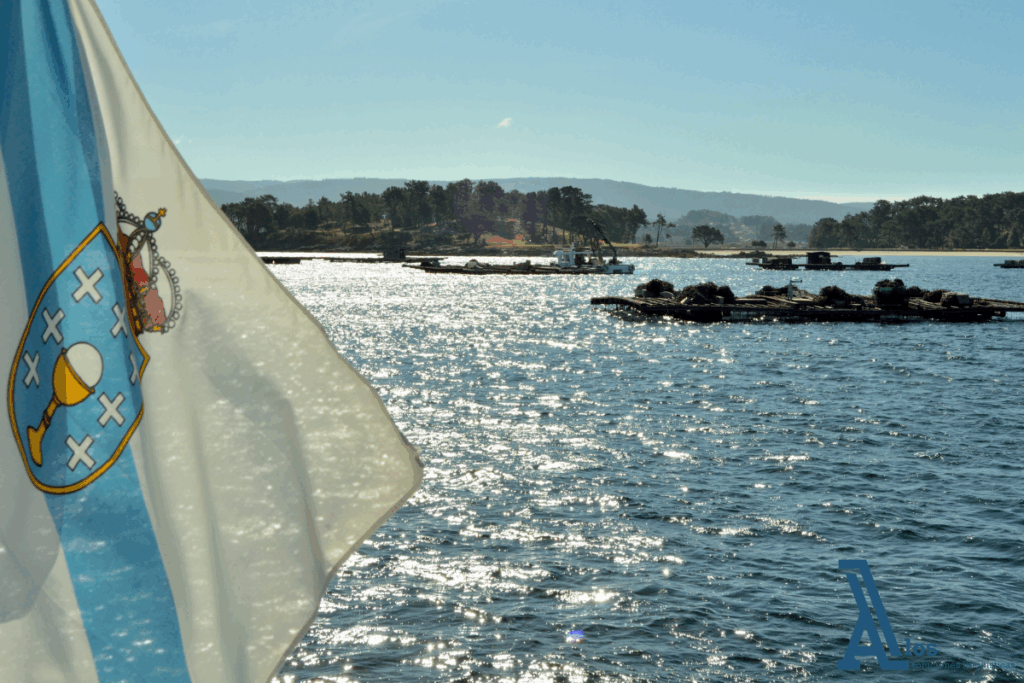
Some of the most widely used expressions
- Galician expressions for saying goodbye in style:
When it is time to leave, it is not done just any old way. Expressions such as “Marcho que teño que marchar” (“I’m off because I have to be off”) are not redundant but a mark of courtesy and clarity: you are leaving because you must, not because you want to escape the company. If, on the other hand, the departure is more abrupt or laced with exasperation, an “A rañala!” (roughly “go scratch”) settles the matter with irony. And to close an argument once and for all, few phrases are more Galician than “Morra o conto” (“let the story die”).
- Galician expressions for showing annoyance or setting limits
When it is time to set limits or express annoyance, Galician does not hold back. “A cona!” or its softened version, “A coniña!”, are emotionally charged exclamations that mark out the territory. If someone is overstepping the mark, an “Amodera, tío” (“steady on, mate”) is enough to warn them without aggression. And if complaints are not welcome, out comes “A chorar a Cangas” (“go and cry in Cangas”), with all the retranca you can muster. In tenser situations, or simply to let off steam, expressions such as “Vas levar unha ostia” or “Me cajo no mundo” bring a level of expressiveness that is hard to match.
- Galician expressions for greetings
When it comes to greetings, Galician goes for warmth. “Que tes/pasa, meu?” (“what’s up, mate?”) is a way of approaching someone with familiarity, of picking up contact again quite naturally.
- Galician expressions for reacting or showing surprise
When something unexpected or surprising happens, the language reacts with equal liveliness. “Mimadriña” or its short form “Mimá” (“oh my”) express astonishment with an affectionate touch. If there are doubts or something seems suspicious, out comes “E logo?”, which asks not about the future but about the logic of what has just been heard. And when the talk turns to times gone by, an emphatic “Onde vai!” reminds everyone that all that is long behind us.
- Galician expressions of folk wisdom and resignation
Galician wisdom shines in its sayings. “Nunca choveu que non escampara” (“it never rained without clearing up”) reminds us that every bad spell ends, while “Malo será” offers calm optimism in the face of adversity. Acceptance without drama appears in “Éche o que hai” (“it is what it is”), and caution dressed up as superstition in “Non sexa o demo” (“lest the devil have his way”). Respect for experience is plain in “Galiña vella fai bo caldo” (“an old hen makes good broth”), and steadfastness in the face of obstacles in “Se chove que chova” (“if it rains, let it rain”).
- Galician expressions of humour and exaggeration
Humour and exaggeration are an essential part of the Galician character. “Trapalladas” makes light, with a wink, of what others would dramatise. “Festa rachada” celebrates a party lived to the full. “De carallo de mico” takes the supposed seriousness out of anything, and phrases such as “Pensé morir” or “Llevé un nabo del carallo” mix drama and comedy in equal measure. “Fuá, neno” rounds off surprise with a youthful ring.
- Galician expressions for criticism and judgement
Criticism, of course, always comes with subtlety. “Caer da burra” (“to fall off the donkey”) implies that someone has finally grasped the obvious. “Tarde piaches” (“you chirped too late”) leaves no room for reply: you were too late. And if someone keeps making the same mistakes, they get an “Outra vaca no millo” (“another cow in the corn”). Being “un toxo” (a gorse bush) describes someone with a prickly character, while “ser un miñaxoia” points to a lack of guile, without necessarily being an insult.
- Everyday and local expressions
Everyday life has its own Galician twists too. “Callos” need not involve tripe at all. A “corto” is a small beer, and a “tapa” may well amount to a full meal. “Timbrar” is what you do when you ring the doorbell, and “mirar” has a broad sense that ranges from watching closely to simply having a quick look. And “jodechinchos” is the retranca-laden name given to the repeat tourists who descend on the Rías Baixas every summer.
- Galician expressions for stress and being overwhelmed
Finally, everyday exhaustion has its own neat expression: “No doy hecho” (“I can’t keep up”). It sums up daily overload simply and with resignation, no long complaints needed.
Each of these phrases does more than name a situation: it reflects an attitude. Learning them is far more than adding vocabulary; it is stepping into the Galician habit of saying a great deal with very little, of speaking in images, sayings, irony and plenty of common sense.
“Galician cannot be fished with a hook made of air; there even Cicero would lose his eloquence“
-Emilia Pardo Bazán
Why does keeping these expressions alive matter?
Galician is not just another co-official language of Spain: it is a profound expression of Galician cultural identity. Through its sounds, its grammatical constructions and its own expressions, Galician gathers up centuries of history, of human relationships, of connection with the land, the sea, the weather and local custom. It is a language that does not merely communicate but evokes, and it remains the natural channel of expression for many people who understand the world through their mother tongue.
Preserving Galician is therefore a matter of cultural dignity and linguistic justice. In a world where homogenisation threatens minority languages, keeping Galician alive means protecting diversity, safeguarding the rights of those who speak it and ensuring that new generations have access not only to the language but to the world view it carries. Every language that disappears takes with it a unique way of seeing and naming the world.
Popular Galician expressions play an essential part in that defence. They are what give the language its warmth, its flavour, its everyday identity. Many have no direct equivalent in English: not only because of their structure, but because they hold cultural references, emotional registers, ironies or values that only make sense within a Galician context. Losing them would be like losing the small stories that make Galicia what it is: a land shaped by an ancient culture, a deeply rooted language and, above all, a collective way of being in which warmth, folk wisdom and pride in what is one’s own define its people.
Recovering, using and teaching these expressions is therefore not empty nostalgia: it is an act of continuity. It allows the language to remain a faithful reflection of the people who speak it. And it is also a way of keeping alive the invisible thread that links past generations to those still to come.
Alos services
At Alos we believe that language is not a barrier but an opportunity to connect. That is why we offer language solutions designed for people who want to communicate with precision, fluency and cultural sensitivity. We work with specialist professional translators and native-speaker teachers who understand that learning a language also means learning to see the world from another perspective. Our services include:
- Professional translation in more than 30 language pairs (legal, technical, marketing, publishing).
- Classes in English, French, German and more, with methods adapted to your pace and your goals.
- Training for companies and individuals, with tailored programmes.
Whether you are a company that needs its website translated into Galician or an individual who wants to learn languages, Alos has a plan for you. For more information, click here:
Frequently asked questions (FAQs)
These expressions are far more than set phrases: they are living fragments of Galician history, thinking and character. Preserving them means keeping alive a collective memory and a unique way of seeing the world.
No. The richness of a language lies in its real, everyday use, and that is where popular expressions play a key role. They represent the language as people actually live it, with all its nuance and authenticity. Preserving them ensures the language stays close to its speakers and representative of them.
Cultural nuance, forms of humour and ways of relating to one another are lost, and above all the passing on between generations of an essential part of Galician identity is broken. These are expressions that no textbook teaches, yet they profoundly define the people who use them.
By using them in daily life, teaching them to others, working them into literature, film or music, and passing them on to new generations.
Because many of them rest on images, metaphors, ironies or very specific cultural references that do not exist elsewhere.
Of course. We translate into Galician and from Galician into many languages.
We offer professional translation both into and out of more than 30 languages. We work in legal, technical, medical, publishing and marketing fields, among others.
You can contact us through our website to request a quote, sign up for courses or clear up any questions about our language services.