






Have you ever wondered which languages are the hardest for English speakers? Learning a new language is an adventure that broadens our view of the world and connects us with different cultures. How difficult the process is, however, depends on the learner’s mother tongue and the target language. For English speakers, certain languages present particular challenges because of differences in grammatical structure, phonetics and writing systems. Many people also find it hard to learn and speak other languages, which may be down to factors such as phonetic differences and the social perception of speaking a foreign language..
Despite these challenges, the benefits of learning a new language are countless. In business, command of another language can open doors to international markets and improve communication with foreign clients. On a personal level, learning more than two languages improves mental agility, boosts creativity and enriches our cultural understanding.
With languages that use new alphabets or characters, daily practice makes all the difference. An e-reader can make reading, highlighting and note-taking easier without relying on your phone.
Below we explore the 10 hardest languages for English speakers, looking at the reasons for their complexity, the countries where they are spoken, the number of speakers, the estimated time needed to reach an intermediate level and the most widely recognised official exams for each one.
1. Mandarin Chinese
Mandarin Chinese is the most widely spoken language in the world, with more than 1,000 million native speakers , and it is the official language of China and Taiwan. It tops the list of the hardest languages for English speakers for several fundamental reasons.

First, its logographic writing system, based on characters (hanzi), is completely different from the Latin alphabet. To read fluently, a learner has to memorise between 2,000 and 3,500 characters, each with different meanings and pronunciations. Mandarin is also a tonal language, which means that the intonation of a word changes its meaning completely. Standard Mandarin has four main tones, which can be difficult for learners used to a more phonetic pronunciation.
Grammar is another challenge: although there are no verb conjugations or genders, sentence structures differ considerably from English ones.
To reach an intermediate level of Mandarin, a learner needs roughly 2,200 to 3,000 hours of study.
The most widely recognised official exam for measuring command of Chinese is the HSK (Hanyu Shuiping Kaoshi), which covers everything from beginner level (HSK 1) to advanced level (HSK 6).
2. Arabic
Arabic is spoken by approximately 274 million people and is the official language in more than 20 countries, from Morocco to Iraq. It takes 2nd place in the list of the hardest languages. Its complexity comes mainly from its writing system, its grammar and the diversity of regional dialects.

The Arabic alphabet has 28 letters and is written from right to left, which is a challenge for anyone used to Latin writing systems. Many letters also change shape depending on whether they come at the start, in the middle or at the end of a word.
Phonetically, Arabic has guttural sounds that do not exist in English, which makes pronunciation harder. Its grammar is also complex, with a verb system based on consonantal roots, and words can change radically depending on the context and the verb form used.
Dialect variation is another major challenge: classical Arabic is the basis of the language, but each country has its own dialect, sometimes unintelligible to speakers from other regions.
For an English speaker, the estimate is around 2,200 hours of study to reach an intermediate level.
The most widely recognised official exam is the ALPT (Arabic Language Proficiency Test), although there are other regional and academic exams.
3. Japanese
Japanese is spoken by approximately 125 million people and is the official language of Japan. It takes 3rd place in the list of the hardest languages. Its difficulty comes from its complex writing, its grammatical structure and cultural differences in communication.

Unlike English, Japanese uses three writing systems at the same time: hiragana, katakana and kanji. While the first two are syllabic and relatively easy to learn, the kanji (Chinese characters adopted into Japanese) are a major difficulty, as around 2,000 characters have to be memorised in order to read fluently.
Its grammar is completely different from English grammar. It follows a subject-object-verb (SOV) order, for example, rather than the subject-verb-object (SVO) order of English. Japanese also has multiple levels of formality that affect verb conjugation and vocabulary.
To reach an intermediate level of Japanese, the estimate is 2,200 to 3,000 hours of study.
The most widely recognised official exam is the JLPT (Japanese Language Proficiency Test), which assesses language competence at five levels, from N5 (beginner) to N1 (advanced).
4. Korean
Korean is spoken by approximately 77 million people, mainly in South Korea and North Korea. Although its script, the hangul, is considered one of the most logical and easiest to learn, the grammatical structure of the language is a major challenge, putting it 4th on the list of the hardest languages.
Korean, like Japanese, uses a subject-object-verb (SOV)sentence order, which forces learners to change how they think when building sentences. It also has a highly hierarchical system of formality levels, which means that word choice and conjugation vary depending on the context and your relationship with the person you are speaking to.
Phonetics is another challenge, as Korean has vowel and consonant sounds that do not exist in English, such as the distinction between tense and aspirated consonants.
To reach an intermediate level in Korean, the estimate is around 2,200 hours of study.
The most widely recognised official exam is the TOPIK (Test of Proficiency in Korean), which measures command of the language at various levels.
5. Russian
Russian is spoken by approximately 258 million people and is the official language of Russia, Belarus, Kazakhstan and Kyrgyzstan. What makes it distinctive, and what puts it 5th among the hardest languages, is its writing system, its complex grammar and its pronunciation.

One of the first challenges is the Cyrillic alphabet, which, although it has some letters similar to the Latin alphabet, includes many others that are completely different in form and sound. Learning to read and write in Cyrillic takes time, but it is a necessary first step to progress in the language.
Grammatically, Russian has six grammatical cases (nominative, accusative, dative, genitive, instrumental and prepositional), which means that nouns and adjectives change form depending on their function in the sentence. This system is completely foreign to English and can be confusing for beginners.
Verb conjugation is another challenge, as it depends on verbal aspect: perfective or imperfective, indicating whether an action is complete or in progress, something English does not handle in the same way.
As for pronunciation, Russian has reduced vowel sounds and palatalised consonants, which can make some words hard to pronounce correctly.
To reach an intermediate level in Russian, the estimate is around 1,100 hours of study.
The most widely recognised official exam is the TORFL (Test of Russian as a Foreign Language), which covers levels A1 to C2 under the Common European Framework of Reference for Languages (CEFR).
6. Hungarian
Hungarian is spoken by approximately 13 million people, mainly in Hungary and in some communities in neighbouring countries such as Romania and Serbia. It belongs to the Uralicfamily, which makes it completely different from the Indo-European languages, and puts it 6th on the list of the hardest languages.
One of the most complicated aspects of Hungarian is its system of 18 grammatical cases, which affect the declension of nouns and change their meaning according to context. Unlike English, which uses prepositions to indicate relationships between words, Hungarian uses suffixes added to the words themselves, so a single verb root can generate multiple variations.
Its vocabulary is another challenge, as it bears no resemblance to the Romance or Germanic languages. Learners will find no familiar cognates, so picking up new words calls for far more memorisation.
Phonetically, Hungarian has long and short vowels that change the meaning of words, as well as double consonants that require precise pronunciation.
To reach an intermediate level, the estimate is around 1,100 hours of study.
The most widely recognised official exam is the ECL (European Consortium for the Certificate of Attainment in Modern Languages), which assesses language competence at standardised levels.
7. Finnish
Finnish is spoken by approximately 5.4 million people in Finland and in some communities in Sweden and Russia. Like Hungarian, it belongs to the Uralicfamily, so its grammatical structure and vocabulary are completely different, which places it 7th on the list of the hardest languages.
One of the main challenges of Finnish is its system of 15 grammatical caseswhich, as in Hungarian, modify words through suffixes rather than prepositions. A word can therefore change shape depending on its function in the sentence.
Another complicated aspect is word structure. Finnish is an agglutinativelanguage, which means that words can be very long because of the addition of multiple suffixes.
Phonetically, although Finnish uses the Latin alphabet, it has long and short vowel and consonant sounds that alter the meaning of words. It also features vowel harmony, which means that certain vowels cannot coexist in the same word.
Its vocabulary has no connection with the Indo-European languages either, so learners have to memorise completely new words with no prior reference points.
To reach an intermediate level in Finnish, the estimate is around 1,100 hours of study.
The most widely recognised official exam is the YKI (National Certificates of Language Proficiency), which certifies different levels of competence in the language.
8. Basque
Basque, or euskera, is a language spoken by approximately 750,000 people in the Basque Country and Navarre, in Spain, as well as in some regions of the French Basque Country. It is one of the few language isolates in the world, meaning that it is not related to any other known language, which places it 8th on the list of the hardest languages.
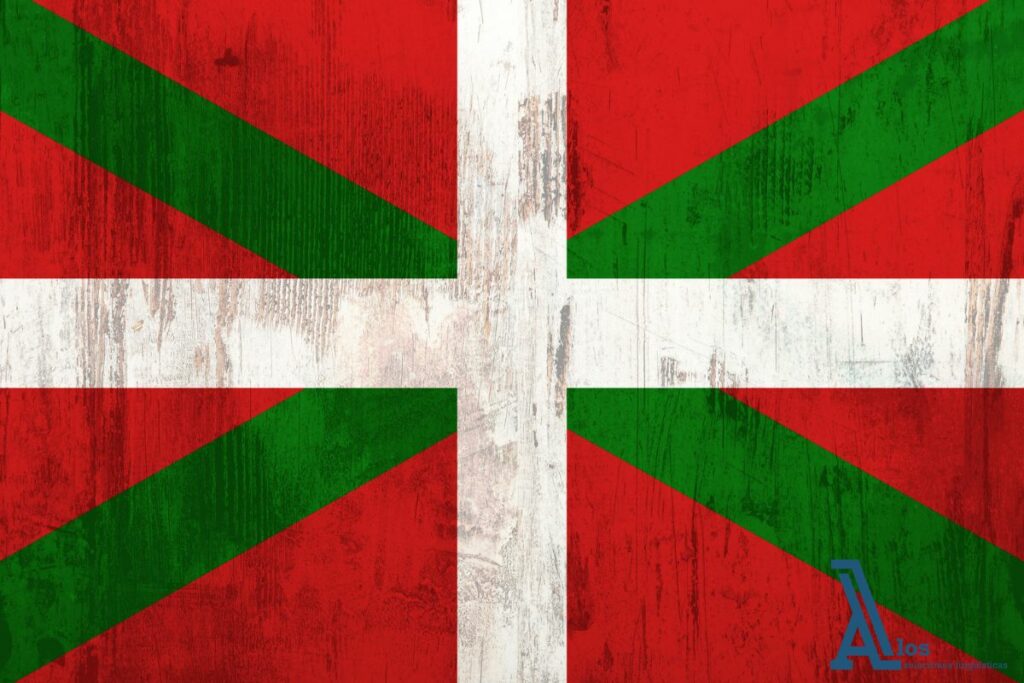
One of the main challenges of Basque is its unique grammatical structure. Rather than following a subject-verb-object (SVO) order, as English does, Basque uses a flexible order in which the verb usually comes at the end of the sentence.
Another complex aspect is its system of declensions and ergativity, which means that verbs and nouns change according to their role in the sentence. The case system affects nouns and pronouns in ways that learners can find hard to grasp.
Basque also has a unique vocabulary, with no roots in common with English or other European languages, which makes acquiring new words harder.
Despite its difficulty, Basque is a much-loved language in its community, and there are more and more resources available for learning it.
To reach an intermediate level in Basque, the estimate is around 1,000 to 1,500 hours of study.
There is no internationally recognised standardised exam, but the IVAP (Instituto Vasco de Administración Pública, the Basque Institute of Public Administration) offers certificates of linguistic competence in Basque.
If you talk to a man in a language he understands, that goes to his head. If you talk to him in his own language, that goes to his heart.
Nelson Mandela
A translation agency in Valencia specialising in Spain’s co-official languages
At Alos, our translation agency in Valencia, we have a team of professionals specialising in translations into Basque, Catalan, Valencian and Galician, offering high-quality services for companies and institutions alike. Spain’s co-official languages carry considerable weight in their respective regions, both institutionally and in advertising, with highly effective marketing campaigns that speak to their audience very specifically in their own minority language. If you need an accurate, culturally adapted translation into Basque or another co-official language, do not hesitate to get in touch for a professional, specialist service.
9. Polish
Polish is spoken by approximately 45 million people, mainly in Poland. It is a Slavic language that presents a number of significant challenges, which place it 9th on the list of the hardest languages. One of the main obstacles is its grammar, which includes seven grammatical cases (nominative, accusative, genitive, dative, instrumental, locative and vocative), meaning that nouns, adjectives and pronouns change form depending on their function in the sentence.
Pronunciation is another complicated aspect, as Polish has a great many consonant clusters and sounds that do not exist in English, such as “sz”, “cz”, “dz” and “rz”. Its spelling is phonetic but far from intuitive for anyone unfamiliar with it.
To reach an intermediate level in Polish, a learner needs between 1,100 and 1,500 hours of study, depending on their exposure to the language and their speaking practice.
The most widely recognised official exam for certifying knowledge of Polish is the Certyfikat Polskiego jako Języka Obcego (Certificate of Polish as a Foreign Language), which assesses competence at different levels under the Common European Framework of Reference for Languages (CEFR).
10. Vietnamese
Vietnamese is spoken by approximately 85 million people, mainly in Vietnam. Although it uses the Latin alphabet, its main difficulty lies in its tonal system, its grammar and its phonetics. It takes 10th place in the list of the hardest languages.
Vietnamese is a tonal language, which means that a single word can have six different tones, each with a different meaning. For learners used to a non-tonal stress system, this is a major challenge, as the meaning of words can change dramatically depending on intonation.
Grammatically, Vietnamese has no verb conjugations and no gender or number inflections. Instead of verb tenses, it uses particles and adverbs of time, which can be confusing for English speakers.
Phonetics is another obstacle, as Vietnamese has sounds that do not exist in English and that take considerable effort to pronounce correctly.
To reach an intermediate level in Vietnamese, a learner needs roughly 1,100 to 1,500 hours of study.
The most widely recognised official exam for certifying command of the language is the VSTEP (Vietnamese Standardized Test of Proficiency in Vietnamese)..
Go on, take on a new language!
Learning a difficult language may look like a daunting challenge, but the benefits far outweigh the difficulties. It improves our professional and personal prospects and also lets us connect with other cultures on a deeper level.
It is a myth that learning a language is impossible in adulthood. Recent studies have shown that brain plasticity is maintained throughout life and that, with the right method, anyone can learn a language, whatever their age. If this concerns you, we invite you to read our article on the myths and realities of language learning in adulthood.
So do not let fear or early difficulties hold you back. Whether for personal growth, professional reasons or simply for the love of languages, every step you take along this path is an investment in your future. The best time to start is now!
(FAQ) Frequently asked questions about the hardest languages to learn
The difficulty comes down to factors such as linguistic distance, that is, how different the target language is from your own in terms of grammar, phonetics and vocabulary. Different writing systems and the presence of tones can also add to the complexity.
Yes, it is entirely possible. Although acquiring a new language may take more effort in adulthood, motivation and the right strategies are the key to success. It is a myth that adults cannot learn new languages effectively.
The time varies with the language and the learner’s commitment. Reaching an intermediate level in Mandarin Chinese or Arabic, for example, can take between 2,200 and 3,000 hours of study, while other languages may take less time.
Learning a complex language not only improves cognitive skills and memory, it also opens up professional and personal opportunities, allowing greater cultural understanding and the chance to communicate with a wider community.
Effective strategies include cultural immersion, using learning apps, constant practice with native speakers and taking part in language exchanges. Setting realistic goals and keeping a positive attitude are also fundamental to progress.