





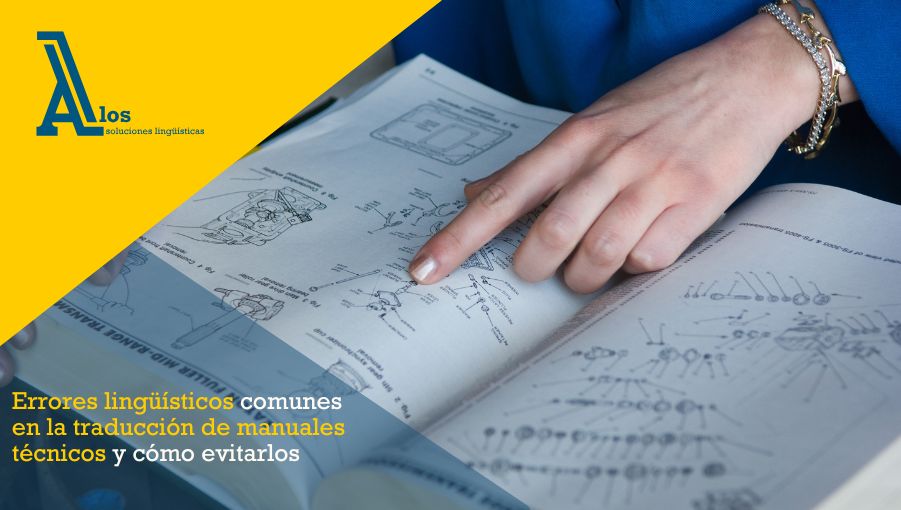
In technical manual translation, a small error can have serious consequences: from operational misunderstandings to safety risks. Many companies underestimate the impact of these language failings on their documentation. In this article you will learn which errors are most frequent and, above all, how to avoid them with a practical, professional approach.
False equivalence: when translating is not enough
One of the most common errors in technical manuals is assuming that a word in one language has a direct equivalent in another. This is especially problematic with technical or industrial terms.
For example, translating “engine” as “motor” may be correct in many contexts, but not always. In specific sectors it can refer to more complex systems that require terminological precision.
This type of error usually appears when no specialist glossaries are used or when the translator lacks sufficient technical context. To avoid it:
Use glossaries validated by the client or the sector
Review previous documentation
Consult technical experts when in doubt
An accurate translation depends not only on the language but on knowledge of the field.
Ambiguity in instructions: an operational risk
Technical manuals must be clear and direct. A poor translation, however, can introduce ambiguity into key instructions.
A real example
Original text: “Tighten the bolt firmly”
Incorrect translation: “Apriete el tornillo firmemente”
The problem: what does “firmly” mean? Is there a specific tightening torque?
In this case, the correct approach would be to specify the exact value if one exists, or to keep it consistent with technical standards.
Ambiguity can lead to usage errors, machinery failures or even accidents. For technical teams working with manuals for electrical or electronic equipment, a digital multimeter is a basic tool that lets you verify on the spot the values that must then be correctly specified in the technical documentation. To avoid this:
Prioritise clarity over literalness
Make sure instructions are measurable or verifiable
Maintain consistency throughout the document
Errors in units, symbols and formats
Another critical failing in technical manual translation is the incorrect adaptation of units of measurement, symbols or number formats.
Frequent cases
Changing “1,000” (one thousand in English) to “1.000” without clear context
Failing to convert inches to centimetres when necessary
Keeping units that are not used in the target country
These errors are not merely linguistic but functional. They directly affect the usability of the manual.
To avoid them
Adapt the units to the target market
Check local standards (ISO, UNE, etc.)
Use dedicated quality control tools
If the manual includes acronyms or technical terms in English, it is important to understand their use fully before translating them. This is especially relevant in technology environments, where a misreading can affect the accuracy of the document. You can look further into this in the article on acronyms and abbreviations in the technology industry.
Incorrect use of the passive voice
In many technical manuals written in English, the passive voice is common. Carrying it straight over into Spanish, however, can produce unnatural or confusing texts.
Example
English: “The device should be operated carefully”
Literal translation: “El dispositivo debería ser operado cuidadosamente”
Better: “Utilice el dispositivo con cuidado”
Technical Spanish tends towards more direct structures. An excess of passive voice hinders comprehension, especially for non-expert users.
Recommendation
Prioritise active structures
Simplify long sentences
Think about the end user, not the original structure
Inconsistent terminology throughout the document
A very common error is translating the same term in different ways within the same manual.
Example
“Switch” translated as “interruptor”, “conmutador” and “selector” in different sections
This creates confusion and looks unprofessional. In technical documentation, consistency is key.
How to avoid it
Create and maintain translation memories
Use CAT (Computer-Assisted Translation) tools
Review the complete document before delivery
Terminological consistency also improves when teams have a good command of technical language. This is especially important in international environments, as explained in the article on English for engineers and technical staff.
Calques that sound right but are not
Calques are overly literal translations which, although they appear correct, are not actually used in the target language.
Example
“Aplicar para un trabajo” (a calque of “apply for a job”)
Correct form: “Solicitar un trabajo”
In technical manuals, these errors affect the naturalness and credibility of the text.
To avoid them
Work with native translators
Review the text from the end user’s point of view
Avoid relying solely on automated tools
Lack of cultural and regulatory adaptation
Not all errors are linguistic in the strict sense. Many technical manuals fail because they are not adapted to the cultural or regulatory context of the target country.
Examples
Safety instructions that do not meet local regulations
References to standards that do not exist in the target country
Use of iconography that is not recognised
This can invalidate the manual entirely.
Solution
Research local regulations
Adapt the content, do not just translate it
Work with suppliers specialising in localisation
Frequently asked questions
Because they directly affect the correct use of products or machinery. An error can cause operational failures, material damage or safety risks.
It can help, but it is not enough. Technical precision, terminological consistency and cultural adaptation require specialist human input.
They should combine language skills with sector knowledge. It is also key that they use professional tools and follow quality control processes.
Technical manual translation leaves no room for improvisation. Every term, every instruction and every detail counts. Avoiding language errors not only improves the quality of the document, it protects your company’s operations and reputation.
If you need to ensure the accuracy of your technical documentation or train your team in professional communication, at ALOS we can help with language solutions tailored to your sector. Get in touch and we will advise you according to your needs.