






Lack of time is one of the most common barriers HR teams cite when they consider investing in language training for their staff. Between meetings, workloads and daily priorities, finding room to learn can seem impossible. With a practical, well-designed approach, however, language training can be rolled out even where diaries are very tight. In this article we show you how to structure a programme that fits your employees’ reality and delivers tangible results.
Why a shortage of time should not stall training
In many companies, language training is seen as a “luxury” that only makes sense if employees have long stretches of free time. The usual result is long courses with poor attendance, low motivation and weak outcomes.
The real challenge for HR is to design initiatives that respect time constraints without sacrificing quality. That means thinking in terms of flexible formats, clear objectives and learning that is woven into everyday work. One effective approach is micro-training in the real work context, with applied objectives such as preparing specific vocabulary for meetings or improving email communication with international clients.
Before choosing the type of course, it helps to consider how business objectives and team priorities align with language training. In some cases, companies decide to combine language training with other professional development initiatives. Once you define which skills need strengthening for each role, for instance, language training stops being an add-on and becomes a strategic tool for overall performance.
Training formats that work when time is short
Modular, flexible training
An alternative to the traditional hour-a-day format is to offer short training modules focused on specific skills. These modules might cover, for example:
- Vocabulary and key phrases for international phone calls.
- Expressions for meetings or presentations.
- Writing professional emails.
This modular approach makes it easier for employees to take part without feeling they are losing large blocks of working time. It also makes progress feel more tangible.
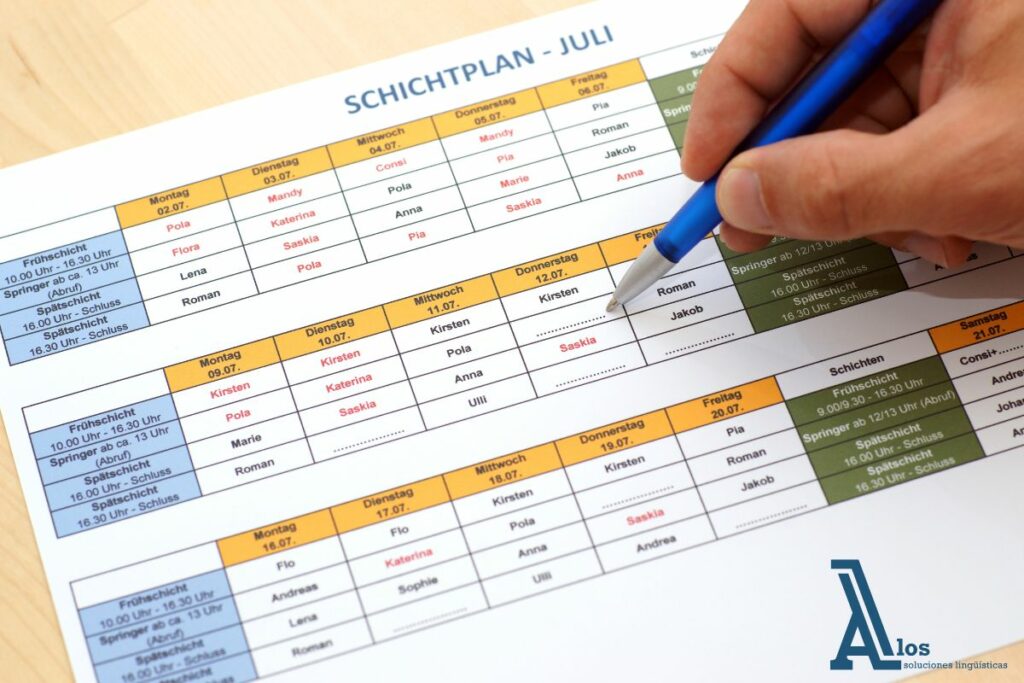
Sessions at workable times
Adapting the timetable is essential to secure participation. Some practical solutions:
- Early bird sessions, before the working day begins.
- Short active breaks built into the diary.
- Training at moments of lower operational pressure.
Combining different formats and times lets each employee find the option that best suits their routine.
Online training combined with applied tasks
Technology makes it possible to design courses that can be followed from anywhere and in short bursts. Online training, with brief and practical resources, lets learners progress at their own pace and apply what they have learned immediately in real work situations.
When training happens in the gaps between meetings or from shared spaces, audio quality is key to making every minute count. Usingprofessional headsets with a microphone and noise cancellation improves concentration, avoids needless repetition and makes it easier to take an active part in short sessions. In programmes designed for time-poor employees, getting these small technical details right makes a real difference to the experience and to how effective the learning is.
In that spirit, combining online training with exercises based on real work tasks — such as drafting a professional email in English — can have an immediate effect and improve retention. Many companies that invest in targeted language training for professionals and teams have found that flexible online formats improve participation even when workloads are heavy.
How to fit language training around other HR priorities
Subsidised training and financial support
One way to make training easier to fund for time-poor employees is to make use of the financing available. In Spain, many companies can draw on the subsidised training credit administered by FUNDAE , the state foundation for workplace training, to cover all or part of the cost of language courses for their staff. This support not only eases the financial burden, it also allows training to be planned without damaging the department’s budget.
Using these subsidies strategically can be especially helpful when you want to offer language training without putting extra pressure on the team’s productive time.
Integration with development plans and KPIs
Language training is more effective when it is tied to measurable objectives. For example:
- Improving the ability to communicate with international clients.
- Reducing misinterpretation in technical documentation.
- Increasing employee participation in global projects.
Measuring these outcomes with clear indicators — satisfaction surveys, self-assessments or performance metrics, for instance — helps justify the investment and strengthens the case for continuing the programme despite time constraints.

Good practice for maximising participation
Strategies that have proved effective in companies with little time to spare include:
- Micro-learning with clear objectives: short content focused on specific tasks.
- Building training into real projects: working with the company’s own materials increases relevance.
- Motivation through recognition: certificates or internal mentions for those who complete modules.
It is not only about teaching a language, but about connecting the learning to day-to-day operations and to the results the company expects.
Although it depends on the starting level and the effort involved, programmes geared to specific tasks commonly show significant gains in particular skills — email writing or phrases for meetings, say — within 8 to 12 weeks.
Yes, especially if you opt for flexible formats (modular, online, blended). The aim is for the training to fit the rhythm of work, not the other way round.
HR should design, plan and clearly communicate the training, align it with professional development objectives and make sure monitoring and evaluation mechanisms are in place.
Language training for time-poor employees is not wishful thinking: it is a matter of approach, design and alignment with the company’s real needs. With flexible formats, clear objectives and measured results, even teams with packed diaries can improve their language skills and add more value in international settings.
If you are in HR and want to roll out a language plan suited to teams with little time, ALOS can help you design and run a tailored programme, with flexible formats, personalised follow-up and measurable results. Get in touch with us for a free assessment and find out how to build your team’s language skills without disrupting their working day.