





When a company starts operating in several markets, translation stops being an occasional matter and becomes a recurring process: contracts, technical data sheets, manuals, marketing campaigns, compliance. In many cases, it is the Procurement department that takes on the job of finding a supplier and optimising costs.
In this article you will see what outsourcing translation in a company involves, which criteria should guide supplier selection and how to avoid the most common mistakes affecting quality, deadlines and budget.
Why Procurement leads the outsourcing of translation
In many organisations the need to translate arises in other departments: Legal, Marketing, Operations or Human Resources. It is Procurement, however, that has to:
- Assess suppliers.
- Negotiate terms.
- Centralise contracts.
- Ensure budget control.
The problem appears when translation is treated as a generic service, comparable on price alone. Unlike other supplies, variables such as sector specialisation, confidentiality, terminological consistency and responsiveness all come into play here.
Outsourcing is not simply delegating: it means integrating an external supplier into your value chain.
When it makes sense to outsource translation in a company
Not every company needs an in-house team of translators. In most cases, outsourcing is the more efficient option when:
- Workload peaks vary.
- Several languages are required.
- Specialised profiles are needed (legal, technical, medical, financial).
- The aim is to scale internationally without adding fixed structure.
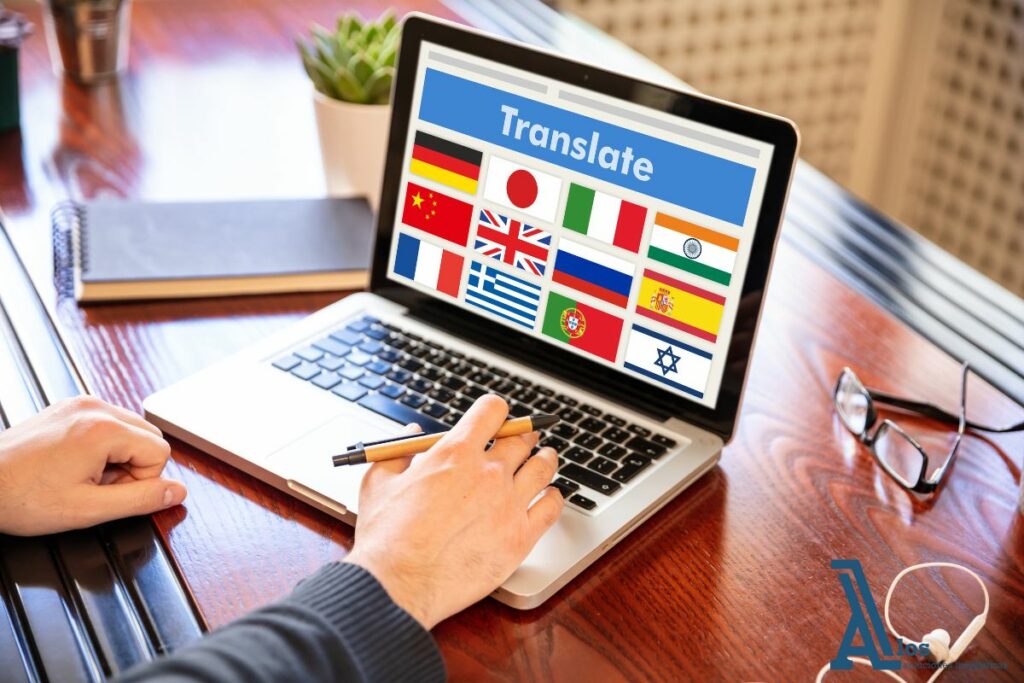
For example, an industrial company exporting machinery may need complex technical translations into German or French on a regular but not constant basis. Keeping an in-house resource for each language is simply not viable.
In such cases, having a specialist partner brings flexibility and reduces risk.
Key criteria for selecting a translation supplier
1. Sector specialisation
Translating a corporate website is not the same as translating a commercial contract or an installation manual. The supplier must demonstrate experience in your sector and offer specialised native-speaker translators.
Asking for samples, references or comparable case studies is good practice before signing a framework agreement.
2. Defined quality processes
Procurement should ask about:
- Review by a second linguist.
- Management of glossaries and translation memories.
- Confidentiality protocols.
- Technology tools in use.
A structured process prevents rework and cost overruns.
3. Terminology management
When different departments order translations separately, consistency is lost in key terms: product names, claims, legal concepts.
Centralising the service with a single supplier makes it possible to build termbases and keep every corporate document consistent.
4. Scalability and turnaround times
In corporate environments, deadlines are usually tight. The supplier must be able to take on urgent projects without compromising quality.
This is where working with a language academy or company with a solid structure makes the difference compared with isolated freelancers.
Common mistakes when outsourcing translation
Choosing on price alone
Cost matters, but it should not be the only criterion. A poorly executed translation can lead to:
- Legal problems.
- Damage to brand image.
- Technical confusion.
- Additional correction costs.
In strategic procurement, price is assessed alongside risk and added value.
Not appointing an internal point of contact
If every department sends texts to the supplier without coordination, the result will be inconsistent. Appointing an internal owner makes communication easier and improves control.
When each department sends requests separately, information becomes scattered. Centralising documents and versions in a single workflow —even something as basic as an organised system of inputs and outputs— helps maintain consistency and control.
Not setting up framework agreements
Working project by project usually makes the service more expensive and scatters effort. Formalising an annual agreement with clear terms allows you to:
- Negotiate better rates.
- Set service levels.
- Secure delivery times.
Outsourcing and in-house training: a smart combination
Outsourcing does not mean washing your hands of languages. Many companies combine translation services with language training for their team.
For example, if the Procurement team negotiates with international suppliers, strengthening their professional English improves direct communication and reduces dependence in certain exchanges.
With that in mind, it can be worth complementing the service with programmes such as corporate language courses, which help professionalise internal and external communication.
How to put together an effective request for proposal (RFP)
From Procurement, a well-structured RFP should include:
- Languages required.
- Estimated annual volume.
- Types of document.
- Level of specialisation.
- Confidentiality requirements.
- Usual deadlines.
The more precise the initial information, the tighter and more comparable the supplier’s proposal will be.

It is also worth assessing not only the commercial offer, but also:
- Working methodology.
- Team assigned.
- Technology tools.
- Ability to advise.
A good partner does not just translate: it guides you and proposes improvements to your language processes.
The strategic impact of outsourcing well
When the service is well managed:
- Contractual errors are reduced.
- International image improves.
- Entry into new markets is faster.
- Time to launch is optimised.
Poor language management, by contrast, can hold up operations or create avoidable disputes.
For the Procurement department, this means understanding that translation is not a minor operating expense but a strategic element of business expansion.
Frequently asked questions
It depends on volume and the range of languages. For most companies with variable needs, outsourcing is more flexible and efficient than keeping fixed resources for each language.
The supplier must sign confidentiality agreements and have security protocols in place. It is advisable to ask about their data protection systems before signing the contract.
As a rule, centralising with one main supplier improves terminological consistency and makes management easier. Only with very high volumes or highly specific languages does diversifying make sense.
Outsourcing translation in a company is a decision that has a direct impact on quality, image and operational efficiency. For Procurement, the challenge is not only negotiating price but selecting a reliable, specialised partner aligned with the company’s international strategy.
If your company is looking to improve the way it manages languages, at ALOS we can help you with both professional translation services and language training tailored to corporate teams. Contact us and we will look at your case to offer you a bespoke solution.