





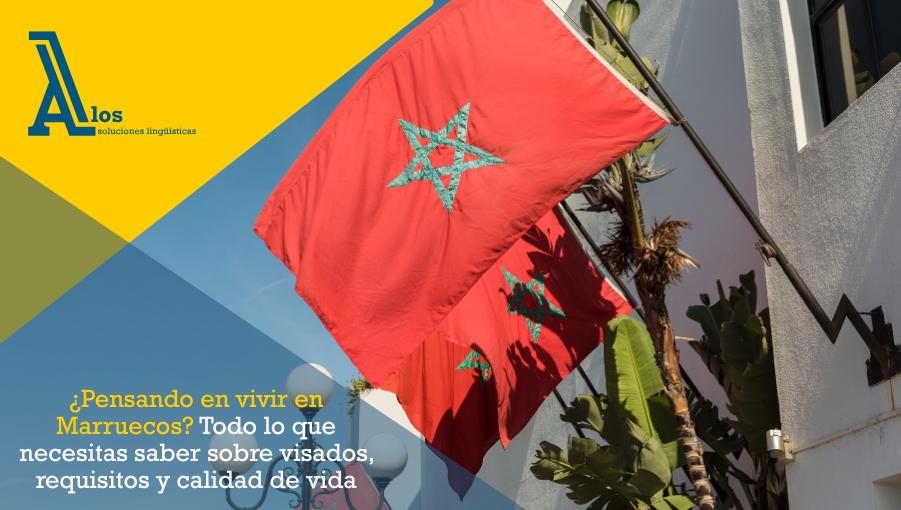
Morocco, with its unique blend of ancient history, cultural diversity and landscapes ranging from the Sahara desert to the Atlantic coast, has become an increasingly popular destination for anyone looking for a change of life or a different culture. Every year thousands of people consider settling in this fascinating country, drawn by its pleasant climate, vibrant food and age-old traditions. Before you pack your bags, however, it is essential to understand how the Moroccan visaworks, as this is the indispensable first step to entering and living there legally.
Applying for a Moroccan visa means knowing the different types that exist, the specific requirements depending on the purpose of your stay and the procedures to be followed. The rules can also vary depending on the applicant’s country of origin, so it is important to check official sources such as the Embassy of Morocco or specialist visa portals such as Visa Index.
“What I love about Morocco is that its beauty is simple, deep and eternal.”
— André Gide
One real-life case that illustrates Morocco’s appeal is that of the well-known Chilean painter Claudio Bravo, who chose to live in Marrakesh for decades. His life in Morocco reflected the cultural charm and quality of life the country offers, and it has inspired many artists and expatriates to follow in his footsteps. You can read more about his story in his Wikipedia biography.
In short, understanding the process of obtaining a Moroccan visa is key to enjoying a trouble-free experience and making the most of everything the country has to offer.
Types of Moroccan visa: a detailed overview
1. Tourist visa
This is the most common visa and is intended for people who want to visit Morocco for a short period, generally for holidays, tourism or family visits. It allows a maximum stay of 90 days within a 180-day period. An extension can be requested if needed, but it has to be arranged inside the country and authorised by the Moroccan authorities.
Documents required:
- Passport valid for at least 6 months
- Duly completed application form
- Recent passport-size photographs
- Accommodation booking or letter of invitation
- Return ticket or proof of travel
- Proof of sufficient funds (at least 70 euros per day)
Notes:
Ideal for short stays; it does not allow you to work or study.
2. Work visa
This visa is designed for people who have found a job in Morocco and want to live there legally while working. To obtain it you need a formal job offer from a Moroccan company, which has to process the corresponding work authorisation. The procedure is usually longer and more rigorous than for a tourist visa.
Documents required:
- Valid passport
- Employment contract signed by the Moroccan company
- Letter or work authorisation issued by the Moroccan Directorate of Migration and Immigration
- Application form and recent photographs
Notes:
The work visa allows residence and legal employment in Morocco.
3. Student visa
This is for foreign students accepted by Moroccan educational institutions, whether universities, technical colleges or specialist courses. The visa can initially last up to one year and can be renewed depending on the length of the academic programme.
Documents required:
- Official letter of admission or enrolment from the educational institution
- Valid passport
- Application form
- Proof of accommodation and sufficient funds
- Recent photographs
Notes:
This visa does not allow you to work unless you hold a special permit.
4. Transit visa
This is granted to people passing through Morocco, generally for a very short period (up to 72 hours). It is useful for travellers using Morocco as a connection point to another country.
Documents required:
- Valid passport
- Onward ticket to the next destination
- Proof of sufficient funds for the transit
Notes:
In some cases it does not allow you to leave the designated area, nor to work.
5. Long-stay or residence visa
This visa is aimed at people who want to settle in Morocco for an extended period, including retired people, investors or those with family ties. It can be applied for in respect of stays of more than a year and requires proof of stable income and means of support.
Documents required:
- Valid passport
- Documents justifying the extended stay (employment contract, tenancy agreement, marriage certificate or resident family members)
- Financial evidence and medical insurance
- Official forms and photographs
Notes:
Renewing this visa requires meeting certain conditions and completing procedures in Morocco.
6. Diplomatic and official visa
For diplomats, government officials or people on official missions. It is processed through diplomatic channels and has special conditions adapted to each case.
7. Humanitarian visa
This is granted in exceptional circumstances, for humanitarian, medical or emergency reasons. It is issued under specific criteria and generally for a limited period.
Types of Moroccan visa
| Type of visa | Permitted duration | Documents required | Notes |
|---|---|---|---|
| Tourism | Up to 90 days | Valid passport, form, photos, proof of accommodation and funds | Can be extended by a further 90 days in certain cases |
| Work | Depending on the employment contract | Job offer, passport, form, photos, employment contract | The applicant has to be hired by a Moroccan company |
| Study | Up to 1 year (renewable) | Letter of acceptance from the educational institution, passport, form, photos | Only applies to people planning to study in Morocco |
| Transit | Generally up to 72 hours | Passport, onward ticket, proof of funds | Only for people passing through Morocco on their way to another country |
| Long stay | More than 1 year | Passport, proof of residence, evidence of income | Ideal for those looking to stay longer, such as pensioners or business owners |
5 key points for applying for a Moroccan visa
1. Choose the right type of visa for the purpose of your stay
Before you start the process, it is essential to identify which visa you need: tourism, work, study, transit or long-stay residence. Each visa has different requirements and permissions, so choosing the right one will avoid legal problems and make your stay easier. A tourist visa, for example, does not allow you to work or study, so if you have employment or academic plans you will have to apply for the corresponding visa.
2. Gather complete, up-to-date documentation
Documentation is key to getting your application approved without setbacks. Make sure your passport is valid for at least six months from your planned date of entry into Morocco. Complete the official application form correctly and provide recent passport-size photographs, an accommodation booking or letter of invitation, a return ticket and evidence of sufficient funds (at least 70 euros per day of your stay). Missing any of these documents can delay your visa or lead to refusal.
3. Start the process well in advance
Processing times can vary depending on the type of visa and the consular office where you apply. It is therefore advisable to start the process at least a month before your planned travel date. That leaves you room to deal with any problems or to provide additional documents if they are requested.
4. Consider the possibility of an extension or renewal
If you plan to stay longer than your initial visa allows, you can apply for an extension inside Morocco. This is handled at the local police station and has to be done before the current visa expires. Bear in mind that approval is not guaranteed and depends on the circumstances of each case, so it is better to plan your stay carefully from the outset.
5. Check the visa exemptions for your nationality
Morocco has agreements with more than 70 countries whose citizens can enter without a visa for short stays (generally up to 90 days). These exemptions can change, however, so it is essential to consult the official list of exempt countries and confirm the requirements before planning your trip. That will avoid unpleasant surprises at the airport or border.
Documents and requirements for the visa application
Below you will find details of the documents you need to gather and the most important requirements, so that your application runs smoothly.
Basic documents for a Moroccan visa application
| Document | Description | Tips |
|---|---|---|
| Passport | Must be valid for at least 6 months from the date of entry | Renew your passport before applying for the visa |
| Application form | Complete it correctly according to the type of visa | Download it and fill it in carefully |
| Photographs | 2 recent passport-size photos | Follow the official specifications |
| Return ticket | Confirmation of travel | Bookings must be genuine or flexibly cancellable |
| Proof of accommodation | Hotel booking or letter of invitation from a resident | Document clearly where you will be staying |
| Financial means | Bank statements proving sufficient funds | Generally 70 euros per day |
Quality of life in Morocco: what to expect
Moving to a new country always means adapting to new customs and ways of life. In Morocco, quality of life can vary a great deal depending on the city or region.
Quality of life in the main cities compared
| City | Approx. monthly cost of living | Infrastructure | Climate | Safety |
|---|---|---|---|---|
| Marrakesh | 700-900 € | Good, with tourist services | Mediterranean, hot | Moderate, safe tourist area |
| Casablanca | 800-1000 € | Very good, economic centre | Mediterranean, humid | Good, cosmopolitan city |
| Rabat | 750-900 € | Capital, excellent services | Mediterranean, temperate | Very good |
| Fez | 650-850 € | Traditional, less modern | Continental, dry | Moderate |
| Agadir | 600-800 € | Tourist-oriented, good beach access | Mediterranean, mild | Good |
Living in Morocco offers a unique experience combining tradition and modernity, and it can be particularly appealing to anyone looking for a different pace of life from that of large Western cities. Quality of life in Morocco varies considerably depending on the region, the city and the lifestyle you choose.
The main cities such as Casablanca, Rabat and Marrakesh have modern infrastructure, health services, educational options and a growing cultural and leisure scene. Casablanca, for example, is the country’s economic centre, with a lively urban life and a wide range of services, while Rabat, the capital, stands out for its quieter, safer atmosphere and its good international schools. Marrakesh, for its part, offers a combination of tradition and upmarket tourism, with many expatriates living and working there.
The cost of living in Morocco is generally lower than in many European or North American countries. Housing, food and transport are usually more affordable, allowing residents to enjoy a good standard of living on a more modest budget. Renting a flat in a central area of Casablanca, for instance, can cost between 400 and 700 euros a month, while in smaller cities or rural areas the cost drops significantly.
Moroccan culture, rich in traditions, festivals and food, is another factor that improves quality of life for those who enjoy a vibrant, community-minded social environment. Adapting to certain social norms and customs can take time, however, especially for people coming from very different cultures.
In terms of healthcare, Morocco has both public and private medical centres, although quality varies between cities and regions. Many expatriates opt for private or international health insurance to guarantee good medical care.
Finally, the Mediterranean and semi-arid climate means mild winters and hot summers, ideal for anyone looking for a lifestyle with plenty of sunshine and outdoor activities.
Prepare for your new life in Morocco with Alos Soluciones Lingüísticas
Moving to Morocco is an adventure full of opportunities, but it also brings challenges, particularly when it comes to communication and handling official documents. At Alos Soluciones Lingüísticas we understand how important it is to have reliable support to make the whole process simpler and more efficient.
Our professional team specialises in official and technical translations, making sure that your documents — contracts, certificates, visas or any other paperwork — meet all the legal and cultural requirements, so that you have no problems arranging your residence or other procedures in Morocco.
We also offer language courses for individuals and companies alike, with tailored programmes in Arabic, French, Spanish and English. Learning the local language or improving your communication skills will be key to integrating fully and making the most of everything living in Morocco has to offer.
Rely on Alos Soluciones Lingüísticas to accompany you at every step of this new chapter. If you would like more information or a tailored quote, do get in touch.
Frequently asked questions (FAQ)
It depends on your nationality. More than 70 countries are exempt for short stays, but always check before travelling.
Normally up to 90 days, with the possibility of an extension under certain conditions.
No, you need a specific work visa.
You have to apply for the extension at the police station before your current visa expires.
Casablanca, Rabat and Marrakesh are the most recommended for infrastructure and services.