





Do you know what a pogadolect is? Probably not, and that is precisely what makes them so fascinating. In a world where the dominant languages take up all the attention (English, Spanish, Chinese, Arabic), there is a parallel universe of almost secret ways of speaking, born of cultural fusion, linguistic blending and the shared history of peoples who have lived side by side for centuries. One of the most unusual phenomena in that universe is the pogadolects. But what are they, who speaks them, and why should you care?
Pogadolects are the alchemists of language: they take the grammar of one language and infuse it with the vocabulary of another to create something entirely new. They are not dialects. They are not passing slang. They are genuine linguistic fusions with history, identity and, above all, soul. And although you may never have studied them in class or heard them on television, they are part of the cultural DNA of many territories, including Spain.
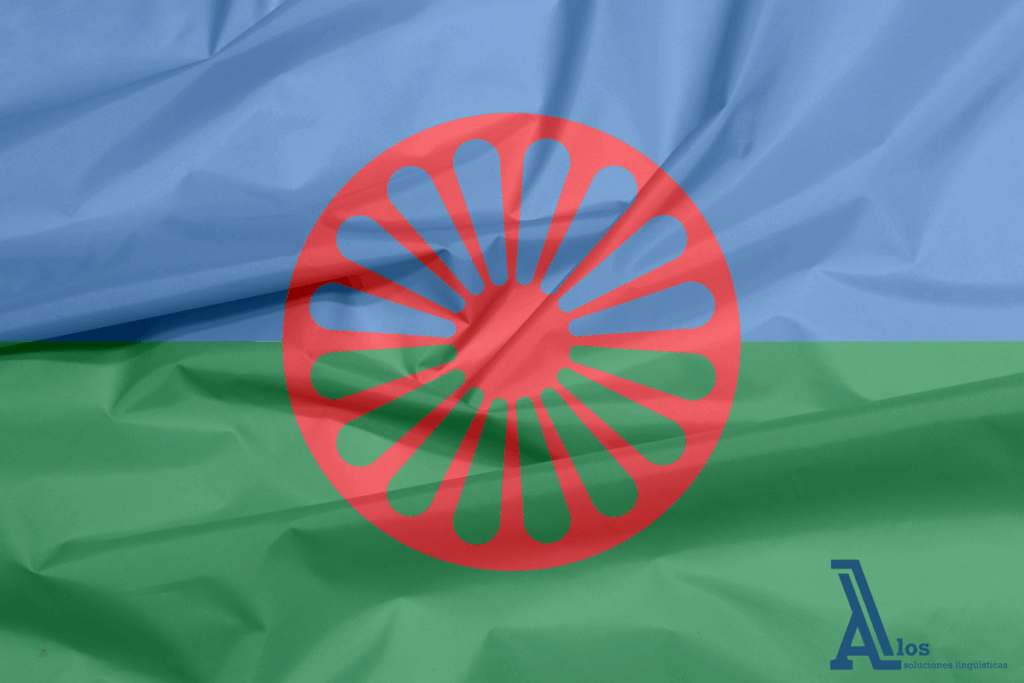
In our country, where officially recognised languages such as Catalan, Basque and Galician coexist, there are also less visible ways of speaking, such as Caló and Erromintxela. These mixed languages have historically been used by Roma communities which, far from staying outside the national linguistic conversation, developed their own deeply symbolic forms of expression. They are languages that resist. That evolve. That hold centuries of marginalisation, resilience and creativity. And that are nonetheless in danger of disappearing.
In this article we will not only explain what a pogadolect is, we will also take you on a tour of its best-known forms in Spain. We will show you examples, vocabulary and meanings, all in tables that are easy to consult. You will discover how speaking “in Caló” or “in Erromintxela” is at once a statement of identity and a philological treasure worth studying. And if you work in translation or language teaching, or you are simply a language lover, this article may open your eyes to a world that very few people know but that deserves to be told.
What is a pogadolect?
The term “pogadolect” refers to a mixed language that combines the grammatical structure of one language with the vocabulary of another. It is considered neither an independent language nor a dialect, since it does not derive directly from a parent language but results from the coexistence and blending of two distinct languages. Such languages usually emerge in contexts of intense, prolonged cultural contact, as is the case with some Roma communities in Spain.
Pogadolects are complex linguistic phenomena that reflect the history and social interactions of the communities that speak them. They often lack official recognition and are in danger of disappearing because of weak intergenerational transmission and the dominance of majority languages.
Examples of pogadolects in Spain
1. Caló: the secret language of the Roma people in Spain
Caló was born of the encounter between the Roma, originally from northern India and Persia, and the Hispanic world. On reaching the Iberian Peninsula between the 15th and 16th centuries, these groups gradually began to abandon their original language ( Romani) because of social and legal pressure to assimilate. They did, however, manage to preserve a significant part of the Romani lexicon while adopting Spanish grammar.
The Caló language is far more than slang or a linguistic curiosity. It is at the heart of the identity of many Roma communities in Spain, a language that has withstood centuries of marginalisation and that, despite the passage of time, is still alive in the streets, in songs and in popular sayings. Although it has often been ignored or misunderstood, Caló is a pogadolect with a fascinating history that reveals the cultural blending and the resilience of those who speak it.
Origin and evolution of Caló
This process gave rise to a unique language: grammatically Spanish, but sprinkled with Romani words that carry a powerful cultural and symbolic charge. Although it is not uniform across the country, since it varies by region and community, Caló has endured as a tool of identity and resistance, an intimate form of communication that strengthens bonds within the group.
Where is Caló spoken?
Today Caló is spoken in various parts of Spain, especially in Andalusia, Extremadura, Castilla-La Mancha, Murcia and some urban areas in the north. However, its use has dropped sharply among younger generations, who tend to speak only Spanish, partly because of the social stigma attached to Caló and partly because of the lack of language protection policies.
There are some cultural initiatives aimed at recovering and revaluing it, such as publications, dictionaries and community projects. In addition, flamenco artists and Roma rappers have incorporated Caló vocabulary into their lyrics, keeping it present in popular culture.
Caló vocabulary table
| Caló word | Meaning |
|---|---|
| Camelar | To love, to like |
| Chaval | Boy, young person |
| Churumbel | Small child |
| Jalar | To eat |
| Lache | Shame |
| Menda | I, myself |
| Parné | Money |
| Rajar | To talk |
| Sobar | To sleep |
| Yeli | Moon |
These words, although used in informal contexts, have even influenced colloquial Spanish. Who has not heard expressions such as “me camela” (he or she fancies me) or “no tengo parné” (I have no money)? Their presence is proof of how Caló has enriched the Spanish language far more than many people assume.
2. Erromintxela: the hidden language between Basque and Romani
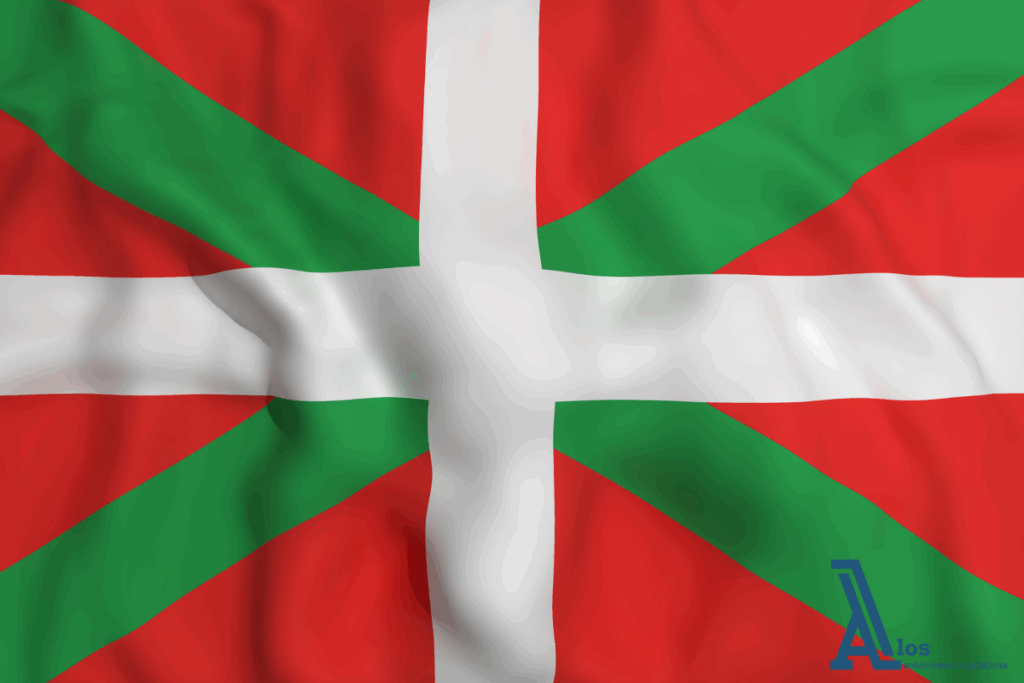
If Caló is a mixed language rooted in Spanish and Romani, Erromintxela is its lesser-known but equally fascinating cousin, born of an even more unusual combination: Basque grammar with Romani vocabulary. This pogadolect is one of the best-kept secrets of Spain’s linguistic heritage, and its existence reminds us that languages do not always evolve along predictable paths.
A language born of contact between cultures
The community that speaks Erromintxela is extremely small, limited to a few Roma groups that settled in the Basque Country over the centuries. Unlike other Romani communities, these adopted the structure of Basque rather than Spanish, but kept part of the traditional Romani vocabulary. That is how this hybrid language was born: structurally Basque, lexically Roma.
The name “Erromintxela” comes from the Basque term for “Roma” (errumantxela, an adaptation of romani čhél, meaning “Roma man”). It is a language passed on orally that has never been standardised or formally codified. That, together with its very small number of speakers (estimated at fewer than 500 people), places it in a critical situation of disappearance.
Where is Erromintxela spoken?
It is found above all in parts of the Basque Country such as Bizkaia, Araba and Navarre. The families that keep it alive do so as part of their ethnic and cultural identity, but they face major difficulties in getting younger generations to learn it and use it in daily life.
Even so, there has been a modest revival of interest among linguists and anthropologists, who have begun to document it. Some Basque universities and Roma studies centres have worked to preserve oral testimony and vocabularies, although much remains to be done.
Erromintxela vocabulary table
| Erromintxela word | Meaning |
|---|---|
| Balichori | Child |
| Churi | Woman |
| Drom | Road |
| Esku | Hand |
| Gajo | Non-Roma person |
| Kher | House |
| Luma | Money |
| Nasti | No |
| Phral | Brother |
| Rrom | Roma man |
This table shows how words from traditional Romani such as phral or rromcoexist with terms taken directly from Basque, such as esku. It is a perfect example of how a language can be a living fusion, a spoken history.
Why preserving pogadolects matters
Pogadolects such as Caló and Erromintxela are an integral part of Spain’s cultural heritage. They represent the history, traditions and identity of communities that have contributed significantly to the country’s diversity. However, the lack of official recognition and the pressure of dominant languages threaten their survival.
Preserving these languages calls for concerted efforts, including linguistic documentation, promoting their use in educational and cultural settings, and institutional support. It is also essential to foster pride in these languages and appreciation for them within the communities that speak them.
Over the course of this tour we have discovered that pogadolects such as Caló and Erromintxela are far more than philological curiosities: they are vehicles of identity, history and resistance. Marginalised and little recognised though they are, they still beat in the corners where memory and language hold each other tightly. And in a globalised world where language is often reduced to a utilitarian tool, remembering that every language is a universe helps us appreciate our own cultural diversity.
At Alos we believe deeply in the power of languages, in all their forms, as a bridge between cultures and people. That is why our services are not limited to professional translationbut also include language training for companies and individuals who want to go beyond the surface and understand the cultural context behind every word.
Understanding pogadolects such as Caló or Erromintxela is not something you learn just anywhere. It takes training, linguistic sensitivity and experience. And that is exactly what drives us. Whether you need to adapt your content for a diverse audience,, translate documents with cultural precision, or train in languages for your professional or personal development, our team is here to help.
Frequently asked questions (FAQs)
A pogadolect is a hybrid language that combines the grammar of one language with the vocabulary of another. It is considered neither a dialect nor a creole, but the result of intense and prolonged contact between two different language communities. Examples of pogadolects in Spain are Caló and Erromintxela.
– Dialect: a regional variety of a language (for example, Andalusian Spanish or Galician).
– Slang: a set of expressions particular to a social or professional group (for example, youth or medical slang).
– Pogadolect: a stable combination of the grammar and lexicon of two different languages (for example, Spanish grammar plus Romani vocabulary in Caló).
Because they have no official recognition, they are passed on orally, and younger speakers prefer majority languages for social or educational reasons. On top of that, there is little academic documentation and no presence in the media or in schools.
Learning a pogadolect such as Caló or Erromintxela requires access to oral sources, specific linguistic materials and, most importantly, direct contact with the speaker community. There are no formal academies, but there are documentation and revitalisation projects.
It depends on the type of text and on the pogadolect. Given their oral and fragmentary nature, there is not always a direct equivalent in other languages, so a specialised and culturally competent translator is required.