





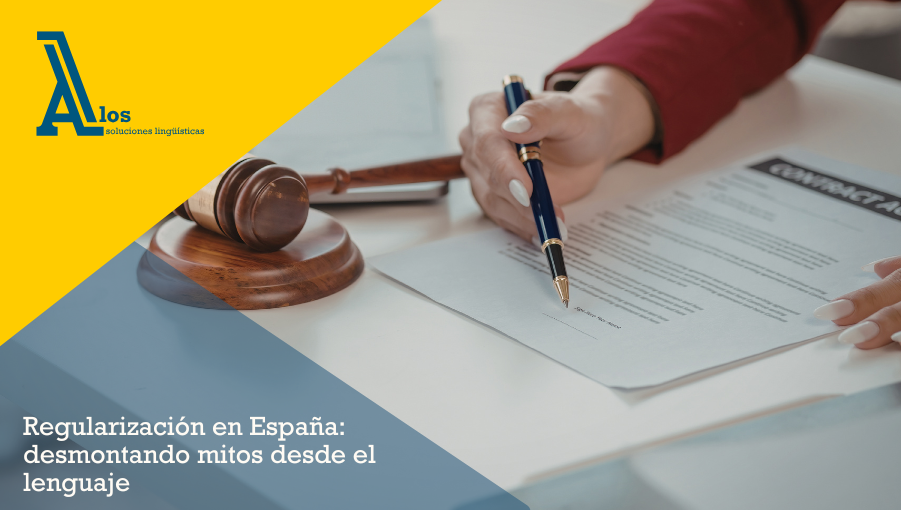
When someone begins a regularisation process in Spain, they usually focus on legal requirements, deadlines or appointments with the authorities. Yet there is one factor that often goes unnoticed: language. Terminological misunderstandings, badly translated documents or incorrect readings can delay or even block a file.
In this article you will understand how language influences immigration matters, which mistakes to avoid and how to prepare your paperwork correctly from the start.
Language is part of the legal process too
One of the most frequent mistakes is thinking that regularisation is purely an administrative procedure. In reality, it is also a linguistic one.
Every document you submit, such as certificates, criminal records, qualifications or contracts, has a legal value that depends directly on how it is drafted and translated. Understanding the content is not enough: it has to meet the standards required by the Spanish authorities.
For example, a badly translated birth certificate can raise doubts about the applicant’s identity or parentage. That usually leads to additional requests for correction, delays or even refusal of the procedure.
Myth 1: any translation will do
This is one of the most common errors.
Many people believe that translating a document themselves or with the help of a bilingual friend is enough. Yet many immigration procedures require a sworn translation.
A sworn translation has legal validity because it is produced by a professional authorised to certify that the content is faithful to the original. Without that requirement, the document can be rejected.
This becomes very clear in practical situations such as opening a bank account abroad, where correctly translated paperwork can make the difference between moving forward and getting stuck.
Myth 2: if it is understandable, it is enough
Another common error is thinking that if the content can be understood, the document will be accepted.
In immigration matters it is not only a question of being understood: the translation has to be exact and legally equivalent. That means respecting the legal terminology and the context of the country of origin.
For example, seemingly simple terms can cause serious errors. “Single” does not always translate automatically as “soltero”, “notary” is not always the equivalent of a Spanish “notario”, and “certificate” can refer to different documents depending on the context. A bad translation can change the legal meaning of the document and affect the outcome of the procedure.
Myth 3: every document works the same way in any procedure
Each regularisation procedure has its own requirements, including at the linguistic level.
A social settlement application may call for specific contracts or reports. Family reunification calls for documents proving family ties. In other processes, such as municipal registration or proof of residence, the way the paperwork is presented is also decisive.
In fact, in a procedure as everyday as municipal registration in Valencia for foreign nationals, submitting correctly translated documents can prevent formal errors and unnecessary delays.
The key role of sworn translation in immigration matters
Sworn translation is not simply a requirement. It is a guarantee that your documents are valid.
It helps avoid requests for correction from the authorities, shortens resolution times and strengthens the consistency of the file. Many immigration problems are not caused by missing documents, but by errors in how they are submitted, translated or read.
Where names, dates, stamps, official titles or legal expressions are involved, precision is not optional. It is part of the procedure.
Common mistakes you can avoid
Across different regularisation processes, certain errors come up again and again.
Not checking the language requirements before starting the procedure. Many people gather documents without checking whether they need an official translation.
Translating before legalising or apostilling. In many cases the order matters, and doing it the other way round complicates the process.
Using machine or uncertified translations. They are useful for understanding the content, but they have no legal validity.
Failing to keep the documents consistent. Differences in names, dates, places or terms can create inconsistencies within the file.
How to handle your process without blockages

The best way to avoid problems is to plan ahead.
Before submitting any application, it is worth identifying which documents you need, checking which ones have to be translated, making sure the translation is valid and confirming that all the information is consistent across the whole file.
To keep all your paperwork in order throughout the process, a document folder with dividers helps you keep every document filed by section and avoid confusion when you need to hand something in or check it quickly.
Having specialist language support is not a minor detail. In many cases, it is what allows a procedure to move forward without unexpected requests for correction.
Frequently asked questions
Not all of them, but yes for those that are not in Spanish and form part of the file. Depending on the procedure, that translation may also need official validity.
That is not advisable. If the body requires a valid translation from the outset, submitting a version that is not accepted can delay the whole procedure.
It works for many official procedures, but it is always worth checking exactly what the body receiving the documents requires.
Yes. A badly resolved term, an incorrect date or a difference in a name can raise formal doubts and lead to requests for correction or delays.
Regularisation in Spain does not depend only on meeting legal requirements, but also on how the documents are presented. Language, terminology and translation can directly influence the outcome of the process.
If you need to prepare documentation for an immigration procedure and want to avoid mistakes that cost you time, ALOS offers specialist language support so you can submit your documents with greater confidence.