





Interpreting has taken on unprecedented importance in global settings, particularly since the spread of remote working and the digitisation of services. According to a recent study, remote interpreting, for example through VRI (video remote interpreting), has allowed hospitals to provide cover in more than 350 languages at a saving of over 60% compared with the in-person format, because travel, accommodation and waiting time disappear. This technological adaptability has become established since the pandemic and has changed how we understand the relationship between interpreter and client at events and in healthcare and court settings. In this new landscape, the choice between remote and in-person interpreting has become a key question for institutions seeking efficiency without losing communicative quality. It is worth asking whether, in every setting, the two formats really guarantee the same level of accuracy and effectiveness.
Beyond the figures and the savings in cost, time and precision, however, there are accounts that flag the limits of these formats. An article found that, although doctor and patient satisfaction with remote interpreting is similar to the in-person version, many interpreters still prefer F2F work, because it lets them pick up the non-verbal and cultural nuances that video does not always convey. From that angle, weighing the strengths and limits of each format is essential to guaranteeing effective communication, above all where precision is vital.
One illustrative case became emblematic in the US courts: Silva v. Baptist Health South Florida, a suit under the ADA (Americans with Disabilities Act) and the RA (Rehabilitation Act), in which it was alleged that unlawful or defective remote VRI provision prevented “effective communication” for deaf patients. The court concluded that it is not enough for the service to exist: it has to work properly and deliver the same quality as in-person interpreting, especially where there are dropouts, poor video quality or no on-site interpreter when one was needed. The case shows how a small technical failure or a tiny delay can alter the perception and the effectiveness of communication, and it underlines how important it is to choose the right format for the setting.
Advantages of remote interpreting
One of the great strengths of remote interpreting is its ability to break down geographical and linguistic barriers quickly and efficiently. In a globalised world where immediacy is crucial, it connects highly qualified interpreters with clients thousands of kilometres away in a matter of seconds. That instant accessibility is particularly useful in hospitals, courts, emergency services or business meetings, where interpreting on the spot can be the difference between an effective solution and a communication breakdown. By dispensing with travel, accommodation and subsistence, remote interpreting also brings a considerable cut in operating costs, which benefits public bodies and private organisations working to tight budgets.
Another benefit is the ability to run multilingual meetings without the logistical limits of the in-person format. Thanks to video conferencing platforms and RSI (remote simultaneous interpretation) solutions, a single event can be interpreted simultaneously into several languages without every interpreter being physically present, which has been revolutionary for congresses and international events. The format also adapts easily to the unforeseen, such as schedule changes, limited availability or mobility restrictions, making scheduling more flexible and scalable. In medical settings, for example, it has made it possible to serve patients in rural areas or communities speaking minority languages that previously had no adequate language cover.
Finally, it is worth noting the technological progress behind remote interpreting: tools such as automatic speech recognition (ASR), artificial intelligence (AI) systems and the steady improvement of specialist platforms have increased interpreters’ efficiency and made the experience smoother for the end user.
Challenges of remote interpreting
For all its merits, remote interpreting brings a set of challenges that should not be overlooked. One of the main ones is dependence on the technical infrastructure. Interpreting quality is directly conditioned by the stability of the internet connection, the quality of picture and sound and the compatibility between platforms. A delay of a few seconds in the audio, a badly positioned camera or a synchronisation failure can change the sense of a whole sentence, especially in legal or medical settings where every word counts. These problems not only frustrate participants; in some cases they can carry serious legal or medical consequences.
Another obstacle is the loss of non-verbal information. Video call platforms have improved considerably, but they still cannot capture facial expressions, gestures or subtle body language with the same precision, and these often complement and qualify the spoken message. That is a significant limitation in cultural or emotionally charged settings, where the interpreter needs to grasp not only what is said but how it is said. Physical distance can also make it harder to manage turn-taking, identify who is speaking or control the pace of the conversation, all of which affects how smoothly the exchange flows.
Finally, the human element is affected too. Remote interpreters are more exposed to cognitive and visual fatigue, particularly when they have to concentrate for long periods on split screens, multiple information streams or awkward technical environments. The lack of face-to-face interaction can lead to professional isolation, loss of context and even emotional exhaustion, so it is essential to put in place protocols for breaks, rotation and psychological support to protect interpreters’ health.
Advantages of in-person interpreting
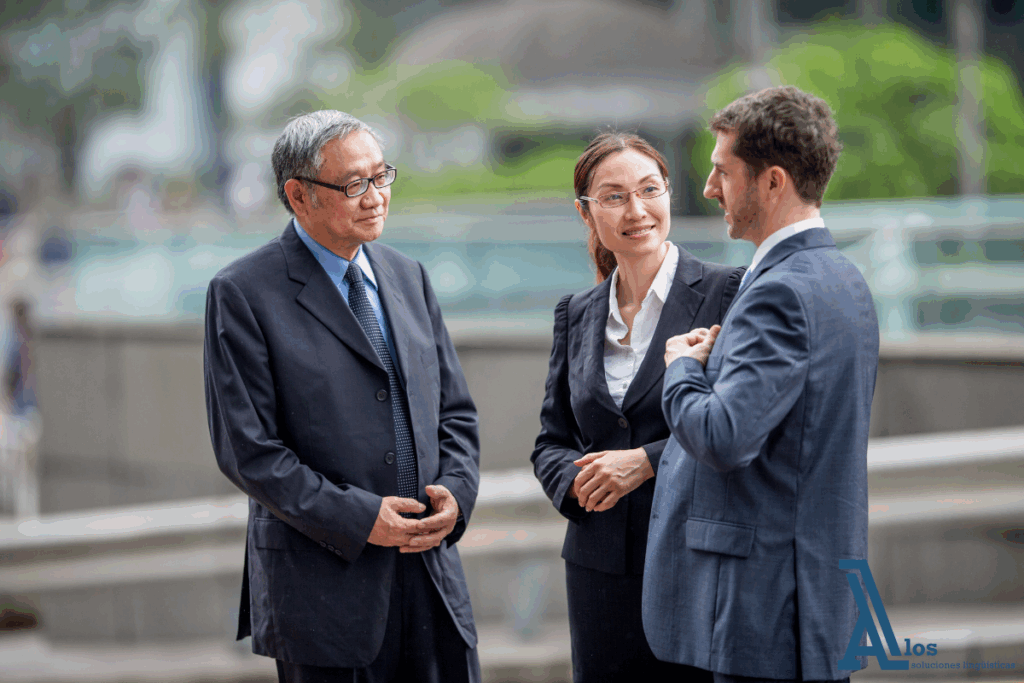
In many respects in-person interpreting remains the benchmark for communicative excellence, particularly where deep interaction, interpersonal trust or contextual precision are needed. Simply sharing the same physical space gives the interpreter access to a wider range of communicative signals, from body language to tone of voice and facial expression, all of which matter in delicate conversations. In a medical consultation, for example, the way a patient responds to a question with a glance or a gesture can be as revealing as their words, and that level of observation is only fully possible when the interpreter is in the room.
The interpreter’s presence also strengthens the bond of trust between the parties. In trials, sensitive business meetings or family mediation sessions, being physically present provides a psychological security that encourages candour, reduces tension and improves cooperation. Face-to-face interpreting also makes it easier to manage the communicative environment dynamically: coordinating turns, modulating the pace, stepping in politely to clear up a misunderstanding and adapting the style of interpreting to what the moment requires, whether a formal contribution or a more informal exchange.
Because the technical risks disappear, in-person interpreting also allows a constant flow of communication with no technical interruptions. That is especially valuable when working with older people, with those who have sensory impairments, or in settings where access to technology is limited or non-existent. It therefore remains the preferred format for many institutional clients, international bodies and professionals in the legal and health sectors.
Challenges of in-person interpreting
In-person interpreting is not without complications, though. One of the most obvious is logistical. It requires more complex advance planning: coordinating schedules and travel, booking accommodation where necessary and, at times, arranging permits to enter official premises or restricted areas. That makes it a more expensive option, especially for short or urgent assignments, where the time spent getting an interpreter to the venue exceeds the time spent interpreting.
Another critical point is the limit on immediate availability. Unlike the remote format, where an interpreter can be available within minutes, in-person work depends on geographical proximity and the professional’s own diary. That can create bottlenecks when several languages or locations have to be covered at the same time, as happens at international conferences or medical campaigns in diverse communities.
It should also be borne in mind that in pandemics, health crises or conflict zones, in-person interpreting can put the safety of both the professional and the client at risk. Mobility restrictions, quarantines or hostile environments make physical access difficult or impossible, which makes remote alternatives indispensable. A hybrid strategy is often the most sensible answer: provide in-person services where the context requires them, but always backed by remote interpreting platforms ready to step in should anything go wrong.
Remote and in-person interpreting are not mutually exclusive: they are two sides of the same practical coin. Remote work offers accessibility, savings and efficiency; in-person work brings trust, communicative richness and emotional depth. Success lies in assessing the setting intelligently, weighing how sensitive the content is and deploying the resources that guarantee maximum objectivity, precision and empathy in the exchange.
Services from Alos Soluciones Lingüísticas
At Alos Soluciones Lingüísticas we offer end-to-end multilingual communication solutions for companies, institutions and private clients. Our team covers both in-person and remote interpreting (VRI, OPI, RSI), adapting to each setting: healthcare, legal, corporate or academic.
We also run tailored language classes geared to professional goals, exam preparation, interviews or general development. And we produce specialist, sworn and technical translations, guaranteeing terminological accuracy and quality with every delivery. Whether you need interpreting, translation or language learning, Alos helps you communicate effectively, clearly and with confidence. For more information, click here:
Frequently asked questions (FAQs)
In-person interpreting allows direct interaction and a fuller reading of non-verbal nuance, which suits sensitive settings. Remote interpreting stands out for its immediacy, low cost and global reach, making it ideal for urgent situations or multilingual events.
It depends on the setting. In technical or emergency environments, remote interpreting is highly effective. In court, medical or emotionally charged settings, however, the in-person format usually produces better results thanks to proximity and body language.
All you need is a stable internet connection, a device with a camera and microphone, and access to a video conferencing platform. At Alos we take care of the rest: we schedule the session, assign the interpreter and provide technical support if you need it.
We offer services in the main European, Asian and Latin American languages, as well as less common languages and dialects. If you have a specific requirement, ask us and we will find the right interpreter or translator for your case.
At Alos we teach one-to-one and group classes, online or in person, adapted to different levels and goals: business, conversation, official exams, interview preparation or sector-specific training (legal, medical, technical).
Yes. We work with certified sworn translators for official translations of legal, academic, notarial and medical documents, among others. Documents are delivered signed, stamped and fully legally valid.
Of course. You can contact us directly for a personalised quote with no obligation, whether for interpreting, translation or language training.