






During the Spanish tax season, some tax documents belonging to international employees may need an official translation in order to be valid in certain administrative procedures. Which tax documents from your international employees need an official translation? Income certificates, tax residency certificates or certain employment records may require one depending on how the document will be used; here is the detail…
If your company employs international staff, the Spanish tax season can become more complicated than expected. Handling tax certificates, proof of residency or employment records issued in other languages tends to raise questions at precisely the moment when mistakes are most costly. This article looks at which paperwork you should review, when an official translation may be required and how to prepare the process with greater confidence.
Why does the tax paperwork of international employees need reviewing?
When a company brings in foreign talent, it is common to come across certificates issued outside Spain, contracts in another language or tax documents that do not fit neatly into a Spanish administrative review.
The problem is rarely having the paperwork; it is presenting it in a valid and comprehensible form. If a key document is not correctly translated, the result can be formal requests for information, delays and a heavier administrative load for the admin, finance or HR teams.
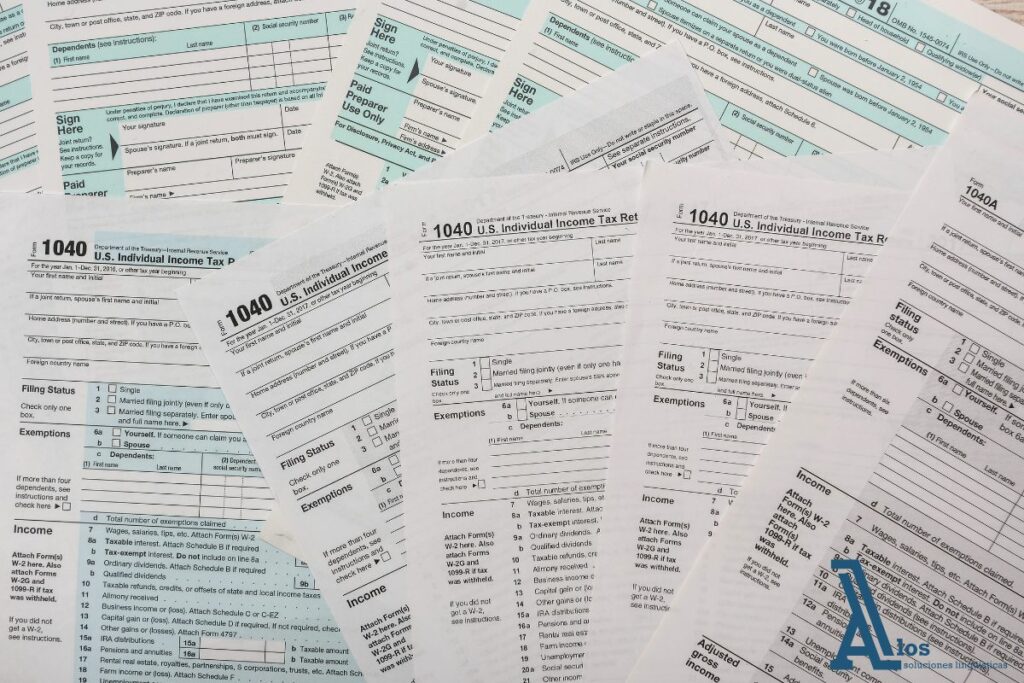
Which tax documents usually require a sworn translation
Income certificates obtained abroad
This is one of the most common cases. It may involve posted workers, international profiles hired by the company or employees who have earned part of their income outside Spain.
In these cases it is worth reviewing income certificates, withholdings applied and the tax periods covered. If the document is in another language, it may need to be translated in order to be filed correctly with the authorities.
Tax residency certificates
This document is essential when tax residency in another country has to be evidenced, or when double taxation treaties are being applied.
If the certificate is not in Spanish, the company has to assess whether a simple translation will do or whether a sworn translation will be needed, particularly when the document is going to be used in a formal procedure.
Employment contracts or international assignment letters
They are not always part of the main file, but they may be requested if there are discrepancies in the income, benefits or employment terms declared.
An accurate translation helps avoid misreadings of concepts such as base salary, bonus, allowances, stock options or benefits in kind.
Documentation on benefits in kind and international benefits
Health insurance, a company car, housing allowances or international mobility compensation may appear in documents issued by foreign parent companies or subsidiaries.
Translating these concepts well matters because they affect how items are treated for tax purposes and how certain entries are evidenced.
When a sworn translation may be required
Not every document in another language needs a sworn translation, but it is worth looking carefully at any paperwork that will be filed with public bodies or that may have legal or tax consequences.
To go deeper into this point, it makes sense to link to the article which documents must be accompanied by a sworn translation, which covers the kind of paperwork that usually requires a translation with official validity.
Common mistakes in companies with international employees
One of the most frequent mistakes is assuming that any translation will do. Another is waiting for a formal request before reviewing the paperwork. It is also common to file incomplete documents, with poorly transferred terminology or without consistency between the original and the translation.
During tax season these failures do more than delay the process. They also multiply internal queries and leave the employee concerned feeling uncertain.

How to organise this process better within the company
Centralise the paperwork in advance
The most practical approach is to identify, before the tax season starts, which employees hold foreign documents and what kind of paperwork may be needed.
Check which documents have administrative value
Not all of them need translating. What matters is spotting which ones may form part of an inspection, a file or a tax justification.
Rely on professionals with documentary experience
When you work with international paperwork, translating word for word is not enough. You have to understand the legal and administrative context of the document.
Another piece from the ALOS blog complements this well, such as foreign documents in Spain: translation requirements, because it helps you understand what happens when a foreign document has to be filed correctly in Spain.
Do not leave the review until the last minute
The closer you get to the filing deadline, the less room you have to request duplicates, verify requirements or order a sworn translation if one turns out to be necessary.
Frequently asked questions
No. It depends on how the document will be used and on whether it has to be filed with the authorities or form part of a formal procedure.
It is not advisable. In tax or administrative paperwork, a terminology error can change the meaning of a relevant figure.
An officially appointed sworn translator. If the document needs official validity, this point is essential.
Managing the tax paperwork of international employees well reduces errors, saves time and avoids unnecessary incidents in the middle of the tax season. If your company needs support with the translation of official documents or with the linguistic review of international paperwork, ALOS can help you resolve it with a practical approach suited to the corporate environment.