






Summer is the worst time to discover that your technical documentation had translation errors, because incidents multiply just when fewer staff are available and products and services are used most. Why is summer the worst moment for this? Because the faults delay corrections, push up support costs and damage the company’s reputation; read on…
Imagine your company launches a product just before the summer and, at the height of the season, incidents start coming in from different markets. Incomprehensible manuals, badly translated instructions or incorrect technical terms. Errors like these do not just cause confusion: they hit sales, support and reputation directly.
In this article you will see why summer amplifies these problems, how they affect your business and what you can do to avoid them before it is too late.
Summer: a perfect storm for translation errors
During the summer months, many companies operate with reduced teams. Holidays, stand-ins and lower availability mean any pre-existing error has more impact.
When technical documentation contains translation faults, the problem is not new… but in summer it becomes visible.
For example:
A client in Germany cannot work out how to install a piece of equipment.
Technical support takes longer to reply because there are fewer staff.
The internal team cannot quickly reach the original translator.
The result: an error that could have been solved in hours turns into days or weeks of friction.
Technical translation: when a small fault has major consequences
Technical translation leaves no room for ambiguity. Translating marketing content is not the same as translating a user manual, a safety data sheet or an interface.
A frequent mistake is relying on literal or machine translation without specialist review. That can lead to:
Incorrect or dangerous instructions
Misuse of machinery or software
More support tickets
Loss of client trust
A lack of specialist review can cause inconsistencies, omissions or terminology errors. In sensitive sectors, as ALOS explains in its article on common errors in clinical trial translation and how to prevent them, a linguistic fault can affect both comprehension and the safety of the content.
Why these errors come to light in summer
Less capacity to react
In summer, teams work with fewer resources. That means:
Slower responses
Difficulty coordinating corrections
Dependence on external providers
A fault that needs urgent linguistic review can end up stuck.
Increased product use
In many sectors (technology, tourism, retail), summer is peak season. More users means more exposure of errors.
The more a product is used, the more obvious a bad translation becomes.
Active international expansion
Many companies use the summer to enter new markets or strengthen their global presence. If the documentation is not properly adapted, the impact is immediate.
In this context, translating is not enough: the content has to be properly localised.
Real cases: what happens when the translation fails
Case 1: A technical manual misread
An industrial company distributes machinery in several countries. The translation of the manual includes incorrect terms.
Consequence:
Badly executed installations
Constant calls to support
Extra costs in call-outs
Case 2: Software with a badly translated interface
A SaaS platform releases its French version without professional review.
Result:
Buttons with the wrong meanings
Users abandoning the product
A poor reputation in the market
Case 3: Ambiguous legal documentation
An exporting company translates contracts without specialist validation.
Problem:
Confusion over commercial terms
Legal risk
Delays in agreements
How to avoid discovering these errors at the worst moment
1. Do not leave translation until last
One of the most common mistakes is treating translation as a final stage. Documentation should be built in from the start of the process.
2. Work with specialist translators
Not every translator is suited to technical content. It is essential to have people who understand:
The sector
The terminology
The context of use
What is more, when documentation includes instructions, drawings, acronyms or technical processes, the language team needs to understand the professional context. This need also comes through in the ALOS article on English for engineers and technical staff, which looks at the importance of specialist language in industrial and technical environments.
3. Put review and quality control in place
A translation without review is a risk. Set up processes for:
Linguistic review
Technical validation
Real-world testing of the content
4. Keep terminology consistent
Using terms inconsistently causes confusion. Creating glossaries and translation memories helps keep every document uniform.
5. Get ahead of activity peaks
Before the summer (or any peak season), review all your documentation:
Manuals
Interfaces
Technical material
Support content
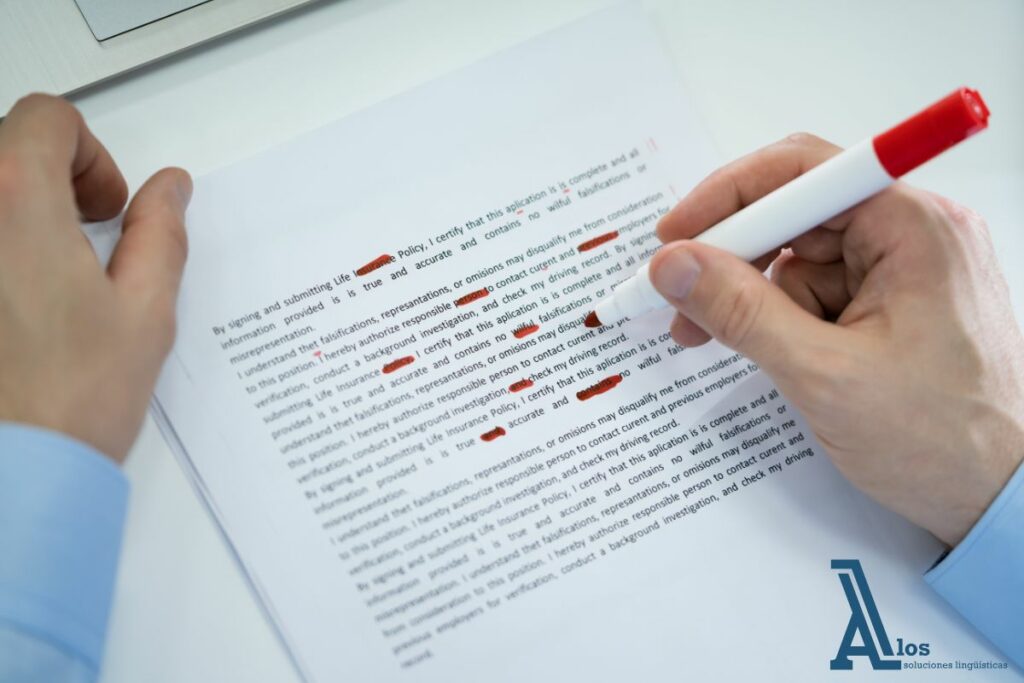
Spotting errors in time is far cheaper than correcting them while the product is in use.
And for the team working flat out during peak season, a USB desk fan helps keep the working environment comfortable when the heat is on too
The real impact on your business
Ignoring these errors is not just a linguistic problem. It has direct consequences:
Higher operating costs
Technical support overload
Loss of international clients
Reputational damage
In competitive markets, one bad experience can mean the client never comes back.
Review your technical documentation before the peak season
Specialist technical translation, with glossaries and quality control, so your manuals and interfaces do not generate incidents just when your team is smallest.
Ask us for a quote →Frequently asked questions
Because it directly affects how the product is used. An error can cause anything from confusion to operational or legal risk.
Not in technical contexts. They can be useful as support, but they must always be reviewed by specialist professionals.
Before launches, before international expansion and especially before periods of high demand such as the summer.
In closing
The problem is not that translation errors exist, but when you find them. And summer is, without doubt, the worst moment.
Planning ahead, working with professionals and setting up quality processes can make the difference between a smooth experience and a constant problem.
If you want to avoid this kind of situation in your company, at ALOS we can help with technical translation services and language training adapted to your sector. Get in touch and review your documentation before it is too late.