





Taking part in international trade fairs involves more than presenting your product or service: communicating effectively with customers, suppliers and partners is what makes the difference. Having a professional interpreter is essential, but so is knowing and preparing the related documents that will help your conversations succeed. In this article you will learn which documents to review and how to make communication at international events work better.
Why documents matter in trade fair interpreting
An interpreter does not simply translate words: they also help convey the information contained in critical documents accurately. At international trade fairs certain documents come up again and again, and understanding them can be the difference between a successful negotiation and a missed opportunity.
Product catalogues, technical data sheets and sales brochures, for example, should be reviewed in advance. That way the interpreter masters the specific terminology of your sector and avoids confusion over technical or commercial terms.
Preliminary contracts, order forms and confidentiality agreements also demand absolute precision. Preparing them and familiarising the interpreter with them keeps conversations clear and safe.
Commercial and marketing documents
Catalogues and technical data sheets
These documents contain detailed information about products or services. An interpreter who has reviewed them in advance can explain technical specifications, materials, dimensions or functions without errors. This matters particularly in sectors such as machinery, technology or pharmaceuticals, where accuracy is crucial.
Presentations and promotional material
Brochures, slides and presentation videos also need reviewing. An interpreter who knows the content can anticipate visitors’ likely questions and convey the message more naturally. That avoids interruptions during demonstrations or quick meetings at the stand.
A practical example
Say your company is taking part in an industrial technology fair in Germany. If your interpreter has reviewed the technical data sheets for your machines beforehand, they will be able to render measurements, capacities and certifications correctly, avoiding the kind of confusion that erodes a potential customer’s trust.
Legal and negotiation documents
Contracts and preliminary agreements
At trade fairs it is common to discuss preliminary terms of collaboration. Interpreters need to be familiar with the contracts and agreements involved so that every party understands the important clauses. This protects your company against legal misunderstandings.
Non-disclosure agreements (NDAs)
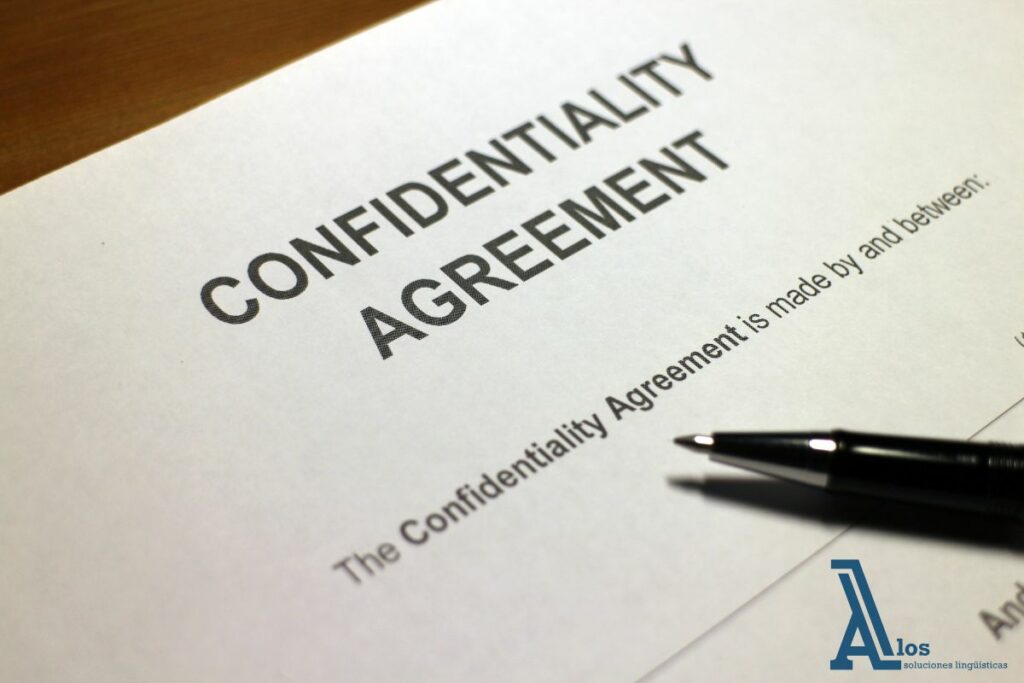
When innovative ideas or prototypes are shared, NDAs are essential. Reviewing them with the interpreter ensures that sensitive information is communicated correctly and that legal boundaries are respected.
Order forms and quotations
A mistranslated quantity, price or payment term can cause problems later on. Preparing these documents in advance and talking the interpreter through them keeps negotiations clear and avoids trouble.
Practical tips for working with interpreters at trade fairs
- Send documents in advance: this gives the interpreter time to study them and prepare the technical terms.
- Set out the context of each meeting: explain the objectives, the products and the questions customers are likely to ask.
- Set priorities: point out which documents are critical and which are supplementary.
- Review together: going through the documents with the interpreter surfaces questions early and speeds up communication during the event.
Frequently asked questions
Catalogues, technical data sheets, presentations, preliminary contracts and non-disclosure agreements. Reviewing them beforehand prevents mistakes during your conversations.
Yes. The more familiar they are with the specific terminology, the more accurate their interpreting will be in meetings and negotiations.
At least a week before the fair, so that they have time to review the material and become familiar with all of it.
Having an interpreter at international trade fairs is only part of what makes them work: preparing and reviewing the related documents matters just as much. With the right planning, your company will get clearer meetings, more effective negotiations and a professional image in front of international customers and partners.
If you want to improve how your company communicates at international trade fairs and make sure your information comes across without errors, contact ALOS to find out about our B2B language services and tailored training.