





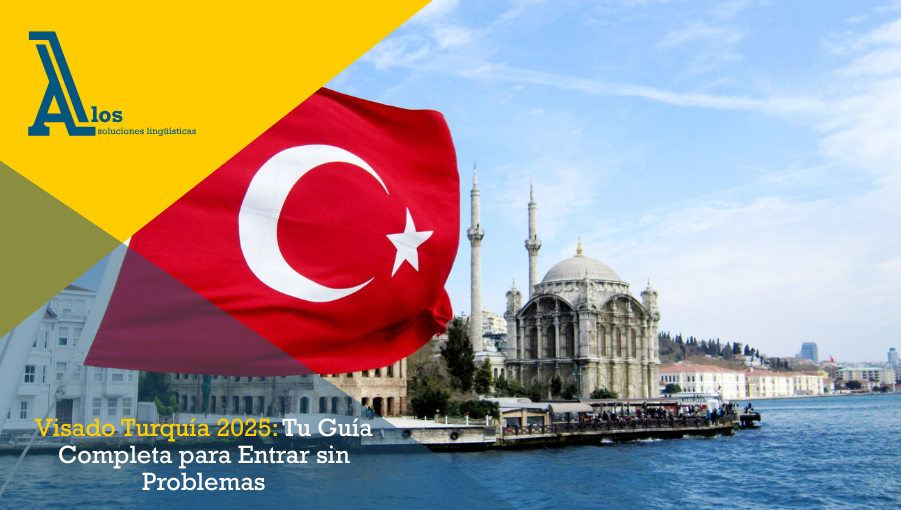
Turkey is booming as a destination for migration and tourism in 2025. More and more people, when researching opportunities to study, work or invest, start with one key search: Turkey visa. This procedure has become the gateway to a country full of history, unique landscapes and a way of life that is affordable and attractive to foreigners from all over the world.
One example is the American actor Joe Taslim, who initially travelled to Turkey for an international production and ended up staying for several months, captivated by the creative energy of Istanbul and its multicultural atmosphere. In interviews he has praised the safety, the food and the local technical talent, which has led other actors and creators to consider Turkey as a base for artistic projects.
The story of Helena Andersson also stands out. This Swedish designer decided to move her ceramics workshop to Cappadocia. Drawn by the mystique of the place and its artistic inspiration, Helena found in Turkey not only a home for her sustainable brand but also a community that supported her from day one. Today she exports pieces across Europe and is part of a growing network of international creatives based in Anatolia.
Even influencers and digital nomads are backing Turkey. Canadian travel content creator Marie Dubois chose Izmir as her base for its internet connection, relaxed city life and proximity to the sea. On her YouTube channel she highlights the immigration benefits and the friendliness of the locals. These stories show that, if you are thinking about travelling or moving, Turkey offers many routes, all of them starting with getting the right visa.
5 keys to applying for a visa for Turkey in 2025
1. Work out whether you need a visa
The first thing to do is to confirm whether you need a visa, based on your nationality and the reason for your trip. For example:
- For tourism or business stays of up to 90 days, citizens of countries such as Spain, Germany or France do not need a visa.
- If you intend to study, work or live in Turkey for more than 90 days, you will need to apply for a specific visa matching that purpose.
Checking this in advance will help you avoid common mistakes and speed up the rest of the process. You can review the official list of exempt countries and the applicable requirements on the website of the Turkish Ministry of Foreign Affairs: www.mfa.gov.tr
2. Apply for your electronic visa (e-Visa)
The e-Visa is a practical option available to travellers from more than 100 nationalities. It is ideal for short tourism or business stays. It is applied for exclusively online, with no need to visit an embassy or consulate.
The procedure is simple:
- Go to www.evisa.gov.tr
- Complete the form with your personal and travel details.
- Pay by credit or debit card.
- Download the visa in PDF format and keep it both digitally and printed.
Most applications are approved within minutes, but it is advisable to complete this step at least 48 hours before travelling.
3. Gather the necessary documentation
If you need a study, work or residence visa, you will have to submit specific documents supporting your application. The basic documentation includes:
- A passport valid for at least six months from the date of entry.
- Recent passport-size photographs.
- A letter of acceptance from an educational institution or an employment contract.
- Proof of sufficient financial means for your stay.
- International health insurance valid in Turkey.
Each type of visa may require additional documents, so it is advisable to check the specific conditions for your case carefully.
4. Consider the special visas
Turkey offers visas tailored to different personal and professional situations. The most relevant include:
- Student visa, for people enrolling at a Turkish educational institution.
- Work visa, which requires a job offer approved by the Ministry of Labour.
- Family residence visa, for people joining relatives resident in Turkey.
- Golden Visa, aimed at investors wishing to obtain Turkish citizenship through significant investments, such as buying real estate worth at least USD 400,000.
Knowing these options will help you choose the route that best suits your objectives.
5. Consult official sources
All information on requirements, documentation and procedures should always be verified against official sources. Although there are agencies that can help you, it is essential to check the details directly with:
- The Turkish Ministry of Foreign Affairs: www.mfa.gov.tr
- The official electronic visa portal: www.evisa.gov.tr
- Turkish embassies or consulates in your country of residence.
Using official sources protects you from fraud, administrative errors and unnecessary delays to your application.
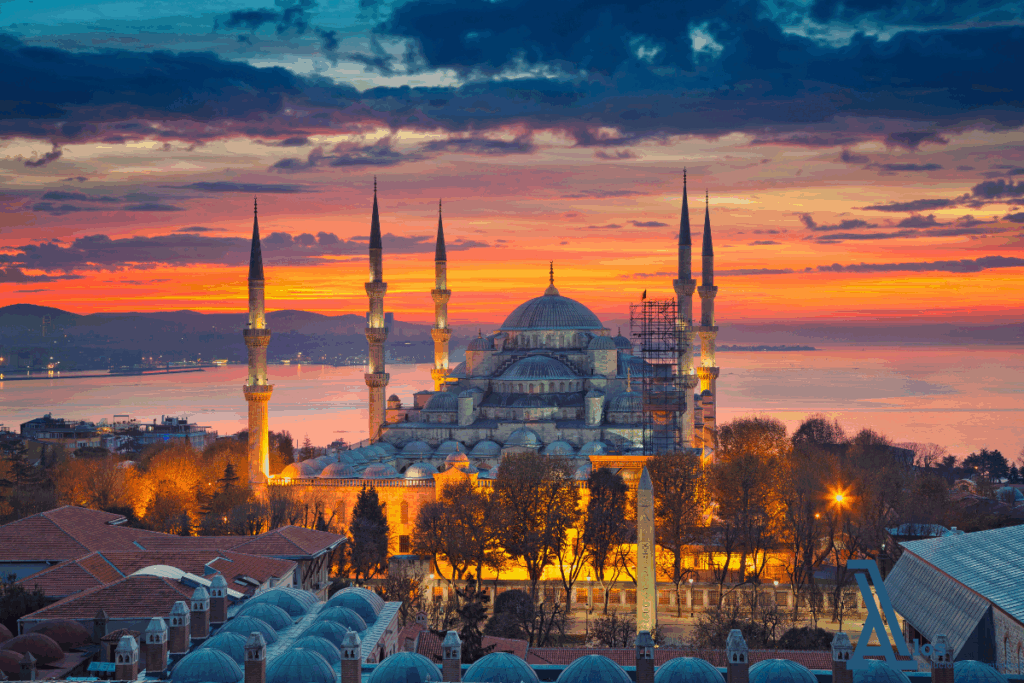
Visa types by purpose of travel
Turkey offers a variety of visas depending on the purpose and length of the stay. Choosing the right type of visa is essential to avoid refusals and to make sure you can carry out your planned activities without legal restrictions. Below are the main types of visa you can apply for in 2025.
1. Tourist visa
This is the most common visa and is intended for people wishing to visit Turkey for leisure, holidays or personal visits. Depending on the country of origin, some travellers can:
- Enter without a visa (up to 90 days)
- Apply for an e-Visa online
- Obtain a visa at the consulate if they do not qualify for the e-Visa
Duration: up to 90 days within a 180-day period
Requires a letter of invitation or hotel booking: not compulsory, but advisable in some cases
2. Business visa
Designed for people travelling to Turkey for commercial purposes, such as meetings, trade fairs, initial investments or technical consultations. In many cases it can be obtained as an e-Visa, depending on the country of origin.
Duration: up to 90 days
Additional documentation: invitation from a Turkish company or proof of participation in a business event
3. Student visa
For those who have been accepted by a university, language course or other Turkish educational institution. It is applied for directly at the consulate and requires a letter of acceptance.
Duration: according to the length of studies (can be renewed)
Requirements:
- Letter of acceptance
- Proof of financial means
- Health insurance
- Valid passport
- Recent photograph
Note: Once in Turkey, the student will need to apply for the residence permit within the first month.
4. Work visa
This visa is compulsory for anyone wishing to work legally in Turkey. The Turkish employer must submit an application to the Ministry of Labour while the employee applies for the visa at the consulate.
Duration: issued for 1 year and renewable
Essential documentation:
- Employment contract
- Employer’s application
- Approved work permit
- Passport and photographs
- Health insurance
5. Family reunification visa
Allows relatives of Turkish citizens or legal residents to join them in Turkey. It is common for spouses, minor children or dependants.
Duration: normally 1 year (renewable)
Requires:
- Marriage or birth certificate
- Proof of the relative’s legal residence in Turkey
- Health insurance
- Financial means
6. Research, culture or sports visa
Aimed at people taking part in cultural, artistic, scientific or sporting activities. It can also be applied for by journalists, academic researchers or participants in specific projects.
Requires:
- Letter of invitation from the organising institution
- Programme of activities
- Professional documentation (licences, CV, etc.)
7. Transit visa
Used by people stopping over in Turkey on the way to another country. It can be valid for 1 or 2 entries and has limited validity.
Important: although many nationalities do not require it, others do have to apply for it for air or land transit.
8. Investor visa (Golden Visa)
This visa is part of the citizenship by investmentprogramme. It is aimed at foreign nationals who invest in real estate, Turkish funds or other financial instruments.
Requires:
- Minimum property investment of USD 400,000
- Holding the investment for at least 3 years
- Criminal record certificate
- Financial documentation and passport
Benefit: the possibility of obtaining Turkish citizenship within a few months.
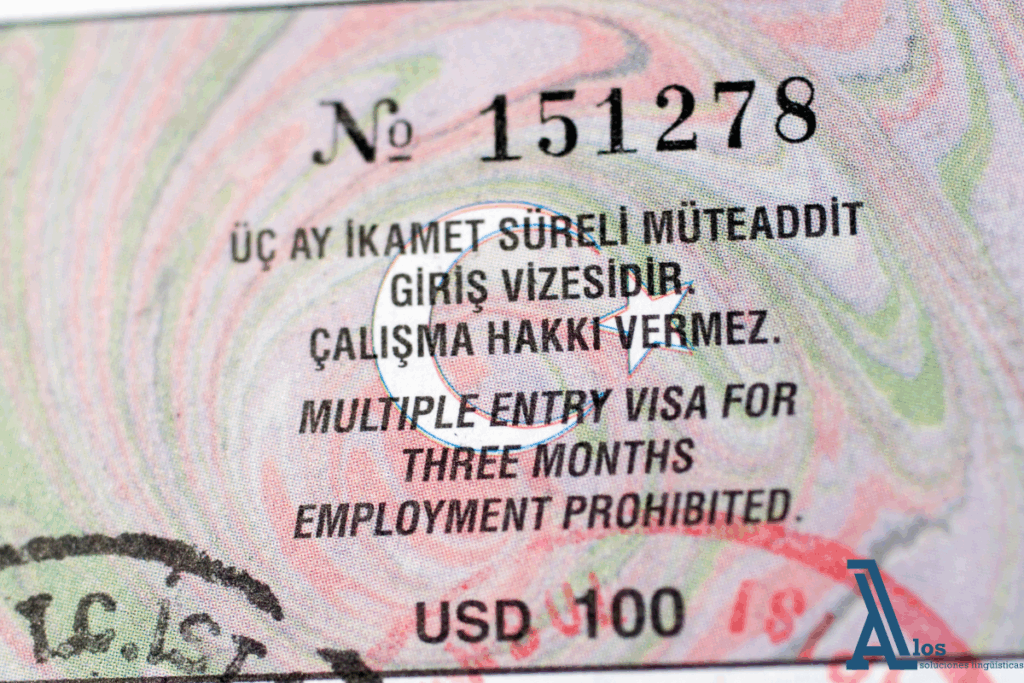
Summary table of visa types for Turkey in 2025
| Type of visa | Duration | Main purpose | Main requirements | e-Visa available? |
|---|---|---|---|---|
| Tourism | Up to 90 days | Leisure travel, holidays | Valid passport, return ticket | Yes (depending on country) |
| Business | Up to 90 days | Meetings, trade fairs, commercial activities | Company invitation, valid passport | Yes (depending on country) |
| Studies | According to programme | University, language courses | Letter of acceptance, insurance, financial means | No |
| Work | Initially 1 year | Legal employment with a Turkish company | Contract, work permit, health insurance | No |
| Family reunification | 1 year (renewable) | Joining a resident spouse or children | Family certificate, proof of residence, financial means | No |
| Research/culture | Variable | Participation in academic or artistic events | Letter of invitation, professional documentation | No |
| Transit | 1-5 days | Stopover en route to another international destination | Connecting ticket, valid passport | Sometimes |
| Investors (Golden Visa) | Min. 3 years’ investment | Citizenship through property investment | Proof of investment ≥ USD 400,000, criminal record certificate | No (it is a special process) |
The e-Visa process step by step
- Go to the official portal: www.evisa.gov.tr
- Complete the online form.
- Pay the fee by card.
- Download your visa in PDF.
This procedure usually takes less than 10 minutes. It is simple, straightforward and requires no visit to the embassy.
Tips for getting your visa application approved
- Make sure your passport has at least 6 months’ validity.
- Attach documents in a legible, up-to-date format.
- Explain the purpose of the trip clearly.
- Include a letter of invitation or acceptance if you are going for work or study.
- Take out international health insurance.
Life in Turkey for foreigners: culture and customs
- Turkey has a low cost of living compared with European countries.
- The people are welcoming, although the language can be a barrier.
- It is a secular country with a Muslim majority; respecting cultural norms is advisable.
- Istanbul, Ankara and Izmir have active international communities.
What to do if your visa is refused
- Read the reason for the refusal carefully.
- Correct any errors or provide the missing documentation.
- You can appeal the decision or reapply.
- Consider support from a specialist agency if the case is complex.
Why choose Turkey?
Turkey is not only a popular tourist destination but also a country that has gained ground in recent years as a place of residence for expatriates, international students, entrepreneurs and professionals in various fields. Its appeal lies in a powerful combination of geographical, economic, cultural and legal advantages that make it a strategic and rewarding option for those seeking a fresh start or a temporary experience.
“If the Earth were a single state, Istanbul would be its capital.”
—Napoleon Bonaparte
1. A privileged location between two continents
Turkey stretches between Europe and Asia, which gives it a unique advantage both geopolitically and culturally. In Istanbul, for example, you can cross from one continent to the other in less than 10 minutes. This strategic location has made the country a key point of commercial, diplomatic and transport connection, ideal for international business, foreign investment and logistics networks.
2. Competitive cost of living
One of the main reasons many people choose to live in Turkey is its low cost of living compared with European or North American countries. Cities such as Istanbul, Ankara and Izmir offer a wide range of options for housing, food, transport and leisure, which makes it possible to maintain a good standard of living on a reasonable budget. Even services such as private healthcare or international education are more affordable than in other destinations.
3. Cultural diversity and historical wealth
Turkey is a crossroads of civilisations. From the ruins of Troy to Ottoman architecture, every city tells a thousand-year-old story. This diverse and inspiring setting enriches the personal and professional experience of anyone who decides to live there. Turkish hospitality is also widely recognised: local people tend to be very friendly towards foreigners and are happy to share their culture.
4. Investment opportunities and residence programmes
The Turkish government has promoted policies favourable to foreign investment, such as the “Golden Visa” , which gives access to Turkish citizenship in exchange for a property investment. There are also specific visas for entrepreneurs, remote workers and highly qualified people. Setting up a company in Turkey is relatively straightforward, and many sectors — such as technology, tourism, construction and education — are growing strongly.
5. Education and healthcare of international quality
Turkey has a solid university system, including institutions such as Boğaziçi University, the Middle East Technical University (METU) and Istanbul University, all with programmes in English and high academic standards. As for healthcare, the country has developed a modern network of hospitals and private clinics offering quality services at competitive prices, which has also driven medical tourism.
6. Modern infrastructure and global connections
Cities such as Istanbul are perfectly connected by air, sea and land. Istanbul airport is one of the busiest in the world and connects to more than 300 destinations. The country also has modern public transport, high-speed rail networks and efficient digital services for paperwork, payments and communications.
7. A varied lifestyle and quality of life
Whether you prefer cosmopolitan life in a vibrant city or the calm of the Mediterranean coast, Turkey offers many lifestyles. Diverse climates, unique landscapes such as Cappadocia and Pamukkale, and a rich cultural and culinary life make the country attractive both to adventurers and to those looking for stability.
Your gateway to Turkey starts with a good translation
Applying for a visa, moving abroad or starting a new professional chapter in another country takes more than enthusiasm: it also requires legal clarity, accurate documentation and language skills. In this respect, Alos Soluciones Lingüísticas is your strategic ally in making the whole process easier, safer and more professional.
Our sworn and professional translation services guarantee that all your documents — such as passports, academic certificates, contracts or birth certificates — are correctly adapted and recognised by the Turkish and European authorities. We know what consulates and embassies require, and we work with precision and speed so that you do not lose time on corrections or refusals.
We also offer personalised language coursesfor companies and individuals alike, in Spanish, English, Turkish and other key languages. Whether you need to learn Turkish before moving or to train your team in language skills to expand into new markets, at Alos we have solutions tailored to your situation.
Frequently asked questions (FAQ)
No, not for tourist stays of up to 90 days within a 180-day period.
Through the official site: www.evisa.gov.tr
A university letter of acceptance, a valid passport, financial means and health insurance.
A programme that allows you to obtain citizenship through property or business investment.
On the website of the Turkish Ministry of Foreign Affairs: www.mfa.gov.tr