





Indonesia, with its more than 17,000 islands and incomparable cultural wealth, has become an increasingly popular destination for anyone wanting to explore, study or settle in South-East Asia. If you are thinking of taking the plunge this year, knowing the requirements for the Indonesia visa 2025 is essential to avoid setbacks and make the most of your time in the country.
One telling example is the actor Josh Lucas, who lived in Bali with his son so that the boy could attend a school focused on sustainability. His story reflects a growing trend: people from all over the world are finding in Indonesia not just a holiday destination but a temporary or even permanent home.
Celebrities such as Julia Roberts, George Clooney and Mick Jagger have spent long periods in Bali, enjoying its calm, its spiritual connection and its friendly people. Beyond the famous names, however, more and more students and workers are deciding to explore educational and professional opportunities in the country.
Types of visa available for Indonesia in 2025
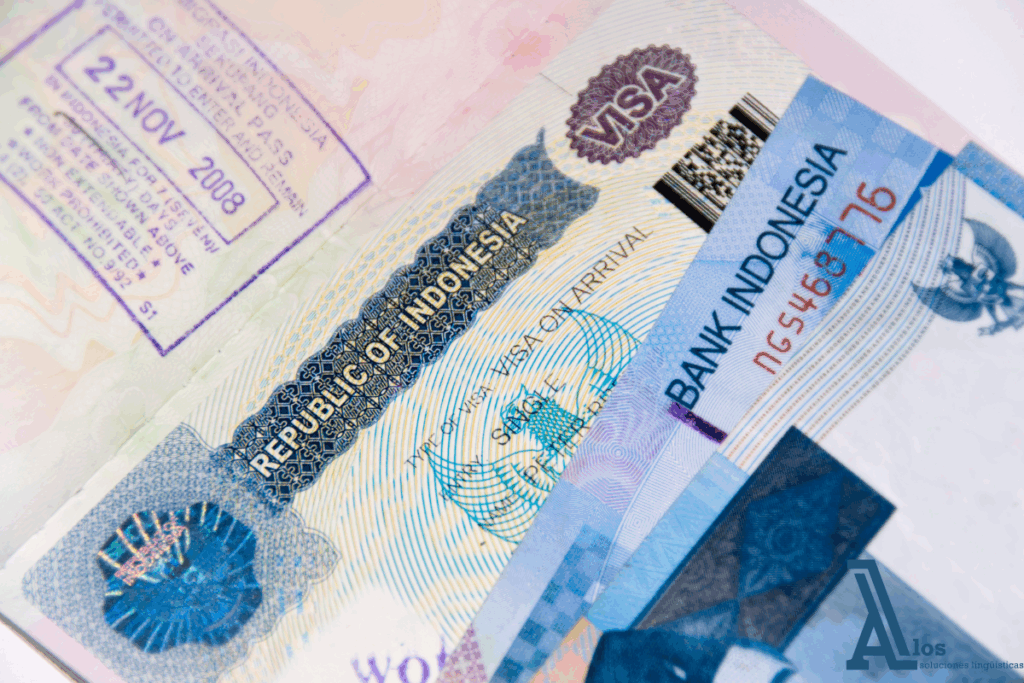
1. Visa on Arrival (VOA) – visa issued on arrival
Ideal for: tourists or short visits
Duration: 30 days (with the possibility of a single 30-day extension)
Cost: roughly 500,000 IDR (~35 USD)
Where to apply: at the airport on arrival or in advance online (eVOA)
Requirements:
- Passport valid for at least 6 months from the date of entry.
- Onward ticket out of the country.
- Payment of the relevant fee.
Notes:
The VOA does not allow you to work, study or carry out paid activities. It is a good option for tourism or visits to family and friends.
2. Tourist visa B211A (eVisa)
Ideal for: tourists planning to stay more than 30 days, retreats, long non-working stays
Duration: 60 days, extendable up to 180 days (4 extensions of 30 days)
Cost: 1,500,000 to 2,500,000 IDR, depending on the intermediary (~100-150 USD)
Where to apply: entirely online
Requirements:
- Passport valid for at least 6 months.
- Passport-type photograph.
- Sponsorship letter (can be arranged by an agent).
- Proof of funds or financial means.
- Travel itinerary and onward ticket.
Notes:
This visa is very flexible and ideal for digital nomads or long-term travellers. It does not allow formal work or study, but it can be used to take part in activities such as workshops, retreats or non-certified courses.
3. Student visa (Student KITAS)
Ideal for: foreign students accepted by educational institutions in Indonesia
Duration: depending on the programme (from 6 months to several years)
Where to apply: through the sponsoring educational institution
Requirements:
- Letter of acceptance from the university or school.
- Proof of sufficient funds to cover expenses.
- International medical insurance.
- Medical certificate.
- Copy of the passport.
- Registration with the Ministry of Education and the immigration authorities.
Notes:
It does not allow you to work. Students can extend the visa if they continue studying. It also allows family members to join them under certain permits (dependant KITAS).
4. Work visa (Work KITAS)
Ideal for: foreign nationals hired by companies registered in Indonesia
Duration: 6 months to 1 year, extendable
Where to apply: the company handles it with the Ministry of Manpower and the immigration authorities
Requirements:
- Letter of job offer.
- Copy of the employment contract.
- Company documentation (registration number, operating licence).
- Valid passport.
- CV and relevant experience.
- Payment of the DPKK levy (Indonesian workers’ development fund).
Notes:
This visa does allow legal employment. The company has to act as the foreign national’s sponsor, and there must be no qualified Indonesians available for the same post (the national priority principle).
5. Business visa (Business Visa B211A)
Ideal for: attending meetings and conferences, market research, seeking investment
Duration: 60 days, extendable
Where to apply: online, with a letter of invitation from a company
Requirements:
- Valid passport.
- Letter of invitation from an Indonesian company or institution.
- Proof of financial means.
- Receiving a salary in Indonesia is not permitted.
Notes:
This is not a work visa. It is used for professional activities that generate no income. An alternative for those who do not yet have a contract but want to explore opportunities.
6. Family reunification visa (Family KITAS)
Ideal for: spouses or children of Indonesian citizens or of KITAS/KITAP holders
Duration: 1 year, renewable
Where to apply: with the support of a resident relative or citizen
Requirements:
- Translated marriage or birth certificate.
- Valid passport.
- Proof of the sponsor’s financial means.
- Registration with the immigration authorities.
Notes:
It does not allow you to work, but it does allow legal residence. To work, you have to change visa type later on.
7. Retirement visa (Retirement KITAS)
Ideal for: foreign nationals over 55 who want to live in Indonesia
Duration: 1 year, renewable
Where to apply: through authorised agencies
Requirements:
- Minimum age of 55.
- Minimum monthly income (around 1,500 USD).
- A rental property taken for at least one year.
- Medical and third-party liability insurance.
- No employment in Indonesia.
Notes:
It is a popular visa in Bali and Lombok among European and Australian retirees. It does not allow employment or commercial activity.
8. Transit visa
Ideal for: people with a stopover in Indonesia who do not plan to leave the airport or who will stay less than 24 hours.
Duration: up to 7 days
Requirements:
- Confirmed onward ticket.
- Valid passport.
Notes:
It does not allow tourism or other activities. It is useful only for travellers in transit to another destination.
9. Social and cultural visa (Sosial Budaya)
Ideal for: visiting family or friends, taking part in cultural or religious activities
Duration: 60 days, extendable
Where to apply: sponsored by an Indonesian citizen or cultural body
Requirements:
- Letter of invitation from an Indonesian sponsor.
- Proof of the relationship (where applicable).
- Valid passport.
- Registration with the local immigration authorities.
Notes:
It is useful for longer non-tourist stays, such as extended family visits, work with NGOs or learning dance, language or culture.
10. KITAP (permanent residence card)
Ideal for: long-term residents (KITAS holders for at least 5 consecutive years)
Duration: up to 5 years, renewable
Where to apply: at the Directorate General of Immigration
Requirements:
- Having held a KITAS for at least 5 years.
- Certificate of good conduct.
- Proof of financial means or stable employment.
- Marriage or family documents (where applicable).
Notes:
It allows you to live, work, set up businesses and make multiple entries and exits without having to renew a visa every year.
Comparison table of Indonesian visas for 2025
| Type of visa | Duration | Key requirements | Allows work |
|---|---|---|---|
| Visa on Arrival (VOA) | 30 days (extendable by a further 30 days) | Valid passport, onward ticket | No |
| Tourist visa B211A (eVisa) | 60 days (up to 180 days with extensions) | Passport, sponsorship letter, online application | No |
| Student visa (KITAS) | Varies with the academic programme | Letter of acceptance, proof of funds, medical insurance | No |
| Work visa (KITAS) | 6 months to 1 year (renewable) | Employment contract, authorisation from the Ministry of Manpower | Yes |
| Business visa (B211A) | 60 days (extendable) | Company letter of invitation, proof of funds | No |
| Family reunification visa | 1 year (renewable) | Marriage or kinship certificate, passport, relative’s financial means | No |
| Retirement visa (KITAS) | 1 year (renewable) | Minimum age 55, fixed income, medical insurance, minimum 1-year tenancy | No |
| Transit visa | Up to 7 days | Valid passport, onward ticket | No |
| Social and cultural visa (Sosial Budaya) | 60 days (extendable) | Letter of invitation, family or cultural link, valid passport | No |
| Permanent residence (KITAP) | Up to 5 years (renewable) | 5 years on a KITAS, clean record, proof of financial means | Yes |
Why choose Indonesia to live, study or work?
Indonesia is much more than a holiday destination. This archipelago of more than 17,000 islands offers not only idyllic landscapes but an affordable quality of life, a growing international community, business opportunities and an expanding education network. Below we look in more detail at why more and more people are choosing Indonesia as a temporary or permanent home.
1. Affordable quality of life
Indonesia is one of the cheapest countries to live in across Asia. In places such as Bali, Yogyakarta or Bandung you can rent a comfortable home for a fraction of what it costs in Europe or North America. Food, transport and leisure are also notably inexpensive.
That allows many foreign residents to maintain a relaxed, balanced and high-quality lifestyle even on a modest income. It is particularly attractive for retired people, international students and digital nomads living on online earnings.
2. A multicultural and friendly environment
Indonesians are famous for their hospitality and warmth. In cities such as Jakarta, Bandung, Surabaya and Denpasar you will find international communities, cafés with a creative atmosphere, coworking spaces and cultural activities organised by locals and expatriates alike.
The country also has great ethnic, linguistic and religious diversity, which enriches the experience of living there. Traditional celebrations such as Balinese Nyepi or Muslim Ramadan offer unique opportunities to immerse yourself in a vibrant culture.
3. Growing infrastructure for digital nomads and entrepreneurs
Bali has emerged as one of the world’s most popular destinations for digital nomads. In areas such as Canggu, Ubud and Seminyak there are plenty of first-rate coworking spaces, good internet connections, flexible accommodation and international networking events.
The Indonesian government has even put forward proposals to create special visas for remote workers, which shows a growing interest in attracting international talent without the need for local employment contracts.
4. International education opportunities
Indonesia has a growing network of accredited international schools and universities, with programmes in English and a multicultural approach. Institutions such as BINUS University, Universitas Indonesia and the international schools of Bali offer internationally recognised degrees and technical training.
That makes it an excellent option for foreign students looking for a different educational experience, with a practical, multicultural approach in an exotic but accessible setting.
5. The job market and business opportunities
Although there are restrictions on jobs that can be filled by local people, there are sectors where qualified foreign nationals are in demand: language teaching, high-end hospitality, IT, international trade and sustainable tourism, among others.
There are also opportunities to set up your own business in partnership with local partners or through foreign investment. Special economic zones and tourist hubs such as Bali, Lombok and Labuan Bajo benefit from policies that encourage investment.
6. A connection with nature and wellbeing
Indonesia offers constant access to nature: beaches, rainforest, volcanoes, ancient temples and nature parks. That closeness to unspoilt surroundings encourages an active, healthy and spiritual lifestyle.
Many visitors end up taking an interest in disciplines such as yoga, meditation, permaculture or traditional medicine, and Bali and other islands are home to internationally renowned teaching centres in these fields.
7. A tropical climate all year round
Indonesia’s warm, humid climate means you can enjoy the outdoors almost every day of the year. There is a rainy season, but the country is perfect for anyone wanting to avoid cold winters or grey spells.
The tropical pace of life also has a positive effect on mood, physical wellbeing and disconnection from the stress typical of large Western cities.
8. A gateway to South-East Asia
From Indonesia you can easily explore other South-East Asian destinations: Thailand, Vietnam, Singapore, Malaysia, the Philippines and Cambodia are all a few hours’ flight away. That makes the country a strategic base for students, businesspeople or travellers who want to explore the whole region.
Many low-cost airlines also operate from the airports of Jakarta, Bali and Surabaya, which makes moving between countries easy and inexpensive.
“Indonesia is a place of wonder, where ancient traditions live alongside the modern world, and where every island has a story to tell.”
—Elizabeth Pisani, author of Indonesia, Etc.: Exploring the Improbable Nation
5 key points for arranging a visa for Indonesia
Arranging a visa for Indonesia in 2025 is not especially difficult, but it does require planning, an understanding of the process and awareness of the specific requirements for each type of visa. Here are the five essential points to bear in mind so that you can arrange your visa efficiently and avoid problems on arrival or during your stay.
1. Check the minimum validity of your passport
One of the most common mistakes — and a frequent cause of refused entry — is travelling with a passport that is about to expire. Indonesia requires your passport to have a minimum validity of 6 months from the date you enter the country, whatever type of visa you apply for.
Practical tip: if your passport expires soon, renew it before starting the visa process. Some airlines may also refuse to let you board if your passport does not meet this rule, even with an approved visa.
2. Book an onward flight before you arrive
Indonesia requires all visitors to present an onward ticket out of the country as a condition of entry. This applies even to those who plan to extend or change their visa once in Indonesia.
Without that ticket you may be refused boarding at your departure airport or refused entry by immigration on arrival.
Practical tip: if you have no fixed departure date, you can use services such as OnwardTicket or book a cancellable flight. The important thing is to show that you do not plan to overstay.
3. Choose the right type of visa for your purpose
Indonesia has different types of visa, and it is essential that you choose the one that best fits your situation: tourism, work, study, family reunification, business or retirement.
Many travellers, for instance, arrive on a tourist visa and then look for work, not realising that working on a tourist visa is not legal. Changing immigration status from inside the country is possible in some cases, but it is complex and not guaranteed.
Practical tip: before travelling, define the reason for your stay clearly and check whether that purpose is compatible with the visa you want to apply for. Sometimes the wisest course is to arrange the visa from your country of origin or with professional help.
4. Find out about the options for applying online
Since the pandemic, Indonesia has modernised its immigration system and now allows several types of visa to be applied for online through official and authorised platforms.
The eVOA (electronic Visa on Arrival) and the eVisa B211A , for example, can be applied for online without having to attend a consulate or embassy in person. The process involves uploading documents, paying digitally and receiving the visa by email.
Practical tip: for more complex visas (work, student or retirement), it is worth hiring an authorised local immigration agent to act as sponsor and handle the process with the authorities.
5. Do not overstay your authorised period
Indonesia is very strict about the length of stay. If you exceed the number of days allowed by your visa (even by a single day), you will face a fine of 1,000,000 IDR per day of overstay (around 60-65 USD). In serious or repeated cases, heavier sanctions can apply, including deportation or a ban on future entry.
Practical tip: keep clear track of your dates and, if you plan to stay longer, start the extension well in advance (at least a week before expiry). Do not leave it to the last minute, as immigration offices can have waiting lists.
Summary of the key points
| Key point | Why it matters | Tips |
|---|---|---|
| 1. Passport validity | A compulsory requirement for entry | At least 6 months from the date of entry |
| 2. Onward ticket | Proof for immigration and the airline | Use cancellable tickets if you have no fixed date |
| 3. The right type of visa | Avoids improper use of the visa | Research carefully before travelling |
| 4. Online application | Saves time and travel | Use official portals or registered agents |
| 5. Do not overstay | Fines and possible immigration sanctions | Keep an eye on your calendar and request extensions in good time |
Additional documentation needed
- Travel insurance with COVID-19 cover (recommended).
- Proof of accommodation (a hotel booking will do).
- Proof of funds.
- Vaccinations (depending on your country of origin; check the requirements for yellow fever and hepatitis).
Special considerations for students and professionals
- Students: they need university sponsorship and can obtain long-stay visas.
- Workers: they cannot work legally on a tourist visa. The employer has to arrange the work permit.
- Entrepreneurs: there are opportunities to set up businesses, but the legal process can be complex.
Do you need official documents translated for your Indonesian visa?
At Alos Soluciones Lingüísticas we help you with the certified translation of passports, letters of acceptance, contracts and more, meeting the requirements of embassies and immigration authorities.
Practical advice for your arrival in Indonesia
1. Buy a local SIM on arrival
Telkomsel and XL Axiata offer good coverage and affordable data plans. Activate your line at the airport so that you are connected from the outset.
2. Carry copies of your documents
Keep printed and digital versions of your passport, visa, medical insurance and bookings. That will make procedures easier and avoid problems if anything is lost.
3. Install useful apps
Download Grab or Gojek for transport and food, Traveloka for bookings and Google Translate to make communication easier.
4. Be ready for the climate
The climate is warm and humid. Take light, waterproof clothing and comfortable shoes. Dress respectfully at temples or in traditional areas.
5. Change money carefully
Avoid changing everything at the airport. Use official exchange offices or bank cash machines such as BCA or Mandiri for better rates.
6. Take out medical insurance
Recommended even where it is not compulsory. Make sure it covers emergencies, hospital treatment and third-party liability.
7. Respect local customs
Learn a few basic rules: use your right hand to give things, take your shoes off in homes and temples, and dress appropriately.
Your language bridge to Indonesia (and beyond)
Preparing a trip to Indonesia to study, work or simply live an unforgettable experience involves much more than booking a flight and packing a suitcase. It is essential to have correctly translated documents and, in many cases, the language skills to communicate fluently and confidently in a multicultural environment.
At Alos Soluciones Lingüísticas, we support you at every step:
- We produce certified translations and specialist translations of official documents such as passports, diplomas, employment contracts, letters of acceptance or medical insurance policies, meeting the requirements of consulates and of educational and professional institutions.
- We offer tailored language courses for individuals, companies and professionals preparing to live or work in an international environment. Whether you need English, Indonesian or other key languages, we adapt the content to your real needs.
With our experience in international projects and our network of professional linguists, we will be your strategic ally so that the language barrier becomes an opportunity rather than an obstacle.
Ready to take the next step? Because we are ready to help you cross borders.
Do I need a visa to enter Indonesia as a tourist in 2025?
Yes, most foreign nationals need a visa. The most common option is the Visa on Arrival, valid for 30 days and extendable by a further 30.
Can I work in Indonesia on a tourist visa or eVisa?
No. To work legally in Indonesia you need a work visa (KITAS) arranged by a registered company and approved by the immigration authorities.
How long can I stay in Indonesia on an eVisa B211A?
Initially 60 days, with the possibility of monthly extensions up to a maximum of 180 consecutive days.
Which documents do I need to apply for a student visa in Indonesia?
You need a letter of acceptance from the educational institution, a valid passport, medical insurance and proof of sufficient funds to cover your stay.
Can Alos Soluciones Lingüísticas help me with my visa documents?
Yes. We produce certified translations of official documents and offer tailored language courses to help you prepare for your stay in Indonesia.
What happens if I overstay the period allowed by my visa?
You will have to pay a fine of 1,000,000 IDR for each extra day. In serious cases you could be deported or barred from entering in future.
Can I change visa once I am in Indonesia?
In some cases yes, but it can be complex and requires the involvement of immigration agents. It is advisable to apply for the right visa before travelling.
Do I need vaccinations to travel to Indonesia?
It depends on your country of origin. The authorities may require vaccinations such as yellow fever if you are coming from a country at risk. It is also advisable to be up to date with hepatitis A/B and tetanus.