






Spanish, our mother tongue, hides fascinating secrets that go far beyond what we learnt at school. With more than 600 million speakers worldwide, Spanish has established itself as the second most widely spoken mother tongue on the planet, ahead even of English in native-speaker numbers. According to the Instituto Cervantes, in 2024 Spanish speakers passed the 600 million mark worldwide for the first time, a figure that keeps growing year after year.
The global influence of Spanish is undeniable. More than 24 million people are currently learning Spanish around the world, making it one of the most widely studied foreign languages. This exponential growth is no accident: Spanish has seen impressive digital development, with online growth of more than 1,500% since the year 2000, over twice that of English. The United States, for example, has already become the country with the second-largest number of Spanish speakers in the world, displacing Colombia from that position.
Beyond these striking statistics, Spanish has unique features that set it apart from other languages. From grammatical quirks that defy logic to spelling curiosities that surprise even native speakers, our language is full of secrets worth discovering. In this article we explore six fascinating facts about Spanish that will change the way you see this beautiful language, from its thousand-year history to its most surprising characteristics.
1. The Ñ: the unique symbol of Spanish around the world
The letter Ñ is far more than just a character in the Spanish alphabet; it is the distinctive symbol of our language and culture. This peculiar letter, which exists in no other language with exactly the same shape and sound, was born of a practical need in the Middle Ages. To save parchment and ink, medieval copyist monks began writing a small “n” above another “n” when they wanted to represent the Latin “nn” sound. Over time, that upper “n” became the tilde (~) we know today.
The importance of the Ñ goes beyond the purely linguistic. In 1991, when the European Union proposed removing the letter from computer keyboards in order to standardise the European alphabet, Spain objected firmly, arguing that suppressing the Ñ amounted to a direct attack on Spanish cultural identity. The episode became known as “the war of the Ñ”, and Spain won it, preserving one of the most representative symbols of the Spanish-speaking world.
Interestingly, although we associate the Ñ exclusively with Spanish, the letter also appears in other languages such as Galician, Asturian, Aragonese, Mirandese and Guaraní. It is in Spanish, however, that it has achieved its fullest expression and worldwide recognition. Words such as “niño” (child), “año” (year), “español” (Spanish) or “enseñar” (to teach) would be unpronounceable and unintelligible without this unique character, which defines the characteristic sound of the language.
2. Spanish has more than 93,000 official words
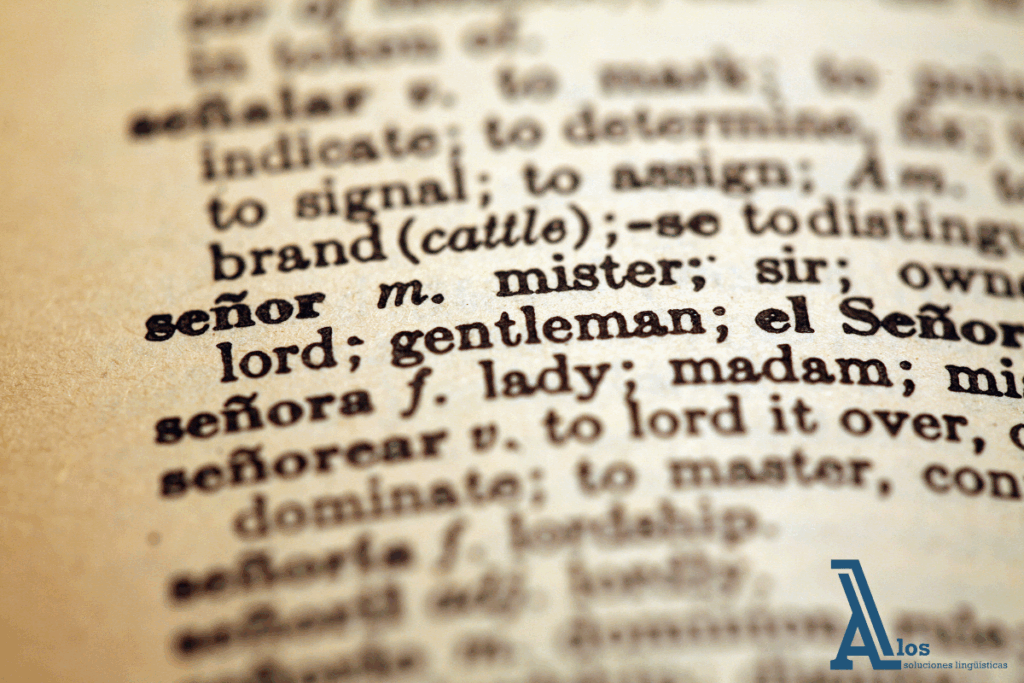
The Dictionary of the Royal Spanish Academy (RAE) contains roughly 93,111 entries, making Spanish one of the lexically richest languages in the world. This abundance of vocabulary stems from the complex, multicultural history of the language, which has taken in terms from many sources: Latin (its essential base), Arabic (during the eight centuries of Muslim presence on the Iberian Peninsula), the indigenous languages of the Americas and, more recently, English and French borrowings.
The longest officially recognised word in Spanish is “electroencefalografista” (electroencephalographer), with 23 letters, referring to a specialist in electroencephalography. There is, however, some debate as to whether technical words such as “pneumonoultramicroscopicsilicovolcanoconiosis” (a lung disease) should count as part of everyday Spanish vocabulary, even if they are technically correct.
What is fascinating about Spanish vocabulary is its capacity to create new words through prefixes and suffixes. Almost any noun can be turned into a verb by adding suffixes such as “-izar” (actualizar, modernizar), and diminutives and augmentatives can be formed with a flexibility few languages possess. This makes Spanish especially rich in expressive nuance, allowing subtle gradations of meaning that other languages can only achieve through paraphrase or lengthy explanation.
Spanish also keeps growing. Every year the RAE adds new words that reflect social, technological and cultural change. Terms such as “tuitear” (to tweet), “wasapear” (to message on WhatsApp) or “googlear” (to google) have found their place in the dictionary, proving the vitality and adaptability of the language.
3. The only word with five r letters
One of the most surprising facts about Spanish is the word “ferrocarrilero”, said to be the only word in the language containing five consecutive r letters. The word, which denotes someone who works on the railways, is a perfect example of how language change can create unique and challenging sound combinations.
“Ferrocarrilero” is formed by combining “ferro” (iron) + “carril” (rail) + the suffix “-ero” (indicating a trade or occupation). Joining these parts produces the sequence “rr-rr-r”, a genuine phonetic tongue-twister that challenges even the most experienced native speakers. Pronouncing it correctly calls for exceptional articulatory control, and it is often used in diction and speech therapy exercises.
This phonetic peculiarity is more than a linguistic curiosity; it reflects the capacity of Spanish to build complex words through derivation and compounding. Other words such as “antirrobo” (anti-theft), “infrarrojo” (infrared) or “vicerrector” (vice-chancellor) also feature challenging combinations of r sounds, but none matches the complexity of “ferrocarrilero”. Master Spanish or translate with precision! Our team of language experts is ready to help you with professional translations and tailored courses designed around your goals.
4. Spanish is the only language with inverted question and exclamation marks
This unique feature of Spanish arose from a practical need: allowing readers to prepare for a questioning or exclamatory tone from the very start of the sentence. The opening marks (¿ ¡) were officially adopted by the Royal Spanish Academy in 1754, making Spanish the only language in the world to use this punctuation system.
The reason behind the innovation is purely functional. In Spanish, thanks to its syntactic flexibility, a sentence can begin neutrally and turn into a question or an exclamation at the end. For example: “María, que llegó tarde ayer, ¿vendrá hoy a la reunión?” (María, who arrived late yesterday, is she coming to the meeting today?). Without the opening mark, readers would not know it was a question until they reached the end, which could affect intonation and comprehension.
Internationally, these marks have become a distinctive symbol of Spanish, so much so that in typography they are known as the “Spanish question mark” and the “Spanish exclamation mark”. Using them correctly is seen as a mark of command of the language and of Hispanic culture.
5. There are perfectly symmetrical words
Another curiosity of Spanish is that it contains several perfect palindromes, words that read exactly the same from left to right as from right to left. The best-known example is “reconocer” (to recognise), a nine-letter word that keeps its form whichever direction you read it in. This is no accident; it reflects the balanced phonetic structure of Spanish.
Other fascinating examples include “somos” (we are), “radar”, “rotor” and “anilina” (aniline). Each of these words demonstrates the natural symmetry Spanish can achieve in the way it builds its vocabulary. “Somos” is particularly interesting because it is the first-person plural of the verb “ser” (to be), a fundamental word that also happens to be symmetrical.
Beyond individual words, Spanish can create whole palindromic sentences, such as “Anita lava la tina” (Anita washes the tub) or “A mamá Roma le aviva el amor a papá, y a papá Roma le aviva el amor a mamá”. Such constructions require a deep understanding of the structure of the language and have been studied in computational linguistics and pattern analysis.
The existence of palindromes in Spanish is not merely a curiosity; it reveals deeper aspects of how the language is organised phonetically and morphologically. Some linguists suggest that these symmetrical patterns point to an intrinsic harmony in the structure of Spanish that favours certain kinds of linguistic construction.
6. The letter Y can take an accent in Spanish
One of the least known spelling rules in Spanish states that the letter “y” can carry an accent when it functions as a vowel. Although examples are extremely rare in modern Spanish, there are historical and technical cases where “y” takes an accent, as in archaic proper names such as “Ýñigo” or “Ýllora”.
This spelling possibility exists because “y” in Spanish has a dual nature: it can work as a consonant (in words such as “yo”, I, or “maya”, Mayan) or as a vowel (in words such as “rey”, king, or “muy”, very). When it acts as a vowel, especially at the end of a word, it is subject to the same accentuation rules as the other vowels. Most words ending in “y”, however, are stressed on the final syllable and end in a consonant, so under the general rules they need no accent.
The Royal Spanish Academy maintains this rule more for theoretical completeness than for practical use. In historical documents and archaic texts, accented “y” occasionally appears, especially in proper names of medieval origin. The feature illustrates the complexity and richness of the Spanish spelling system, which has evolved to keep pace with the phonetic changes of the language over the centuries.
Curiously, in other languages that use “y” as a vowel (such as Welsh), accenting the letter is more common. Spanish, however, has developed phonetic patterns that rarely call for it, making the accented “y” a genuine spelling rarity.
The endless richness of Spanish and its curiosities
Spanish keeps surprising us with its complexity and beauty. These six facts barely scratch the surface of a language that has been evolving, adapting and enriching itself for more than a thousand years. From its Latin origins to its current global reach, Spanish has shown an exceptional ability to absorb diverse influences while keeping its own identity.
The globalisation of Spanish is reflected not only in speaker numbers but in its cultural influence. In music, film, literature and digital media, Spanish occupies a privileged position that continues to strengthen. Spanish-speaking artists dominate the global music charts, Spanish-language series and films win over international audiences, and Latin American literature keeps producing work that crosses cultural and linguistic borders.
This vitality owes much to the characteristics we have explored: grammatical flexibility, lexical richness, phonetic peculiarities and a capacity to adapt. Each linguistic curiosity of Spanish is not just an interesting anecdote but a reflection of the cultural and historical complexity of the peoples who have shaped the language over the centuries. Today’s Spanish is the result of a fascinating historical process of conquests, migrations and commercial and cultural exchange that has left its mark on every aspect of the language.
Knowing these facts about Spanish helps us appreciate the language better and understand why it keeps gaining speakers and students all over the world. Every Spanish speaker, wherever they live, takes part in a rich linguistic tradition that continues to evolve and surprise us. See also our other articles for more facts about Spanish, tips and much more to enrich your language learning:
- Beyond the trip: why are cultural exchanges the best language teacher?
- Learning English from the sofa: films, series and podcasts for the whole family
- The 10 most common questions in job interviews in English (and how to answer them)
Frequently asked questions (FAQs)
The opening marks (¿ ¡) were officially adopted in 1754 to make Spanish easier to read. Because of the syntactic flexibility of the language, a sentence can begin neutrally and turn into a question or exclamation at the end, so these marks let readers prepare for the right tone from the outset.
Although the Ñ is the most distinctive symbol of Spanish, it also appears in other languages such as Galician, Asturian, Aragonese, Mirandese and Guaraní. It is in Spanish, however, that it has gained the greatest worldwide recognition and become a symbol of Hispanic cultural identity.
Spanish stands out for unique features such as the opening marks in questions and exclamations, the letter Ñ, its relatively simple but comprehensive accentuation system and its exceptional ability to create new words through prefixes and suffixes. It also maintains a very close match between spelling and pronunciation.
Arabic has contributed many words to Spanish, especially in fields such as agriculture, science and architecture.
Yes, studies have shown that Spanish is the second fastest language in terms of speech rate, after Japanese.