




Translation in the pharmaceutical industry is far more than a purely linguistic task: it is a critical function for ensuring patient safety, regulatory compliance and the commercial success of a product on international markets. Translating patient leaflets, labels, promotional material and technical documentation calls for a thorough command of medical terminology, of the specific regulations of each country and of a high degree of linguistic precision.
According to a report by Grand View Research, the global market for life-sciences translation services was worth 1.45 billion dollars in 2023 and is forecast to reach 2.55 billion dollars by 2030. This growth is driven by the expansion of international clinical trials, rising demand for multilingual regulatory compliance and the increasing globalisation of the pharmaceutical and biotechnology industry.
The importance of accurate translation is also reflected in patient safety. The European Medicines Agency (EMA) has pointed out that medication errors are one of the most frequent causes of adverse events in European hospitals. They are estimated to affect between 8% and 12% of hospitalised patients. Many of these errors are linked to the misreading of patient leaflets, labels or poorly translated clinical instructions. In addition, a study published in ScienceDirect notes that labelling and packaging errors account for 33% of all medication errors and 30% of the deaths associated with them.
Against this background, bodies such as the EMA, the AEMPS (the Spanish Agency for Medicines and Medical Devices) and the FDA (the US Food and Drug Administration) require all material relating to medicines to meet strict standards of clarity, accuracy and linguistic consistency in the local language of the destination country.
Why accurate translation matters
Patient safety is closely tied to translation quality. A poorly translated leaflet can lead to dosing errors, cause adverse reactions that are not understood, or create confusion about how a medicine should be administered. For this reason, translating pharmaceutical material requires not only command of the language but specialist training in medical terminology, pharmacokinetics and pharmacovigilance. Technical knowledge is essential for interpreting abbreviations, international nomenclature, acronyms and units of measurement, which vary between countries and healthcare systems.
A good translation also has a direct impact on the reputation of and trust in a pharmaceutical brand. Poorly adapted technical language or linguistic errors in advertising material can create a negative perception of a product even before it is used. Pharmaceutical companies with an international presence are investing more and more in localising their content, aware that this not only ensures legal compliance but also strengthens their competitiveness in multilingual markets. That is why advertising material — brochures, presentations for doctors, social media content or websites — needs an adaptation that combines terminological accuracy with cultural sensitivity and commercial suitability.
Real challenges in pharmaceutical translation
Translating for the pharmaceutical industry means facing a series of linguistic, technical and legal challenges. A good command of the language is not enough. Translators have to handle highly specialised terminology that often varies between countries and even between disciplines within the healthcare sector itself. The same term can mean different things in oncology, cardiology or neurology, so context and terminological precision are essential to avoid misunderstandings with clinical consequences.
Pharmaceutical documents are also subject to strict and changing regulation. Each country or region sets different rules on how information about medicines must be written and structured. Complying with those rules means not only translating well but adapting the text to the required format and style. In that sense, translation becomes a process of technical localisation that demands the closest attention to detail.
Confidentiality is another common challenge. The documents to be translated often contain highly sensitive information, from clinical trial data to safety reports or commercial launch strategies. Translators have to sign non-disclosure agreements (NDAs) and work in secure environments that protect the integrity of the information, which adds a further layer of demand to the process.
On top of all this comes deadline pressure. In a sector where time to market can make a difference of millions of euros, translations have to be fast but leave no margin for error. That is why many companies turn to teams of specialist translators who work with translation memories, glossaries and CAT tools to guarantee consistency, speed and accuracy.
What kind of documents are translated in the pharmaceutical sector?
The range of documents requiring translation in this industry is wide and covers content aimed at the general public as well as material for healthcare professionals or regulatory bodies. One of the best known is the medicine leaflet, also called the patient information leaflet (PIL), which contains essential information on dosage, indications, contraindications, side effects and warnings. This document has to be clear, accessible and perfectly localised into the language of the country where the medicine is marketed.
There are also summaries of product characteristics (SmPCs), which are more technical documents aimed at healthcare staff. These call for precise, specific language, as they contain pharmacodynamic descriptions, interactions with other medicines and key clinical data.
In marketing, pharmaceutical companies need to translate advertising material such as information brochures, product presentations, websites, social media content and sales arguments for their commercial teams. Although these documents do not carry the same technical load as a patient leaflet, they are subject to strict rules on what can and cannot be claimed about a medicine, so the translation has to be every bit as careful as for clinical texts.
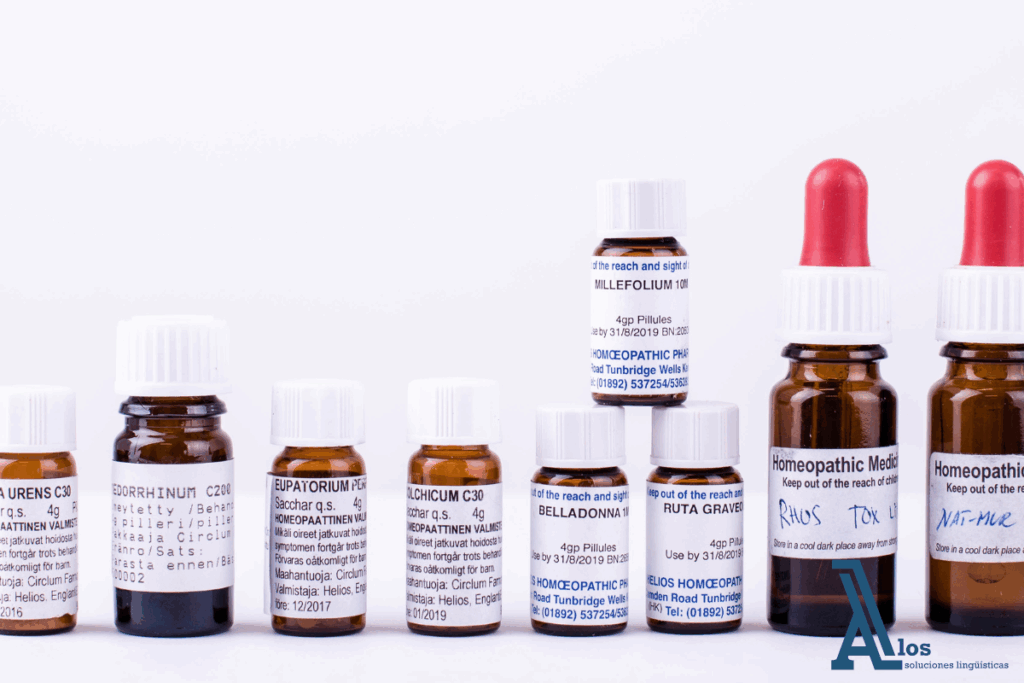
Other relevant documents include labels and packaging, which must carry exact information on composition, expiry date, batch, method of use and warnings. Even small variations in the text can lead to misunderstandings or regulatory breaches. Finally, there are pharmacovigilance reports, informed consent forms and clinical trial protocols, whose translation is key to progressing through regulatory phases and enabling international participation in medical studies.
Common abbreviations every translator should know
When translating pharmaceutical documents, you will often come across abbreviations that translators need to know:
- EMA: European Medicines Agency.
- AEMPS: Spanish Agency for Medicines and Medical Devices.
- FDA: US Food and Drug Administration.
- SmPC: Summary of Product Characteristics.
- PIL: Patient Information Leaflet.
- QRD: Quality Review of Documents group.
- NDA: Non-Disclosure Agreement.
- ICH: International Conference on Harmonisation.
- GMP: Good Manufacturing Practice.
- CTD: Common Technical Document.
As this article has shown, accurate translation of patient leaflets and advertising material is key to guaranteeing patient safety and legal compliance in the pharmaceutical industry. Working with specialist experts ensures clear, effective communication across every international market, protecting users and companies alike.
Why choose Alos Soluciones Lingüísticas?
At Alos Soluciones Lingüísticas we know that accurate translation is vital in demanding sectors such as pharmaceuticals, where every term counts and a single error can have serious consequences. We offer complete solutions to guarantee the highest quality and precision:
- Professional translation services: specialist translations adapted to the rigorous standards of the pharmaceutical sector, ensuring terminological accuracy and regulatory compliance.
- Tailored language courses: specific language training for professionals who need to master technical language precisely and improve international communication within the pharmaceutical field.
Rely on our experience to communicate successfully in a highly competitive and regulated global market. For more information, click here:
Because an error in the translation can lead to misunderstandings about dosage or side effects, putting the patient’s health at risk.
It depends on the country, but in Europe, for example, the EMA guidelines have to be followed and templates such as the QRD ones used.
Knowledge of medical terminology, an understanding of local and international regulations, and advanced language skills.
By hiring translators or agencies specialising in pharmaceutical translation who are familiar with the specific regulations.
Alos provides specialist translation of patient leaflets, summaries of product characteristics, advertising material and regulatory documentation for laboratories and pharmaceutical companies. It also offers revision, localisation and cultural adaptation services to ensure regulatory compliance and a clear message.
Our team is made up of translators with expertise in health sciences and pharmaceuticals, who work with sector glossaries, CAT tools and certified quality control processes to ensure reliable, accurate translations.
Yes. As well as translation, Alos offers specialised language training for professionals in the pharmaceutical and healthcare sector, helping companies improve their internal and external communication.