





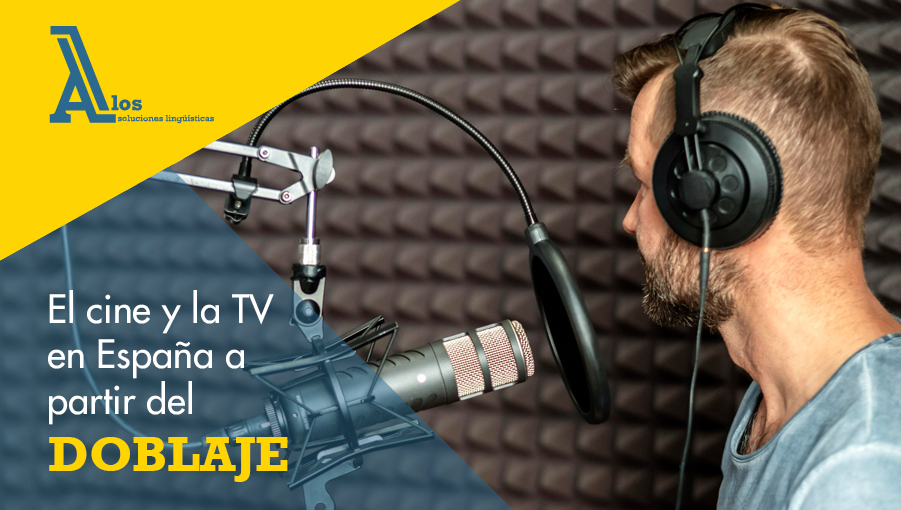
Original version or dubbed? Spanish cinema is at the forefront when it comes to dubbing. Many film lovers prefer to keep a work pure in its original version, and they are not wrong when they say that dubbing “loses” the essence. But it is no less true that, thanks to dubbing, a great many viewers with no knowledge of languages have greater and better access to cinema. In the Spanish context, the history of translation and dubbing in film is as rich as it is varied, marked by emblematic names, fascinating anecdotes and highly significant contributions.
History and development of dubbing
The history of film translation in Spain goes back to the dawn of the seventh art. In the early days of sound cinema, the language barrier was a major challenge for the industry. Foreign films faced the dilemma of reaching a Spanish-speaking audience, and so the practice of dubbing was born. It was in 1933 that the film “Vampires”, directed by Carl Th. Dreyer, became the first film dubbed into Spanish. This milestone marked the beginning of a tradition that has held strong to this day and has established the Spanish dubbing industry as one of the best in the world.
Pioneers and great voices
In the world of dubbing, Spain has been home to talented voice actors who have left their mark on the industry. One outstanding name is Constantino Romero, known for lending his voice to iconic characters such as Darth Vader in the “Star Wars” saga. His ability to convey the intensity and depth of foreign characters made him a legend of Spanish dubbing. Alongside Romero, other great names in our industry have left, and continue to leave, memorable voices on the big screen and on television: Pepe Mediavilla, Nuria Mediavilla, Claudio Serrano, Ramón Langa, Roger Pera, Graciela Molina, Camilo García, Miguel Ángel Jenner, María Luisa Solà…
Some figures
Spain is among the leading European countries in terms of watching dubbed films. Roughly 90% of foreign films are shown in cinemas dubbed into Spanish, according to recent statistics from the Instituto de Cinematografía y de las Artes Audiovisuales (ICAA, the Spanish Institute of Cinematography and Audiovisual Arts). In recent years, the number of dubbed films has risen steadily. In 2022, around 300 foreign films were dubbed to meet the demand of Spanish audiences. This increase reflects the continuing importance of dubbing in the film market, driven above all by the rise in productions that arrive through streaming platforms without passing through cinemas.
A war between the original version and dubbing? Not at all!
Translation and dubbing in Spanish cinema are essential elements that have contributed to cultural diversity and to global access to film. Over the years, they have developed from being simple technical solutions into respected art forms that are fundamental to the cinema experience. As we continue to explore linguistic worlds on screen, translation and dubbing will go on playing a crucial part in connecting audiences with stories from all over the world. On the other hand, if you set out to learn or consolidate a language, watching films in the original version is a great complement. It is a fantastic way to improve your pronunciation, train your ear, improve your grammar and widen your vocabulary. And remember that at ALOS we help you with any language, whichever it is and with the learning method that suits you best.