






Can a single interpreting mistake change the course of a meeting, a diagnosis or an international negotiation? The answer is yes… and in this article we look at the most common interpreting mistakes and how to avoid them.
Interpreting is the process of rendering a message orally from one language into another in real time, enabling effective communication between people who do not share a common language. It is essential in settings such as international conferences, business negotiations, legal proceedings and medical environments. Unlike written translation, interpreting calls for specific skills: active listening, fast decision-making and a deep understanding of culture. Interpreters have to capture not only the words, but also the tone, the emotions and the subtleties of the original speech.
A small interpreting mistake can have significant consequences. In 1977, for example, during a visit to Poland, US president Jimmy Carter was misrepresented by his interpreter, who mistranslated his words and suggested that Carter had sexual desires towards the country. The error caused confusion and needless diplomatic tension. You can find out more about interpreting here..
Making mistakes in interpreting is very easy, even for experienced professionals, because the discipline is demanding and happens in real time. Unlike written translation, interpreting allows no second reading and no pause for reflection: everything happens within seconds. A slip in short-term memory, an ambiguous word, an unexpected accent or an abrupt change in the speaker’s tone can all trigger significant misunderstandings.
Factors such as stress, fatigue, environmental pressure or a lack of background information also increase the risk of error considerably. A moment’s distraction or one badly judged decision is enough for a sentence to lose its original intent, with consequences that can be very serious in legal, medical or diplomatic contexts. That is why interpreting requires far more than command of the language: it takes a combination of mental, technical and emotional skills that are only honed through continuing training, rigorous preparation and a great deal of practice.
Common interpreting mistakes
| Frequent mistake | How to avoid it |
| Losing the speaker’s pace | Preparing in advance is essential. Studying the subject, reviewing similar speeches and building technical glossaries helps you anticipate terminology. Techniques such as chunking the speech also allow complex ideas to be broken into manageable segments, keeping the pace fluid and in sync. |
| Reversal of meaning | Prepare thoroughly in advance: research the subject of the event, get to know the speaker’s style and intent, and make sure you have mastered the technical and cultural vocabulary required. Regular practice in contextual interpreting and discourse analysis exercises help develop the ability to capture not only the literal content, but also the tone, the irony or the subtle implications of the message. |
| Incomplete sentences | Master effective working-memory and note-taking methods, which allow you to capture the key ideas of a speech without losing accuracy. It is also crucial to train the ability to divide the speech into units of meaning, which makes it easier to process and reproduce in full. |
| Omission of key information | The answer lies in constant training and practice with speeches of varying difficulty. Using fast, symbol-based note-taking techniques also lets you capture the key ideas without losing the thread of the interpretation. |
| False friends or poor literal renderings | Continuing training in both languages, frequent reading of specialised texts and a review of the mistakes commonly made in technical contexts. Professional interpreters also work with colleagues to share experience and correct linguistic bias. |
| Not knowing the cultural context | Research the cultural context of the event and get to know the participants and their customs. Taking part in intercultural competence workshops also helps polish this essential aspect of professional interpreting. |
| Terminology errors | Before the event, the interpreter should request documentation, study specific materials and draw up a glossary of key terms. Having digital terminology resources to hand during the assignment is useful too. |
| Lack of coherence in the discourse | Master the technique of reformulation and keep a logical structure throughout the interpretation. Practising with impromptu speech exercises also improves this skill. |
| Not asking the speaker for pauses | Agree pause timings with the speaker beforehand. The interpreter should state assertively when a pause is needed in order to guarantee accuracy. |
| Not knowing how to manage stress | Mental training, breathing techniques, thorough preparation and gradual experience at complex events all help build emotional resilience. |
| Ignoring the technology | Getting to know simultaneous interpreting systems, checking the equipment in advance and having technical support on site during the event are essential to guarantee the quality of the service. |
| Lack of advance preparation | Interpreters should insist on receiving materials in advance, research the subject thoroughly, practise beforehand and liaise with the client to clear up doubts or obtain useful documents. |
How to avoid interpreting mistakes
- Hire professional interpreters: professional interpreters are trained to handle complex situations and to understand cultural and linguistic subtleties. Their experience significantly reduces the risk of error.
- Advance preparation: it is essential that interpreters receive information about the subject, the context and the participants ahead of the event so that they can prepare properly.
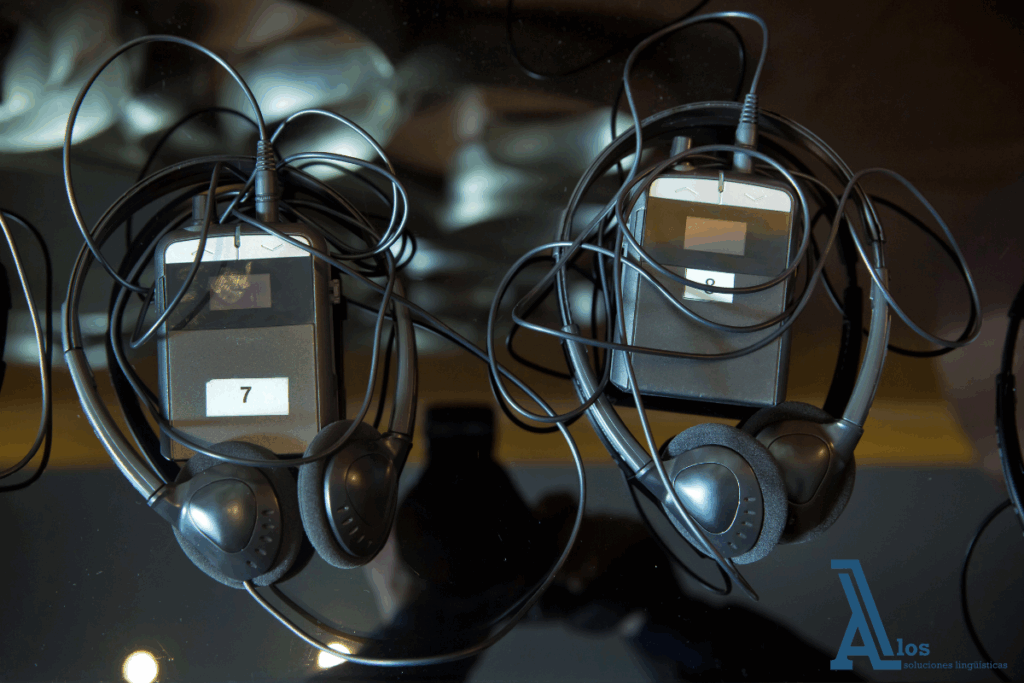
- Use of the right technology: high-quality simultaneous interpreting equipment matters, as it ensures clear transmission without interference.
- Review and feedback: after each event it is useful to review the interpretation and give constructive feedback in order to keep improving the quality of the service.
The advantages of hiring a professional interpreting service
- Accurate communication: professional interpreters convey the original message precisely, including tone, intent, emotion and cultural nuance, avoiding errors that could change the meaning of the speech.
- Command of specialist terminology: many interpreters are trained in specific fields such as medicine, law, technology or business, which guarantees the correct use of complex technical terms.
- Effective handling of pressure: they are trained to stay focused and react quickly in highly demanding settings, without compromising the quality of the interpretation.
- Adaptability to different formats and settings: whether simultaneous or consecutive interpreting, over the telephone or by video conference, professional interpreters are equipped to adapt to any format.
- Guaranteed confidentiality: interpreting professionals are bound by strict codes of conduct that protect clients’ privacy and sensitive information.
- A professional image and credibility: a quality interpreting service improves how the event, company or organisation is perceived.
- Fewer risks and costly errors: avoiding interpreting mistakes prevents serious consequences, especially in settings where a poor rendering can mean financial loss, legal problems or medical failures.
Choose quality
In short, when accuracy, trust and clarity matter, there is no room for common interpreting mistakes. Whatever the situation, working with trained, expert interpreters backed by a serious agency makes all the difference.
At Alos, we bring together linguistic talent and technical excellence so that every word communicates exactly what it should. Our team is ready to help you convey your message with complete fidelity, whatever the language or the context.
Make every word count. Trust Alos and avoid mistakes that can cost you dearly.
Frequently asked questions (FAQs)
A translator works with written texts and has time to consult sources and review the work before delivering it. An interpreter, by contrast, works orally and in real time, which calls for different skills such as mental agility, active listening and speed of response.
The most frequent errors include reversals of meaning, incomplete sentences, the use of false friends, the omission of key information, incoherent discourse and a failure to adapt culturally. All of them can seriously alter the original message and have negative consequences, especially in sensitive settings.
Several factors can play a part: a lack of advance preparation, unfamiliarity with the subject, environmental pressure, a fast-talking speaker, unfamiliar technical terminology, technical problems or even mental fatigue. That is why the interpreter’s preparation and experience are so important.
Because they are trained to handle complex situations, they have command of the terminology in their field, they know the appropriate interpreting techniques and they guarantee confidentiality and professionalism. A non-professional interpreter can make mistakes that compromise the outcome of a negotiation, an operation or a court ruling.
At international conferences, business meetings, trials, medical interviews, diplomatic events or any situation involving participants who do not share a common language. Professional interpreting ensures that everyone present receives the message accurately.
A poor interpreting service can create confusion, loss of credibility, legal or medical errors and even cultural offence. In many cases the consequences of bad interpreting are difficult, or impossible, to reverse.