





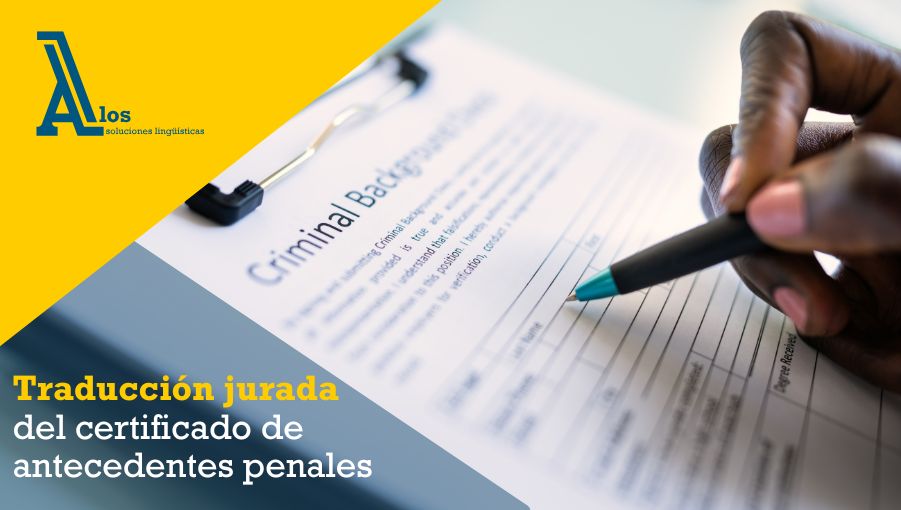
Before setting off on an international adventure, it is essential to know the requirements and formalities for a legal, secure stay in your destination country. One of the most frequently requested documents is the criminal record certificate, an official document stating whether or not you have a criminal record in Spain. This certificate is particularly relevant when applying for visas, work permits or residence and, in some cases, when enrolling at an educational institution.
Emigration by Spanish nationals has risen markedly in recent years. According to figures from the Instituto Nacional de Estadística (INE), the Spanish national statistics office, in 2023 more than 2.7 million Spaniards were living abroad, an increase of 3.3% on the previous year. The most common destinations include European countries such as the United Kingdom, Germany and France, as well as Latin American countries such as Argentina and Mexico. This pattern of migration has various causes, chief among them the search for better work, academic or personal opportunities.

It is also important to bear in mind that many countries require certain documents to be translated and legalised in a specific way. Some ask for a sworn translationproduced by a recognised official translator, while others may ask for the Hague Apostille or consular legalisation. These procedures guarantee the authenticity and validity of documents abroad.
If you need advice on sworn translations or other legal formalities while preparing your paperwork before you travel, do not hesitate to get in touch..
What is a criminal record certificate?
The criminal record certificate is an official document issued by the Spanish Ministry of Justice stating whether or not a person has a criminal record in Spain. It is essential for evidencing an individual’s legal conduct and is frequently required in a range of international procedures.
In some cases, particularly for certain professions abroad, you need not only the criminal record certificatebut also the certificate of sexual offences. This document is compulsory for anyone who will be working in contact with minors, such as teachers, carers, activity leaders or health and social care professionals. The difference between the two certificates is key: the criminal record certificate reflects any type of offence committed, whereas the sexual offences certificate covers only convictions relating to sexual assault or abuse. If you would like more detail on the differences between the two documents and when they are required, take a look at our article Differences between the criminal record certificate and the sexual offences certificate..
When is it needed?
There are many situations in which this certificate may be requested when you are planning a stay abroad:
- Visa applications. Many countries require this document as part of the visa application process, especially for long stays or for work purposes.
- Work permits. Employers abroad may require the certificate to satisfy themselves about a candidate’s legal standing.
- International adoption. The authorities in the receiving country commonly ask for this document to confirm the adopter’s suitability.
- Naturalisation or permanent residence applications. To evidence a clean record in the country of origin.
How do you obtain it?
To obtain a criminal record certificate in Spain, follow these steps:
- Application. This can be done in person, by post or online through the Ministry of Justice’s electronic portal.
- Required documents. You need to provide a valid national ID card or passport and, in some cases, a specific application form.
- Payment of fees. An administrative fee is payable; the amount can be checked on the Ministry of Justice’s official website.
- Processing time. The certificate is generally issued within 3 to 5 working days of receipt of a complete application.
Why sworn translation and legalisation matter
When submitting official documents abroad, it is crucial to ensure they are valid and legally recognised in the destination country. Two aspects are fundamental here: sworn translation and legalisation.
Sworn translation
A sworn translation is an official translation produced by an authorised translator certifying that the translated document is accurate and faithful to the original. It is required when the receiving country does not use the same language as the original document and asks for an official version in its own language.
- When is it required? When submitting documents such as criminal record certificates, academic qualifications, birth or marriage certificates and the like in a country whose language is not Spanish.
- Who can produce it? Only sworn translators officially recognised by Spain’s Ministerio de Asuntos Exteriores, Unión Europea y Cooperación (Ministry of Foreign Affairs, European Union and Cooperation) or by the competent authority in the destination country.
Legalisation of documents
Legalisation is the process of certifying the authenticity of a public document so that it is valid in another country. There are different methods of legalisation, depending on the international agreements between Spain and the receiving country. The
- Hague Apostille: for countries party to the Hague Convention, this procedure simplifies legalisation by means of a single apostille.
- Diplomatic or consular legalisation: for countries not party to the Hague Convention, a chain of legalisations is required, usually involving the Ministry of Justice, the Ministry of Foreign Affairs and the embassy or consulate of the destination country.
Obtaining and legalising the criminal record certificate: the procedure
Below is the full process for obtaining the criminal record certificate and preparing it for use abroad:
1. Applying for the certificate
- In person. At the regional offices of the Ministry of Justice or at its public information offices, presenting your national ID card or passport and the application form.
- By post. Sending the required documents to the address given on the Ministry of Justice’s official website.
- Online. Through the Ministry of Justice’s electronic portal, using a valid digital certificate.
2. Paying the fees
The corresponding fees can be paid:
- In person. By making a payment at a participating bank.
- Online. Through the payment platform on the Ministry of Justice’s electronic portal.
3. Receiving the certificate
Once issued, the certificate can be:
- Collected in person. At the office where the application was made.
- Received by post. At the address given in the application.
- Downloaded online. If the application was made electronically.
4. Sworn translation
If the destination country requires the certificate in another language, you must:
- Contact a sworn translator. Making sure they are officially recognised.
- Provide the original document. So that the translator can produce the certified translation.
5. Legalisation or Hague Apostille
Depending on the destination country:
- Hague Apostille. If the country is party to the Convention, the apostille can be obtained at the regional offices of the Ministry of Justice or at the relevant notaries’ association.
- Diplomatic or consular legalisation. If the country is not a party, you will have to follow the corresponding legalisation process, which may involve several steps at different official bodies.
Countries and their specific requirements
Every country has its own rules on the documents required of foreign residents. Below are some examples of specific requirements in different countries:

- United States. Requires an apostilled criminal record certificate and, in some cases, a translation into English by a sworn translator.
- United Kingdom. Usually requires a sworn translation of the certificate and, depending on the procedure, its legalisation at the Spanish embassy.
- Argentina. Accepts the Hague Apostille, but in some cases requires certification by the Spanish consulate in Argentina.
- Germany. Requires the certificate translated into German by a sworn translator and, on occasion, the Hague Apostille.
- Canada. For many procedures, in addition to the apostilled certificate, the sworn translation must be produced by a translator recognised in Canada.
It is always advisable to check the requirements with the embassy or consulate of the destination country before starting the process, as they can change.
In summary: obtaining, translating and legalising the criminal record certificate for life abroad
Obtaining the criminal record certificate and making sure it meets the requirements of the destination country is an essential step for anyone wanting to live outside Spain. Translating and legalising it correctly can make all the difference to whether immigration, employment or education applications are accepted.

Red tape can be a challenge, but with the right information and some planning the process becomes quicker and more reliable. From applying for the certificate through to legalisation and translation, every stage calls for attention to detail if delays or rejections are to be avoided.
If you are planning to move abroad, we recommend reading other related articles that may make the process easier, such as our Step-by-step guide: how to have your university degree recognised abroad and How to register with the Spanish consulate when you move to another country..
FAQ: frequently asked questions about the criminal record certificate for living abroad
Validity varies by destination country, but it is generally valid for 3 to 6 months from the date of issue. If your criminal record certificate has expired and you had already had the document translated, at ALOS we offer a nominal fee for a copy of your document; ask us for more information..
Yes. You can apply online if you have a digital certificate, or by post through a representative in Spain.
No, only for those that are party to the Hague Convention. Countries outside that agreement require consular legalisation.
It depends on the official language of the receiving country. If the certificate is not in that language, you will probably need a sworn translation.
You can consult the official list of sworn translators on the website of Spain’s Ministry of Foreign Affairs or at the embassy of the destination country.
Fees may vary, but the certificate costs approximately €3.78. Legalisation or apostille, and sworn translation, carry additional charges that depend on the service provider.
The certificate is issued in approximately 3 to 5 working days. Legalisation or apostille can take between 1 and 2 weeks, and sworn translation depends on the translator but is usually completed within a few days.