






In today’s globalised world, where language barriers can decide whether a multimillion-euro negotiation succeeds or fails, professional interpreters have become a key part of the international machinery. According to figures from the International Association of Conference Interpreters (AIIC), there are more than 3,000 certified professional interpreters working at multilingual events worldwide, handling over 150 different language pairs. These professionals do not merely have command of languages; they act as cultural bridges at conferences that may involve budgets of millions of euros and decisions affecting millions of people.
Demand for interpreting services has grown exponentially in recent years. According to Global Growth Insights, the global interpreting market was valued at 12.94 billion dollars in 2024 and is projected to reach 14.34 billion dollars in 2025, with a CAGR of 10,8% through to 2033. This growth is mainly due to the rise in international corporate events, diplomatic summits and scientific conferences that require simultaneous communication in several languages.
One telling figure is that professional interpreters spend an average of 40 hours preparing for every day of interpreting at specialist events. That intensive preparation is no accident: a single interpreting error can cost millions. A notable example of the consequences of a poor interpretation occurred in 1956, when the Soviet leader Nikita Khrushchev was misinterpreted as saying “We will bury you”, which heightened Cold War tensions.
Why thorough preparation is critical
The difference between a successful interpretation and a communication disaster lies in details that seem trivial. Professional interpreters understand that their work goes beyond simple word-for-word translation; they have to capture nuances, intentions, cultural contexts and emotional undertones that can completely alter the meaning of a message.
Preparation before the event accounts for 70% of success in professional interpreting. That includes not only command of the languages, but also a deep understanding of the context, the industry, the participants and the aims of the event. Interpreters working at medical conferences, for instance, have to become familiar with terminology that can range from specific surgical procedures to drug names in different international markets. An error in that context not only compromises communication, it can have serious legal and ethical implications.
Modern technology has added new layers of complexity to preparation. Hybrid events, where some participants are in the room and others are connected remotely, require interpreters to master particular technology platforms, deal with audio delays and adapt their pace to technical limitations.
Methodology for pre-event preparation
A professional interpreter’s preparation begins weeks before the event with a thorough analysis of the documentation provided. The process includes reviewing detailed agendas, speaker biographies, preliminary presentations, technical papers and any relevant reference material. Interpreters build specialist glossaries that can contain between 500 and 2,000 technical terms, depending on how complex the event is. These glossaries include not only direct translations but also contexts of use, synonyms and possible readings according to the cultural context.
Background research is another essential pillar. Interpreters study the professional track record of the main speakers, their recent publications, their political or business positions and their communication style. That information allows them to anticipate the register, the speed of delivery and the topics likely to come up. A CEO known for direct communication, for example, calls for a different interpreting approach from an academic who uses more elaborate, more nuanced language.
Specific technical preparation varies with the type of interpreting required. For simultaneous interpreting, professionals practise cognitive multitasking exercises, improving their ability to listen, process and speak at the same time. They do shadowing exercises (immediate repetition) in different languages, practise techniques for anticipating what comes next and develop strategies for handling moments of high information density. For consecutive interpreting, they focus on note-taking techniques, short- and long-term memory development and practice in summarising complex information.
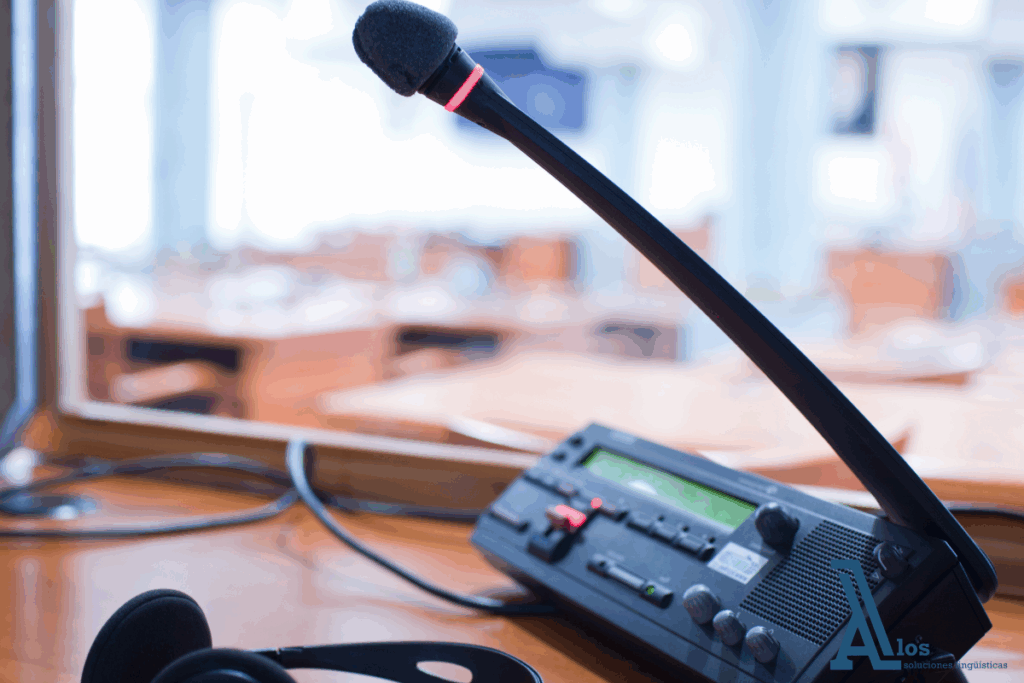
Is your event international? Make sure it succeeds with professional interpreters who convey your message without losing a word. Ask for a quote now!
Managing stress and cognitive performance
Simultaneous interpreting is considered one of the most cognitively demanding activities there is, comparable in neurological intensity to the work of air traffic controllers. Professional interpreters develop specific mental preparation routines that include controlled breathing techniques, mindfulness meditation and concentration exercises. A study in Neuroscience Letters measured brain activation in professional interpreters during simultaneous interpreting compared with repeating an audio text. The results indicated that simultaneous interpreting involves broader and more complex brain activation than other language tasks.
Physical preparation matters just as much. Interpreters keep up cardiovascular exercise routines to improve oxygen supply to the brain, practise vocal exercises to maintain the clarity and stamina of their voice during long sessions, and develop muscle relaxation techniques to prevent the tension that builds up over hours of intense concentration.
Nutrition before and during events is also part of the preparation. Interpreters follow specific diets that optimise brain function, avoiding foods that might cause drowsiness or affect concentration. They develop their own hydration protocols and use nutritional supplements that support cognitive function, always under professional medical supervision.
Coordination within interpreting teams
Complex multilingual events require coordinated interpreting teams in which each member has a specific role. Preparation includes joint rehearsal sessions where interpreters practise handovers, coordinate specific terminology and develop systems for supporting each other. In simultaneous interpreting they work in pairs that swap every 20 to 30 minutes in order to maintain quality and prevent extreme cognitive fatigue.
Communication between team members beforehand is crucial. They share glossaries and interpreting strategies for particular speakers, and develop protocols for unforeseen situations. They use discreet signalling systems to flag errors, to ask for help with difficult terminology or to coordinate a change of turn. That coordination is especially critical at events with several simultaneous rooms or where interpreting is needed in more than three languages.
Teams also develop response strategies for communication crises. This includes protocols for handling speakers who talk too fast, situations where technical terminology has no direct equivalent in certain languages, or moments of high emotional tension where cultural nuances can cause misunderstandings. Preparation includes drills for these situations to ensure coordinated and professional responses.
Modern technology and support tools
Technological change has significantly transformed the tools available to professional interpreters. Remote interpreting platforms such as Zoom and Microsoft Teams, and specialist systems such as Interprefy, require specific technical preparation. Interpreters have to become familiar with different interfaces, variable audio quality and technical delays that can affect the pace of interpreting.
Computerised terminology management systems make it possible to create and maintain dynamic glossaries with instant search functions during live events. Tools such as SDL Trados, MemoQ and Wordfast have developed specific modules for interpreting that synchronise terminology between team members in real time. Preparation includes mastering these tools in order to get the most out of them during high-pressure events.
Artificial intelligence is beginning to play a supporting role in preparation. Speech recognition systems help interpreters practise with different accents and speeds of delivery, while text analysis algorithms can automatically identify technical terminology in preparation documents. Professional interpreters stress, however, that these tools complement but never replace human preparation and professional judgement.
Why thorough preparation defines success
The thorough preparation professional interpreters undertake for multilingual events is a complex, many-sided process that goes well beyond command of languages. As we have seen throughout this analysis, modern interpreters have to be technical specialists, cultural mediators, managers of communication crises and experts in advanced technology. Their intensive preparation, which can require 40 hours for every day of interpreting, reflects the critical responsibility they take on in enabling communication in settings where an error can have devastating economic, diplomatic or even humanitarian consequences.
The shift towards extreme specialisation and the integration of advanced technology is fundamentally redefining the profession. The interpreters of the future must not only have command of several languages but also keep up to date in specific technical fields, adapt to hybrid ways of working and use artificial intelligence tools to support their human expertise. That transformation calls for continuous investment in training, technological updating and the development of new skills to complement traditional interpreting abilities.
Growing recognition of the strategic value of professional interpreting has significantly raised both expectations and pay in the sector. Organisations increasingly understand that investing in thorough preparation and specialist teams is not an operating cost but a strategic investment that can prevent multimillion-euro crises and open up international business opportunities. That professional recognition, combined with the growing demand for interpreting services in an ever more interconnected world, makes professional interpreting a career with excellent prospects for growth and development. If you are interested in building specialist language or interpreting skills, you can read our articles on:
- Interpreting explained: the key differences from translation and why working with professionals makes the difference
- Can you trust AI translation?
- Professional translation of research articles: a key requirement for doctoral students and researchers in Spain
Frequently asked questions (FAQs)
Professional interpreters spend an average of 40 hours preparing for every day of interpreting at specialist events. For complex technical conferences that time can extend to 60-80 hours, including studying documentation, building specialist glossaries and practising with specific terminology.
Simultaneous interpreting requires preparation focused on cognitive multitasking, shadowing exercises and handling high information density. Consecutive interpreting centres on note-taking techniques, memory development and summarising complex information. Both modes require a similar amount of time for document preparation.
The medical and pharmaceutical, legal, technological and scientific, and financial sectors require the greatest specialisation. Each demands deep technical knowledge, specific terminology and an understanding of specialised procedures and regulations that vary from country to country.
They use remote interpreting platforms, glossary applications and terminology management systems to improve accuracy and efficiency.