





Can a bad translation bring an entire logistics operation to a halt? It certainly can, and it happens more often than we think. In the logistics sector, where international shipments, customs regulations and technical documentation are handled in several languages, a small linguistic slip can quickly trigger major problems: delays, penalties and even loss of goods.
The International Chamber of Commerce stresses the importance of having common rules and guidelines for financial institutions, stating that:
“Banks need common rules and guidelines for clarity and to avoid confusion that comes with varying national rules.” (ICC – International Chamber of Commerce))
That need for uniformity applies just as much to logistics, where a lack of consistency in terminology and translation can create misunderstandings and costly errors.
One telling example is the case of the German company Bayer, which faced import restrictions in Brazil because of confusion in the translation of the technical labelling of chemical products, leading to a temporary hold at customs. The problem was not the product but the way it was described.
These examples make it clear that a logistics translation is not simply “words in the right place” but a critical tool for the smooth running of the global supply chain. The solution: rely on a specialised partner that masters not only the languages but also the terminology, the regulations and the cultural sensitivity of each market.
Language barriers in logistics: where companies usually fail
Translation in logistics does not only mean moving words from one language to another. It requires technical precision, regulatory compliance and cross-cultural understanding. Mistakes in this area can put entire operations at risk. Below is a list of frequent errors companies make and how to avoid them with a professional and strategic approach.
1. Literal translations with no context
Mistake: Translating word for word without understanding the function of the term in the logistics environment.
Solution: Use translators with specific experience in logistics who understand the operational and technical context.
2. Using machine translation without human review
Mistake: Relying solely on automated tools that do not distinguish nuance or specialised terminology.
Solution: Complement the technology with review by human experts in logistics and international trade.
3. Lack of terminological consistency
Mistake: Using different terms for the same concept across different documents.
Solution: Create and maintain glossaries and translation memories customised for each client or project.
4. Leaving out critical details
Mistake: Failing to translate information such as units of measurement, numerical values or contractual conditions.
Solution: Put in place quality controls and checks before final delivery of the documents.
5. Unfamiliarity with local regulations
Mistake: Overlooking specific requirements in the destination country, such as mandatory labels or contractual clauses.
Solution: Work with translators familiar with local laws and regulations in the logistics sector.
6. Formats not adapted to local standards
Mistake: Keeping address, date or weight formats in the original system (imperial vs metric).
Solution: Localise the content taking into account the conventions and standard formats of the destination country.
7. Not providing a sworn translation when it is mandatory
Mistake: Submitting ordinary translations where a sworn or certified translation is required.
Solution: Confirm the official requirements in advance and work with accredited sworn translators.
8. No review by the technical team
Mistake: Accepting a translation without validation by the in-house logistics or legal department.
Solution: Always include a collaborative review stage between the translator and the company’s specialist staff.
9. Underestimating the importance of technical labelling
Mistake: Mistranslating labels or packaging instructions, causing customs problems.
Solution: Check every label against the requirements of the receiving country and use standard industry terminology.
10. Unrealistic deadlines for translations
Mistake: Requesting urgent translations without allowing time for proper review.
Solution: Plan translation as part of the logistics schedule and choose partners that offer express services without sacrificing quality.
11. Not allowing for cultural differences in instructions
Mistake: Drafting instructions for use or warnings without considering the cultural sensitivity of the destination country.
Solution: Adapt the message with a focus on cultural localisation, not just textual translation.
12. Misreading ambiguous logistics terms
Mistake: Confusing words with several meanings (such as “carrier” or “dispatch”).
Solution: Make sure the translator has enough logistics experience and context to interpret them correctly.
As you can see, mistakes in logistics translation go far beyond grammar: they affect operations, legal compliance and customer satisfaction. The best way to prevent them is to work with a specialised partner that guarantees accuracy, consistency and adaptability in every project.
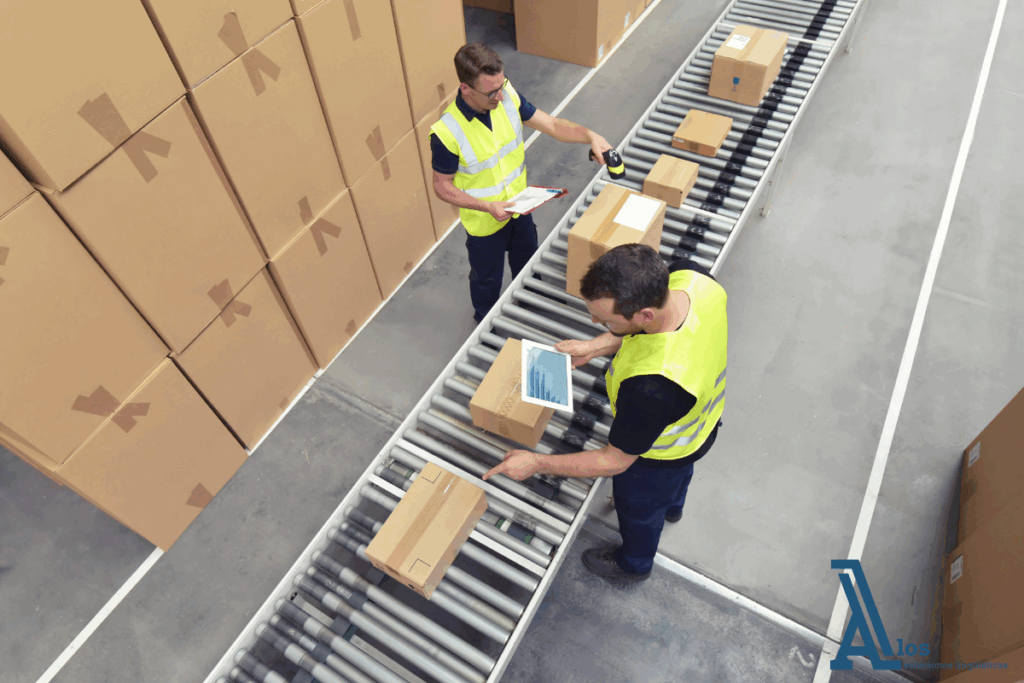
What does a mistake cost? The economic impact of bad translation in logistics
In logistics every error has a price. A badly translated document does not just create confusion: it can become a direct cost or a lost opportunity. Companies often underestimate the real cost of poor translation, especially if they turn to non-specialist translators or to automated tools with no review.
Where is the money lost?
Translation errors affect several levels of the logistics operation:
- Customs fines and penalties: A bad translation on a commercial invoice or on labelling can breach import regulations and lead to penalties.
- Delivery delays: Incorrect documents mean goods are held at customs, disrupting schedules and putting supply contracts at risk.
- Reprocessing costs: When a consignment is rejected because of documentary errors, extra work follows: retranslation, reshipping, storage or destruction.
- Loss of reputation and customer trust: Recurring errors in international communication damage your professional image and reduce loyalty.
- Supply chain disruption: A mistranslation can disrupt coordination with suppliers, carriers and end customers.
What if you saw it as an investment?
Investing in a translation partner specialised in logistics is not a cost, it is a prevention tool. With an investment proportionate to the volume of documents your company handles, you can avoid:
- Unnecessary returns
- Legal intervention
- Internal reprocessing
- Reshipping or destruction costs
- Time lost clarifying matters with customers or authorities
In other words, you get a tangible ROI: fewer errors, more efficiency and greater operational confidence.
Why choose a partner specialised in logistics translation?
In today’s international trade environment, logistics is not just a matter of transport: it is a complex operation that depends on legal, technical and administrative processes carried out across languages and cultures. A simple typo on a certificate of origin, a misread contract or a badly translated technical label can trigger customs penalties, halt deliveries or even lead the customer to reject the goods.
This is where the value of a partner specialised in logistics translation comes in. It is not simply about knowing languages, but about mastering the sector’s specific terminology, knowing import and export procedures and understanding the regulatory and cultural reality of the markets you are targeting.
A generalist translation supplier may miss these nuances, whereas a partner with specific experience in logistics brings strategic advantages:
- Sector expertise: Professionals with deep knowledge of the technical jargon and the processes of the supply chain, international transport, customs and local regulations.
- Cultural adaptation: Translations that go beyond the literal, taking into account the cultural sensitivities and linguistic differences of each market.
- Regulatory compliance: Translations that respect the legal and documentary requirements of international trade (Incoterms, customs documentation, regulated labelling and so on).
- Terminological consistency: Use of translation memories and specific glossaries to ensure uniformity across all documents, which is key in contracts, manuals and certificates.
- Fewer errors and lower costs: Prevention of incidents caused by misreadings or badly translated documentation, avoiding extra costs from returns, fines or delays.
- Operational efficiency: Smooth integration into logistics workflows and delivery of translations to tight deadlines, without sacrificing quality.
- Sworn and certified translation: Availability of accredited translators for legal or technical documentation that requires official validity in specific countries.
- Continuous multilingual support: The capacity to manage projects in several languages at once, which is essential for companies operating across a number of regions.
A partner with these characteristics does not just translate texts for you: it translates into operational peace of mind. It helps you save time, reduce risk and improve your professional image with international customers and regulatory authorities.
Translate well, operate better: logistics speaks languages too
Global logistics is a symphony of precision, and every badly translated document puts the operation out of tune. It is not just about translating words, but about conveying legal responsibilities, technical data and local regulations with absolute fidelity.
As we have seen, linguistic errors are not anecdotal: they cause real losses, hold up shipments and erode trust. Faced with that reality, relying on a partner specialised in logistics translation is not a recommendation, it is a strategic necessity. It is the difference between reacting to a crisis and preventing it. If your company manages international operations, guaranteeing linguistic quality is as important as guaranteeing product quality. Because in logistics, every word carries value too.
To explore related topics, we invite you to read our blog posts:
- Subsidised language training. Boost your company’scompetitiveness
- Language training for specific purposes: the success story among professionals and companies in 2025
- Common mistakes in managing subsidised language training and how to avoid them
- The most expensive translation mistakes in history and how to avoid them in your company
Frequently asked questions (FAQ)
Logistics translation refers to the accurate adaptation of documents and communications relating to the supply chain, including invoices, contracts, certificates and manuals, making sure they comply with the regulations and cultural contexts of the countries involved.
A specialist translator understands the technical terminology and the specific regulations of the logistics sector, which guarantees accurate translations and prevents errors that could cause delays or penalties.
Translation errors can result in shipping delays, fines for regulatory breaches, loss of customers and damage to the company’s reputation.
It is advisable to select a company with proven experience in the logistics sector, native and specialised translators, and rigorous quality control processes.
Documents that commonly require translation include commercial invoices, certificates of origin, transport contracts, customs documents and operating manuals.