





Have you ever sat in an international meeting without understanding a single word? Or watched a powerful speech fall flat because of a poor translation or an imprecise piece of interpreting?
In a hyperconnected world where information travels in real time and business, politics and culture cross borders, professional interpreting becomes a critical need. Clear communication between languages is no longer a luxury: it is essential if you want to avoid misunderstandings and make sure your message carries its full weight.
This is where two key disciplines come in: translation and interpreting. Although they are often confused, they are distinct practices with very different functions, timescales and challenges. One works with text; the other with the living word. Done well, both can open doors. Done badly, they can slam them shut.
Did you know that an interpreting error can wreck a multi-million-euro deal or spark a diplomatic incident? In our blog article The most costly translation errors in history and how to avoid them in your company we looked at how expensive a translation mistake can be. In this article we go deeper into:
- The essential differences between translation and interpreting
- The types of interpreting and when to use each one
- Real-world errors caused by relying on unsupervised technology
- And, above all, why professional interpreters are still irreplaceable
Get ready to look at language from a new angle. Because when words matter, it matters who says them… and how they are translated or interpreted.
What is the difference between translation and interpreting?
Although both disciplines aim to carry meaning across languages, they differ fundamentally in:
- Medium: translation works with written text; interpreting works with spoken language.
- Response time: translators can take the time to research, draft and revise. Interpreters work in real time.
- Accuracy vs immediacy: translation aims for formal exactness; interpreting prioritises fluency without losing the original meaning.
All understanding is interpretation
George Steiner
These distinctions do more than mark technical differences between two language professions: they have a direct bearing on how meaning is built, how the speaker’s intention is conveyed and how the message is received. In the words of the philologist and literary critic George Steiner, “all understanding is interpretation” ((After Babel, 1975), a reminder that even at the most basic levels of communication, interpreting is not just translating words, but understanding meanings in context.
A brief history of interpreting: from ancient diplomacy to the modern booth
Interpreting is an ancient practice that has enabled communication between communities since time immemorial. The first interpreters appeared in contexts of trade, diplomacy and exploration, acting as bridges between cultures and civilisations.
A significant milestone in the professionalisation of interpreting was the founding of the Geneva Interpreters’ School in 1941, which established standards and methods for training conference interpreters. The discipline has evolved ever since, taking on new techniques and adapting to the changing needs of global communication.
A recent study highlights the crucial role of interpreters during the Alaska gold rush in the 19th and 20th centuries. The researcher María Gracia Torres, of the University of Málaga, carried out pioneering research into translation and interpreting in that period, bringing to light the work of native inhabitants, and of women in particular, in linguistic mediation. This work underlines how important interpreting has been in historical contexts in enabling communication and intercultural understanding.
Types of interpreting and their uses
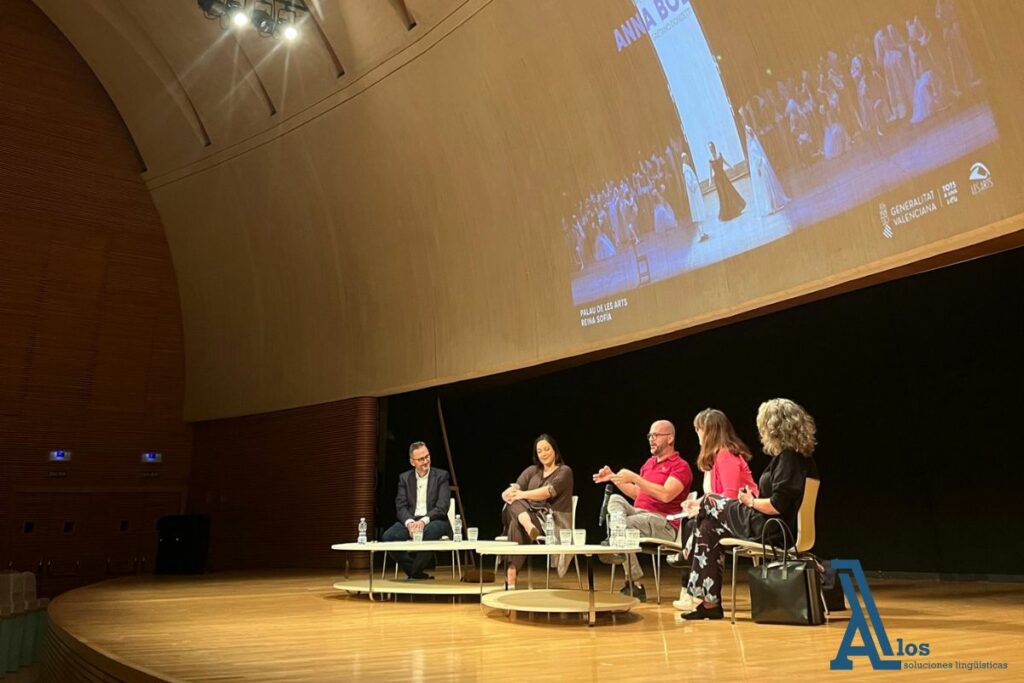
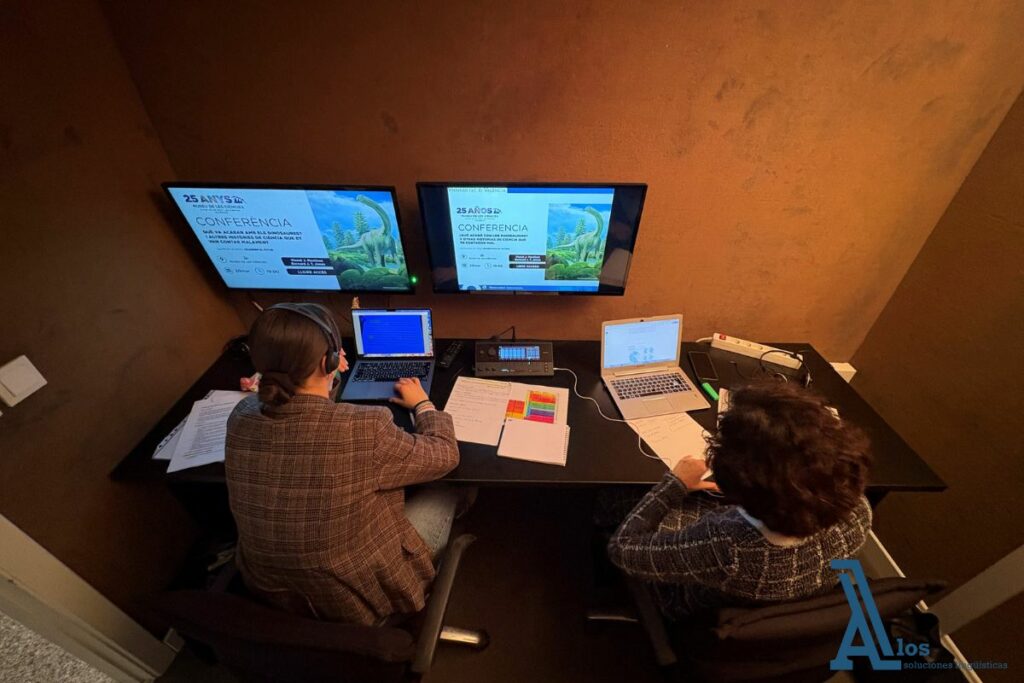
- Simultaneous interpreting: the interpreter speaks almost at the same time as the speaker. Ideal for congresses, conferences or multilateral sessions. It requires a booth, headsets and considerable mental agility.
- C onsecutive interpreting: the speaker pauses to allow the interpreting to take place. More common in bilateral meetings, interviews and press conferences.
- W hispered interpreting (or chuchotage)): the interpreter speaks into the listener’s ear. Useful with small groups.
- Remote interpreting, or RSI (remote simultaneous interpreting): delivered via online platforms. In high demand since the pandemic.
- Court or sworn interpreting: essential in courts, hospitals and immigration centres. Here, errors can have serious legal consequences and in certain cases a sworn translator-interpreter is indispensable.
- Liaison (or bilateral) interpreting: the interpreter enables dialogue between two parties, alternating between the two languages in short turns. Widely used for guided factory visits, business meetings, technical inspections or institutional encounters. It needs no technical equipment and allows smooth communication in more dynamic settings involving direct contact.
As well as choosing the most suitable type of interpreting, it is essential to consider the technical and logistical conditions of the event. Depending on the format, the number of attendees and the setting, you may need soundproofed interpreting booths, specialist technicians, infoport systems or wireless receivers. These elements not only guarantee that the interpreter works in optimum conditions, they also ensure that the message reaches the audience clearly, without interruptions or interference.
If you are wondering which option is right for your event or particular need, do get in touch with expert professionals. At Alos Soluciones Lingüísticas, from our translation and interpreting agency in Valencia, we will help you assess the setting, the audience, the languages involved and your communication objectives so that you can choose the most appropriate type of interpreting and ensure your message comes across clearly, accurately and without barriers.
Why are professional interpreters still essential in the age of AI?
Despite technological advances, automated interpreting still has critical limitations:
- It does not pick up irony, double meanings or cultural references.
- It struggles in settings with noise, strong accents or interruptions.
- Quality varies enormously depending on the language and the context.
A study by Fernández Pérez (2020) in the academic journal Sendebar points out:
The interpreter’s intercultural competence is indispensable. Artificial intelligence lacks pragmatic intuition and empathy.
When trusting the technology went wrong: real cases
One of the most widely discussed examples came at the 2025 Goya Awards, where the actor Richard Gere gave a moving speech in English. Instead of using professional interpreters, the organisers opted for live automatic subtitling. The result? Noticeable delays, translation errors and a complete loss of the tone and emotion of the message, which frustrated the audience both in the room and at home. Source: El País
Another much-discussed case took place on the programme La Resistencia, during an interview with Norman Reedus. The host, David Broncano, decided to do without a professional interpreter, relying on his own English and on improvised interpreting. The result was a conversation full of misunderstandings, awkward silences and confusion, which drew heavy criticism from experts in the field.
Source: Huffington Post
Why hire a professional interpreter?
- It guarantees communicative accuracy
- It ensures fluency and a natural delivery
- It conveys emotions and cultural nuances
- It improves the experience of everyone present
- It avoids errors that can cost money or reputation
When words matter, it matters who says them
In the age of artificial intelligence and instant communication, the value of the human interpreter has not diminished. Quite the opposite: in a multilingual world, working with interpreting professionals is a byword for success, accuracy and cultural respect.
Avoid misunderstandings, protect your message and give your audience, client or company the best possible experience.
Do you have a multilingual event, court hearing or meeting coming up?
Let’s talk. Our team of professional interpreters is ready to help you cross any language border.
🎧 Break down language barriers at your events with Alos
Do you organise congresses, court hearings, international meetings or official events? Ensure flawless communication with highly qualified professional interpreters.
(FAQ) Frequently asked questions about professional interpreting
Simultaneous interpreting happens in real time; consecutive interpreting takes place after the speaker pauses.
Not completely. Although artificial intelligence has made progress in automated interpreting, it still fails to capture irony, double meanings, emotions and cultural references that are central to human communication. It also has no judgement with which to adapt the message to the tone, the audience or the speaker’s intention.
That said, it all depends on the purpose of the meeting: for an informal or internal conversation, automated solutions may well be enough. But when the precision of every word, the conveying of nuance or even your brand image is at stake, leaving interpreting to an AI is a considerable risk.
In professional, legal, institutional or high-level settings, the choice between technology and a professional should answer one key question:
Can you afford for your message not to be understood exactly as you planned it?
They usually hold a university degree in translation and interpreting, plus specialisations by field (legal, medical, technical and so on).
It depends on the language, the duration, the mode (in person or remote) and the specialisation. It can range from €150 for a short session to €600 a day for simultaneous interpreting.
Literalness, confused meanings, poor segmentation and errors with proper names or jargon.
It varies, but the norm is to work with one main pair (for example, English <> Spanish).
They study materials on the subject, technical glossaries, the speaker’s profile and the context of the event.
It is not advisable in professional or legal settings. The risk of error is high.
The translator works with legal documents. The interpreter is present at hearings, trials or mediation sessions.
In many countries they must be authorised by official bodies or by the courts. Accuracy is vital.