





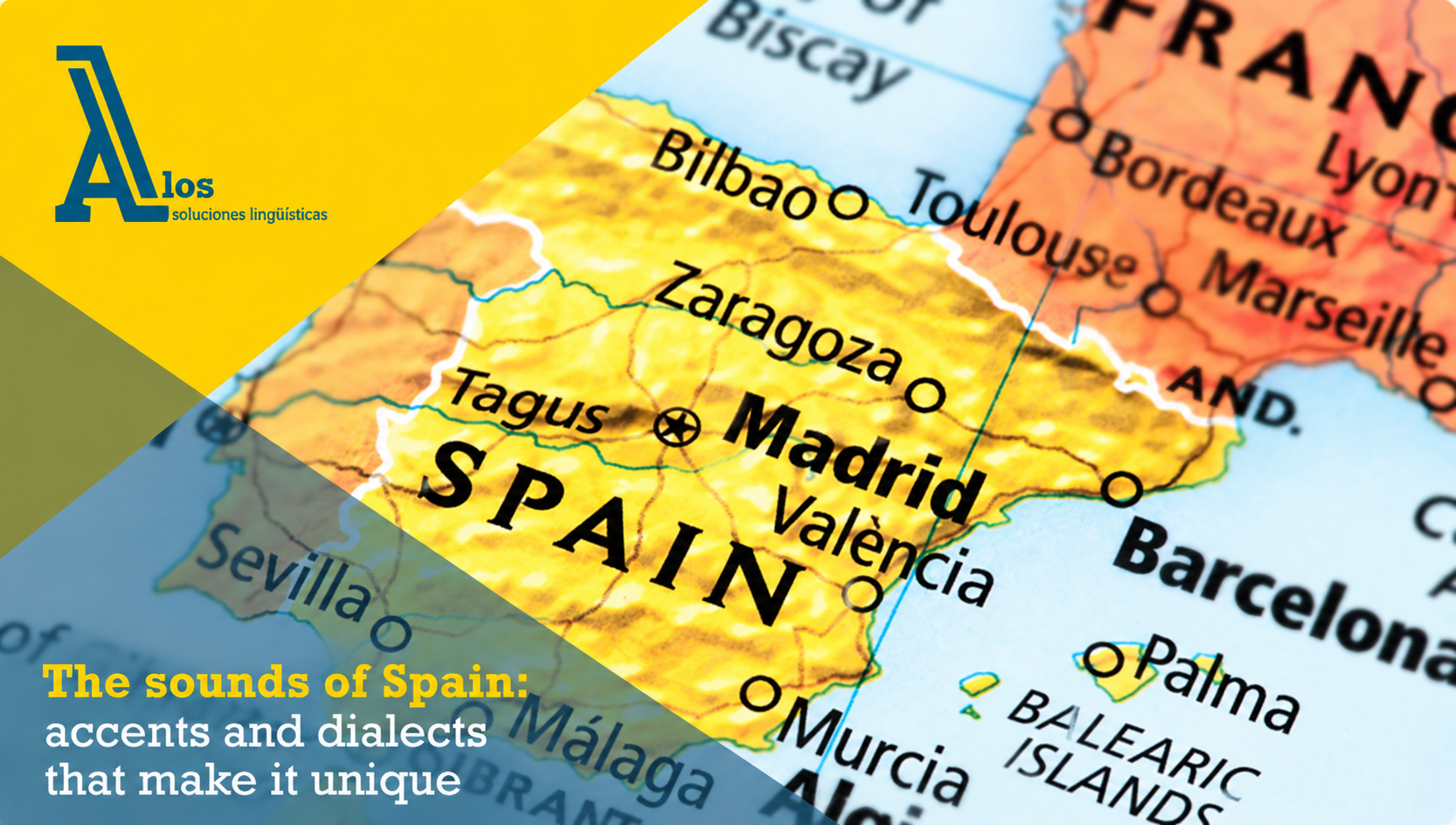
Spanish accents and dialects in Spain: a guide to regional varieties
Spain is a country of extraordinary linguistic diversity. Across the country, you will find not only different co-official languages, such as Catalan, Basque, Galician and Valencian, but also a wide variety of Spanish accents and dialects. This linguistic richness is the result of centuries of history, diverse cultural influences and the unique development of language in each region.
According to the Instituto Cervantes’s 2026 report, more than 520 million people worldwide have native proficiency in Spanish. Within Spain, each region contributes its own phonetic, lexical and grammatical features, enriching this shared linguistic heritage.
Spain’s co-official languages include Catalan, Valencian, Galician and Basque, alongside Aranese in Catalonia. Under Article 3 of the Spanish Constitution, languages other than Castilian may also have official status in their respective autonomous communities, in accordance with their statutes of autonomy. Each has its own linguistic traditions, literature and institutions involved in its promotion and standardisation, such as the Acadèmia Valenciana de la Llengua, the Real Academia Galega and Euskaltzaindia.
Spain’s linguistic diversity is also reflected in everyday life. According to the Spanish National Statistics Institute’s 2021 survey, 83.1% of people living in Galicia reported speaking Galician well. In Catalonia, the figure was 75% for Catalan, while 51.6% of residents in the Valencian Community reported speaking Valencian well. These figures illustrate how regional languages remain an important part of daily communication and cultural identity alongside Spanish.
These languages are taught in their respective regions and used in public administration. Educational resources and media outlets also help raise awareness of Spain’s multilingual identity.
One particularly interesting example of this diversity is la fala, a Romance linguistic variety spoken in just three small towns in the Jálama Valley, in the province of Cáceres: San Martín de Trevejo, Eljas and Valverde del Fresno.
With close historical links to Galician and Portuguese, la fala was declared a Bien de Interés Cultural (an officially protected cultural asset) by the regional government of Extremadura in 2001, in recognition of its linguistic and cultural importance. It has its own dictionaries and vocabulary resources and continues to be passed down from one generation to the next.
The main Spanish accents and dialects in Spain
1. Northern or central-northern Castilian
Northern Castilian, often associated with what is commonly considered “standard” Peninsular Spanish, is spoken across much of northern and central Spain, including Castilla y León, La Rioja and parts of Cantabria.
One of its most recognisable features is the distinction between the /s/ and /θ/ sounds, a phenomenon known as distinción. This means that words such as casa (house) and caza (hunt) are pronounced differently.
This variety has historically influenced the development of standard Spanish, although the Real Academia Española (RAE) recognises the legitimacy of the different regional varieties of the language.
Northern Castilian is also generally associated with relatively clear articulation of consonants, particularly at the ends of syllables, although pronunciation varies considerably between speakers and areas.
Some of its main features include:
- A clear distinction between /s/ and /θ/.
- Frequent preservation of syllable-final consonants.
- Intonation patterns characteristic of central and northern Spain.
- Regional vocabulary that varies from one area to another.
- Frequent preservation of intervocalic /d/ in past participles ending in -ado.
2. Andalusian
Andalusian is one of the most recognisable and distinctive varieties of Peninsular Spanish. Spoken throughout Andalusia, it includes several regional varieties, particularly those associated with eastern and western Andalusia.
Its pronunciation often involves the weakening or reduction of certain consonant sounds, giving Andalusian speech its characteristic rhythm.
Some of its main features include:
- Seseo and ceceo: In parts of Seville, Cádiz and Málaga, seseo involves pronouncing the letters z and c (before e or i) with an /s/ sound. In other areas, particularly parts of Cádiz, Málaga and Granada, ceceo involves pronouncing s with a sound similar to /θ/.
- Aspiration or loss of syllable-final /s/: Los niños may sound more like loh niñoh.
- Yeísmo: The sounds traditionally represented by ll and y are pronounced alike, a feature also widespread in other Spanish-speaking regions.
- Aspiration of /x/: The sound represented by j, as in jamón, is often pronounced more softly, with an aspirated sound.
Beyond these phonetic features, Andalusian has a rich vocabulary of its own. Expressions such as pisha (mate), malaje (an unpleasant or disagreeable person) and quillo (a shortened form of chiquillo, meaning kid or lad) are characteristic of certain areas of Andalusia.
3. Canarian
Canarian Spanish shares many features with Latin American Spanish, particularly Caribbean varieties, reflecting the historical connections between the Canary Islands and the Americas.
Its most notable characteristics include:
- Generalised seseo: There is no distinction between /s/ and /θ/.
- Aspiration or loss of syllable-final /s/: A feature also found in Andalusian and several Latin American varieties.
- Distinctive pronunciation of certain consonants: Including regional variations in the pronunciation of ch and other sounds.
- Use of ustedes instead of vosotros: As in much of Latin America, ustedes is generally used for the second-person plural in both formal and informal contexts.
Canarian vocabulary has been influenced by Portuguese, partly because of historical migration from Madeira and mainland Portugal. It also preserves guanchismos, words associated with the languages of the islands’ pre-Hispanic inhabitants.
Terms such as guagua (bus), millo (maize) and gofio (a traditional food made from toasted grain flour) are characteristic of Canarian speech and culture.
Can you spot the Spanish dialect?
From guagua to quillo, Spanish is full of regional surprises. Can you match these words and expressions to the places they’re associated with? Take the four-question challenge!
Your dialect detective results
Spanish has so many regional varieties to explore. Keep discovering the language and its cultural richness!
Note: Regional features often overlap, and the same word may be used in several places. This activity highlights characteristic associations rather than exclusive features.
4. Extremaduran or castúo
The Spanish spoken in Extremadura combines features of Castilian with influences from neighbouring linguistic varieties, particularly Leonese and Andalusian.
The term castúo is sometimes used to refer to traditional Extremaduran speech, although it does not cover all the linguistic varieties found in the region.
Spoken across Cáceres and Badajoz, these varieties show significant differences between northern and southern Extremadura.
Some of their main characteristics include:
- Aspiration of historical Latin /f/: In some traditional varieties, words such as hacer (to do) may be pronounced with an initial aspirated sound, similar to jacer.
- Raising of final vowels: In certain northern varieties, final -o may be pronounced closer to -u, as in perru instead of perro (dog).
- Preservation of archaisms: Some traditional words and expressions have survived here despite becoming less common elsewhere.
Areas such as La Vera and the Jerte Valley have particularly distinctive forms of speech, with a stronger historical Leonese influence.
Regional vocabulary also includes words such as jurdano (a person from Las Hurdes) and esmagar (to crush or squash).
5. Murcian or panocho
Murcian Spanish is spoken throughout the Region of Murcia and in neighbouring areas of Alicante and Albacete.
It shares certain features with Andalusian Spanish and has also been influenced by the languages and linguistic traditions of neighbouring regions, including Valencian.
The term panocho is associated with particular traditional forms of Murcian speech, rather than being an exact synonym for every variety spoken in the region.
Some of its most distinctive features include:
- Weakening or loss of certain consonants: Particularly /d/ and, in some varieties, final /r/, as in verdá instead of verdad (truth) or comé instead of comer (to eat).
- Vowel opening: In certain contexts, the vowels /e/ and /o/ may be pronounced more openly.
- Aspiration of syllable-final /s/: A feature shared with several southern Spanish varieties.
- Distinctive regional vocabulary: Including words such as abancalar (to create agricultural terraces), bajoca (green bean) and zaragüelles (traditional loose-fitting trousers).
These features give Murcian speech its own distinctive identity within the wider Spanish-speaking world.
6. Madrid Spanish
The Spanish spoken in Madrid, particularly in some traditional neighbourhoods, has distinctive features that set it apart from other varieties of Castilian.
Although Madrid is Spain's capital and a major centre of communication and media, its speech is not necessarily more correct or more standard than that of other regions.
Some characteristic features include:
- Laísmo: The use of la as a feminine indirect object pronoun, as in la dije instead of the standard le dije (I told her).
- Weakening of intervocalic /d/: Particularly in words ending in -ado, as in he estao instead of he estado (I have been).
- Expressive vowel lengthening: The lengthening of certain vowels to add emphasis or convey emotion.
- Castizo vocabulary: Traditional colloquial expressions associated with Madrid, alongside widely used words such as guay (cool) and molar (to like or think something is great).
Traditional Madrid speech, sometimes associated with habla cheli or habla castiza, has evolved considerably over time.
Today, the city's linguistic landscape is increasingly diverse, shaped by migration, cultural exchange and contact with speakers from other regions and countries.
7. Manchegan
Manchegan Spanish, spoken in Castilla-La Mancha, is generally regarded as a transitional variety between central-northern Castilian and the varieties spoken further south.
Its pronunciation, vocabulary and intonation reflect influences from neighbouring regions, although there are also significant differences within Castilla-La Mancha itself.
Some of its characteristic features include:
- Mild aspiration of syllable-final /s/: Less widespread than in many Andalusian varieties but present in certain areas.
- Neutralisation of syllable-final /l/ and /r/: Particularly in some eastern areas of La Mancha.
- Distinctive intonation: With regional patterns of rising and falling pitch.
- Preservation of older vocabulary: Including expressions such as endenantes (earlier or a short while ago), alongside other traditional words.
These characteristics reflect the region's position between different dialectal areas of Spain.
8. Leonese and the Spanish of León
In the historical region of León, which includes León, Zamora and Salamanca, Spanish coexists with the linguistic heritage of Asturleonese.
Leonese is part of the Asturleonese linguistic continuum and has its own historical development. Its influence can still be seen in certain local varieties of Spanish, particularly in rural areas.
Some notable features include:
- Historical preservation of the distinction between /ʎ/ and /ʝ/: Found in some traditional varieties, although yeísmo is now also widespread.
- Use of the definite article before possessives: As in la mi casa instead of mi casa (my house), particularly in traditional Leonese speech.
- Diminutives ending in -ín or -ina: Such as pequeñín (little one) and casina (little house).
The region also preserves distinctive vocabulary, including words such as apalpar (to feel or touch), chiflar (to whistle) and esgalamido (famished).
These linguistic features are an important part of León's cultural heritage and reflect the historical relationship between Spanish and Asturleonese.
9. Cantabrian or montañés
The Spanish spoken in Cantabria has distinctive regional characteristics, some of which reflect the historical influence of neighbouring Asturleonese varieties.
The term montañés is traditionally associated with local speech in Cantabria, although the region's linguistic landscape is more varied than this single label suggests.
Some characteristic features include:
- Vowel metaphony: A historical feature found in some traditional varieties, involving changes in vowel pronunciation influenced by another vowel in the word.
- Occasional preservation of aspiration from Latin /f/: In traditional local forms such as jacer instead of hacer.
- Distinctive intonation: With particular rhythms and cadences, especially in some inland valleys.
- Diminutives ending in -uco or -uca: Such as pequeñuco (little one) and casuca (little house).
Cantabrian vocabulary also includes regional words and expressions associated with rural life, local traditions and the region's cultural heritage.
Would you like to improve your Spanish? At ALOS Soluciones Lingüísticas, we offer Spanish courses tailored to your needs, level and learning objectives.
One country, many voices
Spain's dialectal diversity is one of its richest linguistic legacies. Far from threatening the unity of the language, these accents and dialects demonstrate the vitality of Spanish and its ability to adapt to different geographical, historical and cultural contexts.
As we have seen, each regional variety contributes distinctive features that enrich this shared linguistic heritage.
The way Spanish dialects are evolving today also reflects the influence of globalisation. On the one hand, the media, education and increased mobility can encourage the use of more widely understood forms of Spanish. On the other, regional accents and expressions remain important markers of local identity.
Rather than cancelling each other out, these tendencies often coexist: speakers may adapt their language to different situations while retaining the features that connect them to their region.
Attitudes towards dialects are also evolving. Varieties that have historically faced negative stereotypes, such as Andalusian or Murcian, are gaining greater visibility through the media, culture and education.
The importance of protecting linguistic diversity extends beyond Spain. The Council of Europe monitors the protection of regional and minority languages, including those spoken in Spain, through the European Charter for Regional or Minority Languages. This reflects a wider recognition that linguistic diversity forms an essential part of Europe's cultural heritage.
This growing recognition of linguistic diversity can help foster a more inclusive society in which different ways of speaking Spanish are valued and respected.
If you would like to explore this subject further, we recommend our articles on:
- Las Fallas of Valencia: history, culture and language
- The 10 hardest languages for Spanish speakers: challenges and benefits
- Is it possible to be 100% bilingual?
Do you need translation or interpreting services that take the regional nuances of Spanish into account?
At ALOS Soluciones Lingüísticas, we help businesses and professionals communicate accurately and naturally across languages and cultures.
EVERY ACCENT TELLS A STORY. MAKE SURE YOUR MESSAGE COMES ACROSS.
From regional expressions to cultural nuances, effective communication goes beyond words. At ALOS, we help you bridge linguistic and cultural differences with professional translation and interpreting services.
Frequently asked questions (FAQ)
This depends on the learner's experience and exposure to different varieties of Spanish. Some learners find certain Andalusian accents challenging because of features such as consonant aspiration, sound reduction and differences in pronunciation. However, familiarity plays a major role, and no accent is inherently more difficult than another.
No single regional variety of Spanish is inherently more correct than another. Madrid Spanish has its own dialectal features and does not represent the only accepted standard. Standard Spanish is a set of linguistic conventions used in formal communication, and it encompasses features shared across different Spanish-speaking regions.
Seseo and ceceo are pronunciation features found in several varieties of Spanish. With seseo, the letters s, z and c (before e or i) are pronounced with an /s/ sound. With ceceo, these spellings are pronounced with a sound similar to /θ/, as in the English word think. Both features can be found in parts of Andalusia, while seseo is also characteristic of the Canary Islands and much of Latin America.
Accents and dialects reflect the history, traditions and cultural influences of different regions. They help people express their local identity, preserve linguistic heritage and maintain a connection with their communities. Recognising and respecting these differences contributes to Spain's cultural richness.
