





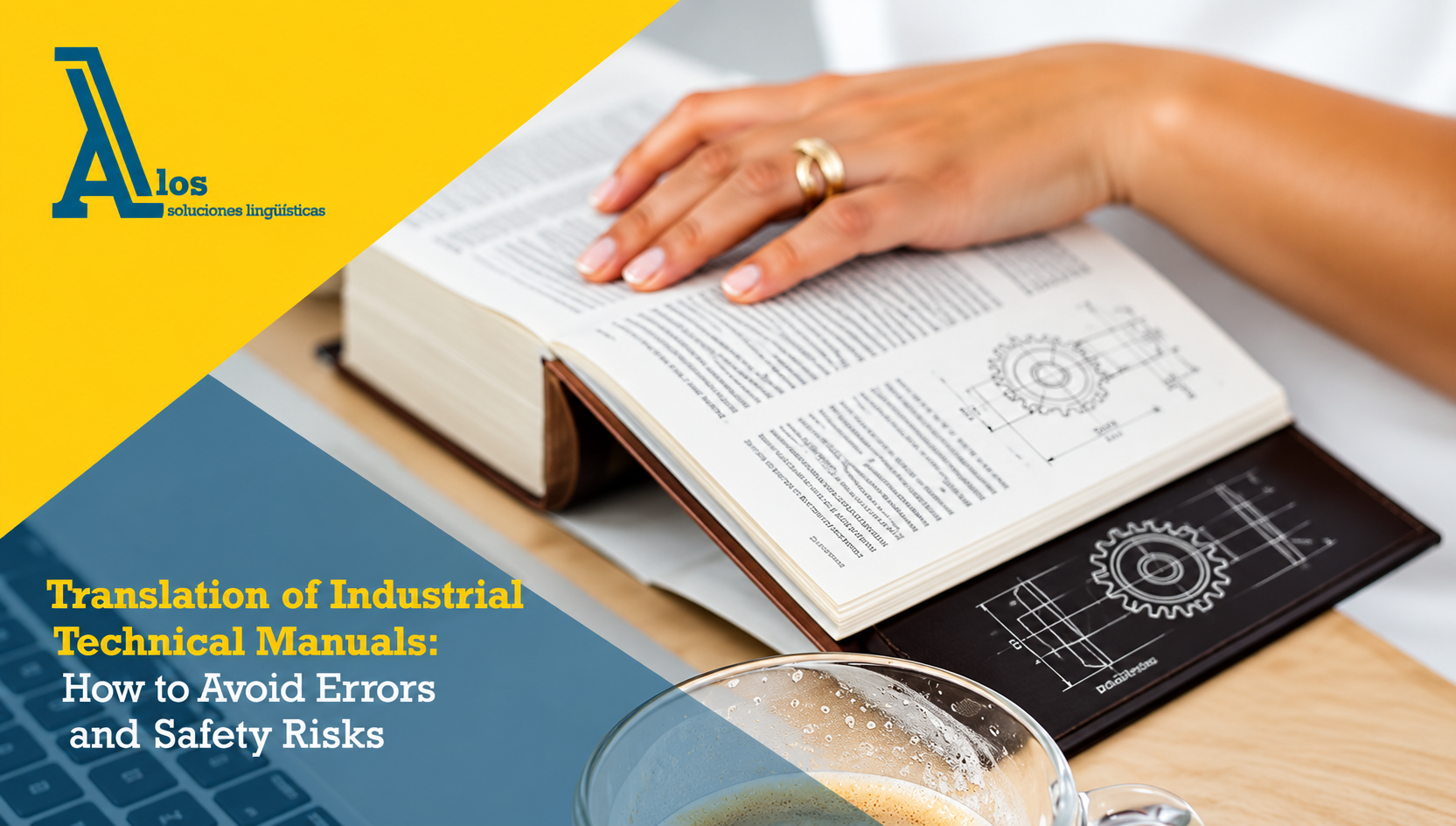
Accurate translation of industrial technical manuals helps prevent safety errors through precise terminology, consistency and specialist review. When translating operating instructions, maintenance procedures and safety warnings, even a small ambiguity can affect how equipment is used. This article explains the main risks involved in technical manual translation and the steps companies can take to reduce them.
A poorly translated technical manual does more than cause confusion: it can lead to operational errors, safety incidents or legal problems. Companies may underestimate the complexity of this documentation until problems arise in production or international customers report difficulties.
Below, we explain what technical manual translation involves, which mistakes are most common and how to achieve a reliable, professional result.
What makes technical manual translation different
Translating technical manuals is not simply about transferring words from one language to another. It involves accurately interpreting instructions, processes and specialist terminology while maintaining precision and consistency.
Unlike many other types of translation, technical manual translation involves several critical factors:
- Specialist terminology (engineering, machinery, software, etc.)
- Clear, unambiguous instructions
- Compliance with applicable regulations in certain sectors
- Consistent use of terminology throughout the document
For example, in an industrial maintenance manual, using different translations for the same component can cause confusion and lead to errors when maintenance tasks are carried out.
According to Eurostat, manufacturing accounted for 18% of all non-fatal workplace accidents in the EU in 2022, with 535,977 recorded cases. These figures highlight the importance of clear operating instructions and effective safety procedures in industrial environments.
Common risks in technical translation
Some companies rely on quick solutions, such as unreviewed machine translation or non-specialist providers, without fully considering the potential risks.
Lack of terminological precision
Using technical terms incorrectly can completely change the meaning of an instruction. This is particularly critical in sectors such as:
- Manufacturing
- Energy
- Technology
- Automotive
Literal translations
An overly literal translation can be difficult to understand or sound unnatural to the end user. Technical manuals must be clear and practical, not merely linguistically correct.
Internal inconsistencies
Without glossaries or translation memories, the same technical term may be translated in several different ways within a single document.
Lack of context
A translator without sufficient experience in the relevant sector may not fully understand how a product or piece of equipment works. This can affect the accuracy and usability of the translated instructions.
For further information about why accuracy matters, you can read our article on translating technical and training manuals safely and effectively.
How to ensure quality in technical manual translation
Outsourcing technical translation is not inherently risky. The important thing is to follow a structured process with appropriate quality checks.
Work with specialist translators
A technical translator needs a strong command of both the languages involved and the relevant technical field. Translating a software manual requires different expertise from translating documentation for industrial machinery.
Create and maintain glossaries
Glossaries help maintain terminological consistency across documents. They are particularly useful when working in several languages or updating technical content regularly.
Use translation memories
Translation memories allow previously translated and validated content to be reused. This can improve consistency and reduce turnaround times for recurring projects.
Carry out a technical review
Where appropriate, translated content should be validated by someone with detailed knowledge of the product or sector, particularly when it contains safety-critical instructions.

A practical example: the impact of a poor translation
Imagine a company exporting industrial machinery to several European countries. The original manual states:
“Disconnect the equipment before carrying out any work.”
An inaccurate translation might instead say:
“Switch off the equipment before working on it.”
Although these instructions appear similar, they do not mean the same thing. Switching off equipment does not necessarily mean isolating it from its electrical supply or other energy sources. This distinction can be critical during maintenance work.
This example illustrates why accurate wording is essential in technical manual translation. Safety-related instructions must also reflect the equipment manufacturer’s specified isolation procedures.
One tiny translation error. What could happen?
Click a mistake to reveal its potential impact.
Illustrative examples only, not operating instructions for actual machinery.
When to outsource technical translation
Not every company needs an external translation provider for every document. However, specialist support is particularly advisable in situations such as:
- Launching products in new markets
- Updating technical documentation
- Meeting applicable international or national regulatory requirements
- Managing technical documentation in several languages
If your in-house team lacks specialist experience in technical translation, working with a qualified external provider can help improve consistency, accuracy and efficiency.
Technical manual translation is a strategic process, not simply an operational task. Clear, accurate and appropriately adapted documentation helps users follow instructions, reduces the likelihood of misunderstandings and supports a company’s international operations.
If you need reliable translations of technical documentation or want to adapt your manuals for new markets, ALOS can help with specialist language solutions tailored to your sector.
NEED ACCURATE TECHNICAL MANUAL TRANSLATIONS?
From industrial machinery manuals to maintenance instructions, ALOS provides specialist technical translation services to help your company communicate clearly across international markets.
Request a translation quoteFrequently Asked Questions (FAQs)
It includes translating the content, adapting specialist terminology, linguistic review and, in many cases, technical validation. It may also involve working with PDFs, software documentation or online manuals.
Machine translation can support the process, but its output should be checked by qualified specialists before being used in safety-critical documentation. Human review is essential to identify terminology, context and accuracy issues.
The time required depends on the document’s length, technical complexity, formatting and number of target languages. Specialist terminology work, revision and technical validation may also affect the schedule.
