





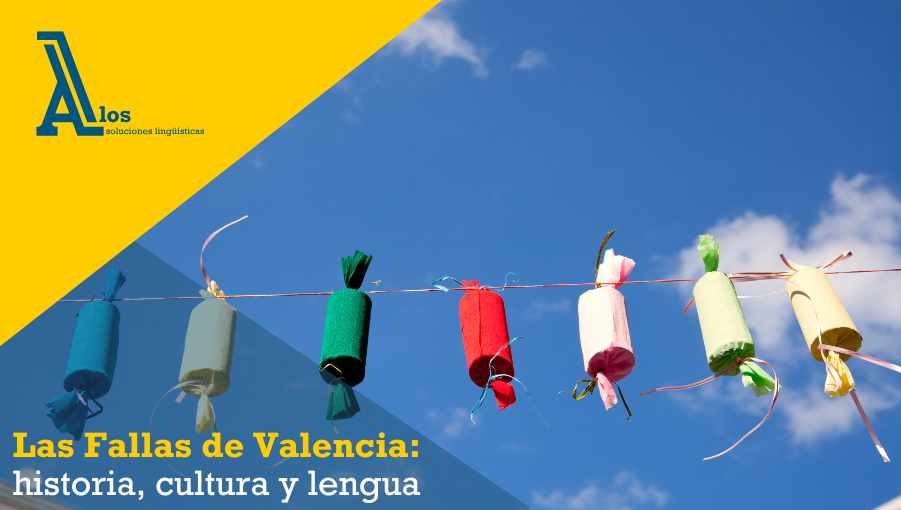
The Fallas of Valencia are a unique celebration combining art, tradition and language, and reflecting the rich cultural identity of the Valencian Community. The festival, recognised by UNESCO as Intangible Cultural Heritage of Humanity in 2016, centres on the creation and burning of artistic monuments known as fallas, alongside a series of events in which Valencian, the region’s co-official language, plays a deep-rooted part. In today’s blog post we tell you a little more about the origin, the history and the vocabulary of the Fallas of Valencia.
The origin of the Fallas: tradition and language
The origin of the Fallas goes back to an old custom among Valencian carpenters. On the eve of the day of Saint Joseph, their patron saint, these craftsmen burned the “parots” in front of their workshops, wooden structures used to hold the oil lamps that lit their work through the winter months. With the arrival of spring and the lengthening days, these supports became unnecessary, and burning them symbolised the end of one stage and the beginning of another. Over time, old junk and rudimentary human figures were added to this bonfire, giving rise to today’s “fallas”, satirical monuments that poke fun at aspects of society.
The word “falla” comes from Valencian and has its roots in the Latin “facula”, meaning torch. This etymological development reflects the transformation of a simple bonfire into a complex artistic and cultural event. Many of the inscriptions and explanations that accompany the fallas are also written in Valencian, which reinforces the role of the language as a vehicle for identity and popular expression. We recommend reading more about the history of the festival and everything you can do during it on the Visit Valencia.
Historical development and linguistic enrichment
Over the centuries the Fallas have developed significantly. During the 18th century, the celebrations began to include figures called “ninots”, models depicting satirical scenes from everyday and political life. These depictions, full of humour and criticism, became a form of social communication, using Valencian as the main language for conveying messages and reflections. You can read more on the blog of Las fallas de Valencia.
The Valencian language has been essential in shaping the identity of the Fallas. The “llibrets”, publications explaining the content and meaning of each falla, are mostly written in Valencian. These texts not only describe the scenes on display, they also include poems, satires and stories that enrich the cultural and linguistic heritage of the community. During the festivities it is also common to hear “albaes”, traditional songs in Valencian that recount local stories and anecdotes.
Fallas vocabulary. Key words in Valencian
The world of the Fallas has generated a specific vocabulary reflecting the cultural and linguistic wealth of the region. Below are some terms you will need to know in order to find your bearings during the festival:
- Falla: artistic monument made up of various figures, set up in the streets during the festivities and burned at the end of the celebration.
- Ninot: individual figure forming part of the falla, generally satirical or humorous in character.
- Plantà: the act of erecting the fallas in their designated places, marking the official start of the festivities.
- Cremà: the closing event in which the fallas are burned, symbolising renewal and the passage of time.
- Mascletà: daytime firework display characterised by the intensity of its sound, held every day during the Fallas.
- Despertà: morning tradition in which the falleros go through the streets with firecrackers and music to wake the neighbourhood.
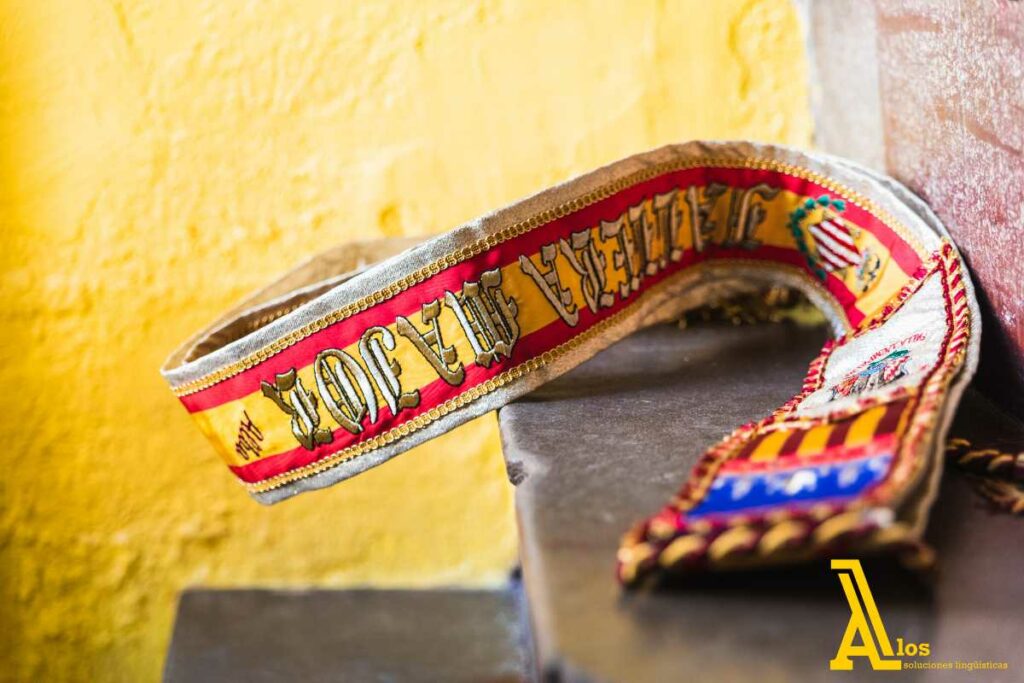
- Crida: official proclamation announcing the start of the Fallas, made by the Fallera Mayor from the Torres de Serranos.
- Ofrena: floral offering to the Virgen de los Desamparados, patron saint of Valencia, in which every Fallas committee takes part.
- Casal Faller: the headquarters of each Fallas committee, where meetings and activities connected with the Fallas are organised.
- Llibret: publication accompanying each falla, setting out its theme, poems and explanations of the scenes on display.
These terms, among others, are fundamental to understanding and fully experiencing the Fallas, and they show the deep connection between the festival and the Valencian language.
The Fallas are not only a visual spectacle and a festival, they also carry a linguistic wealth that reinforces the cultural identity of the Valencian Community. Below we look at more facts that reflect the deep connection between the Valencian language and this festival:
Linguistic facts about the Fallas
The Fallas are not only a visual spectacle and a festival, they also carry a linguistic wealth that reinforces the cultural identity of the Valencian Community. Below we look at more facts that reflect the deep connection between the Valencian language and this festival:
The Gremio de Artistas Falleros. Guardians of the craft and the language
The Gremio de Artistas Falleros (the guild of Fallas artists) is a key institution in preserving the craft of the Fallas and the use of Valencian. These masters not only design and build the Fallas monuments, they also preserve a specific vocabulary connected with their trade. Terms such as “cartó pedra” (papier mâché), “remat” (the upper part of the falla), “empaperar” (to cover with paper) and “saragüells” (traditional Valencian trousers) are part of everyday language in the Fallas workshops.
Lo Rat Penat and the defence of Valencian
The cultural association Lo Rat Penat, founded in 1878, has been one of the strongest promoters of the use of Valencian in the Fallas. From the outset it has run Fallas poetry competitions and talks on the language and the history of the festival, and it has defended the use of Valencian on signage and in official Fallas documents. It still organises the Concurso de Llibrets de Falla (the Fallas booklet competition), which rewards the best texts in the Valencian language.
The bunyols and their Valencian origin
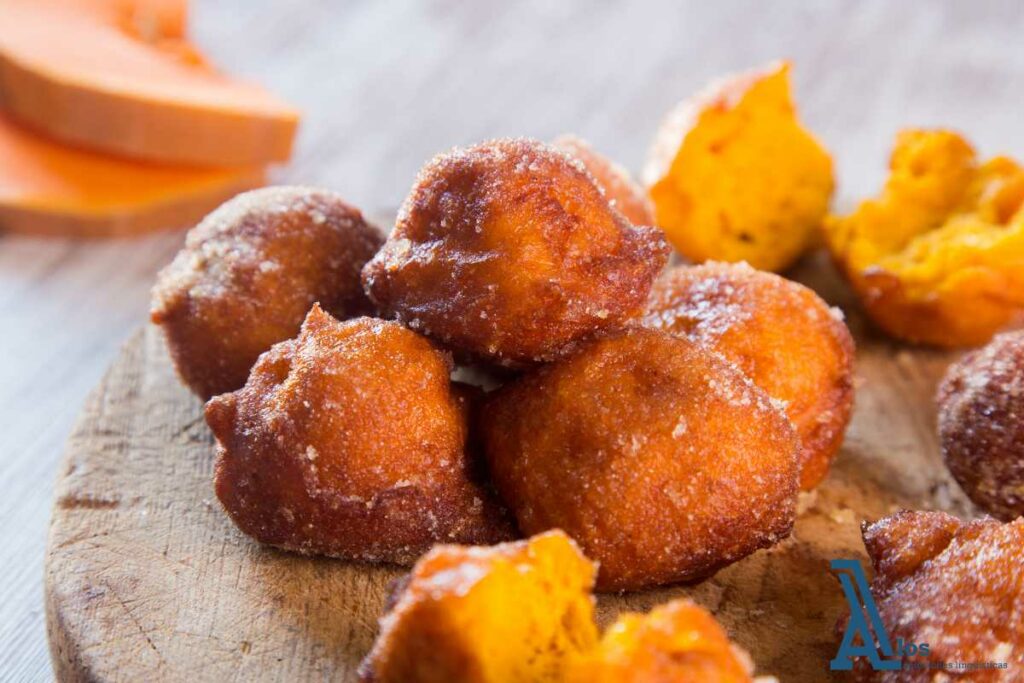
One key culinary element of the Fallas is the “bunyols de carabassa” (pumpkin fritters), a traditional sweet sold in the streets during the festival. The word “bunyol” is of Arabic origin (bunyal), which shows the linguistic heritage that Valencian has preserved down the centuries. Indeed, many words in Valencian cooking come from Arabic, such as “albercoc” (apricot), “safran” (saffron) and “almeló” (watermelon).
5 Fallas expressions: essential for experiencing the festival
The Fallas are not just fire, gunpowder and partying, they are also a reflection of Valencian identity through language. During Fallas week it is common to hear popular expressions that only genuine falleros and falleras know. These phrases, full of humour and tradition, are part of everyday Valencian speech at this time of year and convey the excitement, passion and intensity of the festival.
If you want to feel like a real fallero or fallera, here are five essential expressions you are sure to hear on the streets of Valencia during the Fallas:
“Foc i flama!” → An emblematic expression meaning “Fire and flame!”, used to describe the spirit of the Fallas, the passion for the festival and the blazing atmosphere of these days.
“Ja estem en Falles!” → Literally “We’re in Fallas now!”, a phrase used to announce with enthusiasm that the festival has begun or that you can already feel the Fallas atmosphere.
“Quina mascletà!” → Said when something has been striking, loud or thrilling, referring to the roar of the mascletà..
“Açò és una cremà!” → Used when something gets out of hand or ends abruptly, comparing it to the final moment of the Fallas when everything goes up in flames at the cremà..
“Açò és més llarg que la plantà d’una falla” → Said when something seems to go on forever, alluding to how laborious it is to put up a falla at the plantà..
The importance of Valencian in education and cultural identity
Valencian is not just a language, it is an essential part of the cultural identity of the Valencian Community. As a co-official language of the Spanish state alongside Spanish, its use and preservation are fundamental to social cohesion, education and the everyday lives of Valencians. Learning and using Valencian not only contributes to linguistic diversity, it also strengthens regional identity and allows speakers to connect more deeply with their roots, their traditions and their surroundings.
In education, Valencian plays a key role as the language of instruction in many schools and universities. Access to culture, literature, the media and public administration in Valencian also strengthens its presence in society. Its use in official and commercial settings likewise underlines its importance as a living language in constant development.
Learning Valencian to settle into the Valencian Community
If you have decided to move to Valencia to live, study or work, learning Valencian is an excellent way to fit into the community and understand its rich culture. A command of the language will not only make day-to-day life easier, it will also open doors professionally and socially. At Alos Idiomas we offer Valencian courses for all levels, designed to help you communicate fluently and immerse yourself in local life.
Certify your level of Valencian and open up new opportunities
If you are “de la terreta” (a local, born and bred) but are not sure what your level of Valencian is, or you need to certify it officially to sit a public examination, obtaining a language certificate can open many doors professionally and academically. In the Valencian Community, qualifications such as those of the Junta Qualificadora de Coneixements de Valencià (JQCV), the CIEACOVA or the Escola Oficial d’Idiomes (EOI) are essential for applying for public administration posts and other professional opportunities.
Translating campaigns into Valencian: connect with your audience in a genuine, close way
If you run a company or a project in the Valencian Community, translating your campaigns and promotional materials into Valencian can make a real difference to how you connect with your audience. Using Valencian in business communication creates closeness and trust and reinforces your commitment to local culture. At Alos Soluciones Lingüísticas we are an agency specialising in the translation of co-official languages, offering professional services to adapt your message accurately and authentically. Whether for advertising, branding, signage or corporate documentation, a professional translation into Valencian will ensure your message lands effectively while respecting the linguistic and cultural particularities of the region.
(FAQs) Frequently asked questions about the Fallas and Valencian
The Fallas are held from 15 to 19 March every year, although preparations and events begin on 1 March.
No. Valencia is the epicentre, but many other towns in the Valencian Community hold their own Fallas with similar traditions.
The best places are the Plaza del Ayuntamiento (where the city falla is burned) and the various Fallas neighbourhoods, each with its own main falla.
The Fallas llibrets, which explain the content of each falla, are mostly written in Valencian. It is also used on posters and in official speeches, which encourages people to use and learn it.
The Fallas llibrets, which explain the content of each falla, are mostly written in Valencian. It is also used on posters and in official speeches, which encourages people to use and learn it.
Yes, translating campaigns into Valencian can be a very effective commercial strategy. Although Spanish is widely understood in the Valencian Community, using Valencian in advertising creates a stronger emotional connection with the local audience, reinforces cultural identity and demonstrates a commitment to the community. In certain sectors, such as public administration, education and local commerce, Valencian is moreover a key factor in trust and closeness. Companies that include Valencian in their communication can improve their brand image and build customer loyalty.
If you need to adapt your marketing campaigns or advertising materials, take a look at our Valencian translation service to guarantee an accurate and effective adaptation.