





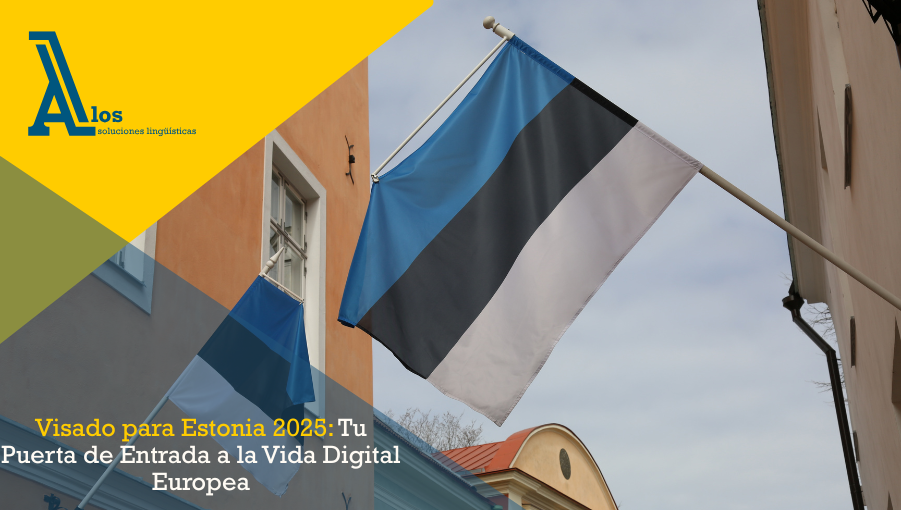
Over the past decade, Estonia has become a surprising destination for anyone looking for new ways to work, start a business, study or simply live with a stronger digital connection. Applying for an Estonian visa in 2025 is not merely an immigration formality: it is a gateway to one of the most technologically advanced countries in the world. With just 1.3 million inhabitants, this small Baltic state has digitalised more than 90% of its public services and offers a modern, transparent legal framework designed for global citizens.
But Estonia has not only revolutionised government technology, it has also redesigned its immigration system. In contrast to the rigidity of many European countries, Estonia has created specific visas for students, skilled workers, freelancers, digital entrepreneurs and digital nomads, offering clear conditions, transparent procedures and a safe environment in which to develop personal and professional projects.
A striking example of Estonia’s pull is Edward Lucas, a journalist at The Economist and a cybersecurity expert. He was the first person in the world to receive Estonian e-Residency , a programme that grants foreign citizens a digital identity so that they can set up and run a company in the EU without living in the country source. Since then, more than 100,000 people from 170 countries have followed his example, establishing Estonia as the “Silicon Valley” of the Baltic. Source:e-Residency Blog)
And it is not just a matter for journalists: more and more professionals in fields such as design, programming, marketing and education are choosing Estonia as their remote operating base or business hub. In 2020 the Digital Nomad Visawas launched, one of the first in the world, allowing remote workers to live legally in the country while working for foreign companies. In 2025, Estonia continues to expand and refine its visa system, with a flexible, digital approach geared towards global talent.
“Estonia is a fairy-tale land of forests, islands, medieval towns and quiet magic.”
—Rick Steves, travel writer and presenter
Why live in Estonia? Seven reasons to choose Europe’s most digital country
Beyond its innovative immigration policies, Estonia offers an excellent quality of life, a safe environment, abundant nature and a thriving tech ecosystem. If you are considering moving to Estonia in 2025, these are some of the most compelling reasons:
1. A leading digital society
From filing your taxes to voting or signing contracts: everything can be done online with your e-ID. This cuts red tape and saves you valuable time every year.
2. An ideal environment for entrepreneurs
Setting up a company in Estonia can take less than 30 minutes and be done entirely online. The tax system is favourable too: reinvested profits are tax-exempt, a crucial advantage for start-ups and SMEs.
3. Quality of life and safety
Tallinn and Tartu stand out for their low crime rates, high air quality and efficient public services. Estonia was ranked the safest country for women travelling alone in a global traveller survey source: WeGoPlaces.me.
4. Nature and sustainability
More than 50% of the country is covered by forest. The national parks, the Baltic islands and the snowy winters make Estonia a perfect country for nature lovers and sustainable lifestyles.
5. Low costs (compared with Western Europe)
Although salaries are somewhat lower than in Germany or France, so is the cost of living. You can live comfortably on €1,000-1,300 a month in medium-sized cities.
6. A first-rate education system
Estonia tops the European PISA rankings in reading, mathematics and science. Estonian universities run international programmes in English and have a growing global academic community.
7. An international community and good English
Some 80% of young Estonians speak English, and a growing number of events, coworking spaces and social venues are designed for nomads, expats and international students.
| Reason | Description |
|---|---|
| 1. A leading digital society | You can complete almost every formality online: signing contracts, paying taxes or voting. |
| 2. An ideal environment for entrepreneurs | Setting up a company takes less than 30 minutes. Profits are not taxed as long as they are reinvested. |
| 3. Quality of life and safety | Clean, safe and efficient cities, with excellent public transport and low crime. |
| 4. Nature and sustainability | More than 50% of the country is covered by forest; ideal for a quiet, green life. |
| 5. Low cost of living | You can live comfortably on €1,000-1,300 a month. More affordable than Western Europe. |
| 6. An excellent education system | High-quality state education. Estonia leads Europe in school performance (PISA). |
| 7. International community and bilingualism | English is widely spoken, and the expat community makes integration easier. |
The best cities to live in Estonia
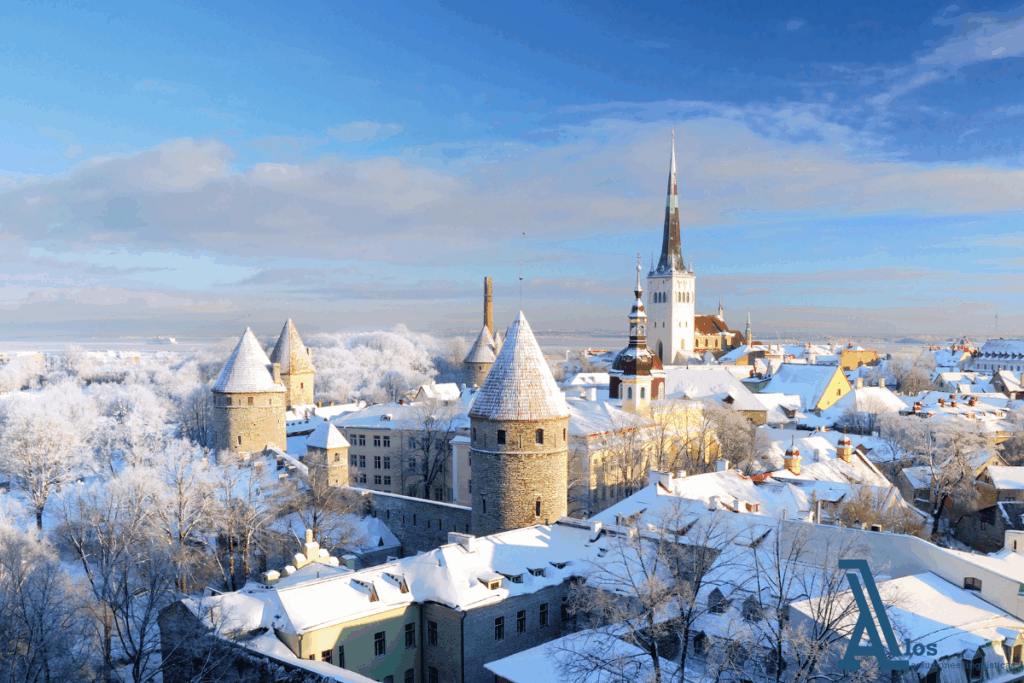
1. Tallinn – Europe’s digital capital
- Ideal for: entrepreneurs, remote workers, tech professionals.
- Advantages: it is the largest, most modern and best connected city. Home to tech companies, universities, coworking spaces and an active international community. It has excellent transport, museums, cultural life and views over the Baltic Sea.
2. Tartu – The university city
- Ideal for: students, researchers, young families.
- Advantages: home to the University of Tartu, one of the most prestigious in northern Europe. It has a quiet atmosphere, lower prices than Tallinn and a lively student scene. Good quality of life and access to educational services.
3. Pärnu – For those seeking balance and nature
- Ideal for: families, freelance professionals, retirees.
- Advantages: a coastal city with beaches, nature and tourism. Famous for its spas and relaxed way of life. Ideal if you are after a slower pace but with good infrastructure.
4. Narva – A crossroads of cultures
- Ideal for: cross-border workers and anyone interested in the Russian language or Eastern Europe.
- Advantages: a border city with Russia, multicultural and strategically placed. Although less developed than others, it offers low rents and specific opportunities in industry and logistics.
5. Viljandi – Quiet, artistic living
Advantages: a small city with a cultural atmosphere, music festivals and nature. A good place to switch off without leaving the country.
Ideal for: creatives, artists, families with a rural lifestyle.
Types of Estonian visa in 2025: which one do you need?
Estonia has developed a modern, flexible immigration system that adapts to different professional, academic and personal profiles. Below we explain the main types of visa you can apply for in order to live, work, study or start a business in Estonia in 2025:
Type C visa – short-stay Schengen visa
- Duration: Up to 90 days within a 180-day period.
- Purpose: Tourism, personal visits, business, events, conferences or medical treatment.
- General requirements: A valid passport, international medical insurance with minimum cover of €30,000, proof of funds and accommodation, and evidence of the purpose of the trip.
- Where to apply: The Estonian embassy or consulate in your country of residence.
Recommended for anyone travelling for short stays, such as meetings, tourism or trade fairs.

Type D visa – long-stay national visa
- Duration: Up to 365 consecutive days.
- Purpose: Work, study, research, volunteering, entrepreneurship or family reunification.
- Requirements: Identity document, employment contract or letter of academic acceptance, proof of funds, medical insurance and proof of accommodation.
- Where to apply: The embassy or consulate or, in some cases, directly in Estonia.
This is the right visa if you want to live legally in Estonia for more than three months.
Digital nomad visa
- Duration: Up to 365 days (extendable to a total of 548 days over two years).
- Purpose: Working remotely as a freelancer, entrepreneur or employee for a foreign, non-Estonian company.
- Key requirements: Proof of a minimum net monthly income of €4,500 over the six months preceding the application. A service contract or a letter from your employer must be submitted.
- Where to apply: An Estonian embassy or consulate, or centres authorised by Estonia.
Designed for professionals who work online and want to live legally in Estonia without entering into employment ties with local companies.
e-Residency – digital identity for business (not a residence visa)
- Duration: Renewable every five years. It does not grant the right to live or work physically in Estonia.
- Purpose: Setting up and running a company registered in Estonia from anywhere in the world, with access to the state’s digital services.
- Requirements: An online application, identity verification, payment of a fee (€100-120) and collection of the e-Resident card at an embassy or pick-up point.
- Where to apply: At e-resident.gov.ee.
Perfect for international entrepreneurs who want a company legally established in the European Union without having to move there physically.
Temporary residence permit
- Duration: Generally one to five years, depending on the grounds. It can be renewed.
- Purpose: Extended residence for work, study, family, investment or research.
- Requirements: Similar to the D visa, but it applies to stays of more than a year. It must be justified with official documents and a contract.
- Where to apply: Through the Estonian Police and Border Guard Board.
This is the next step for anyone wanting to settle long term, including the possibility of permanent residence and citizenship.
Start-up visa
- Duration: Initially up to one year (type D visa), with the option of applying for a temporary residence permit afterwards.
- Purpose: To allow founders of innovative foreign start-ups to establish their company in Estonia.
- Requirements:
- An innovative business project approved by Estonia’s Startup Committee .
- A viable business plan.
- Proof of sufficient funds to support yourself during your stay.
- Medical insurance and accommodation.
- Where to apply: Once approval from the start-up committee has been granted, the D visa is applied for at the consulate or embassy.
This visa positions Estonia as one of the most start-up-friendly countries in Europe and is ideal for tech entrepreneurs.
Research and teaching visa
- Duration: Generally up to one year (type D visa), with the possibility of renewal or conversion into a residence permit.
- Purpose: To attract foreign researchers, university lecturers and scientists to work with Estonian institutions.
- Requirements:
- A letter of invitation or a contract with a recognised Estonian university, research centre or educational institution.
- A relevant academic qualification or professional experience.
- Medical insurance, proof of funds and proof of accommodation.
- Where to apply: An Estonian embassy or consulate, or directly in Estonia if you are already in the country.
Particularly useful for anyone taking part in academic programmes, European research projects (such as Erasmus+ or Horizon) or Estonian universities.
Start-up visa
- Duration: Initially up to one year (type D visa), with the option of applying for a temporary residence permit afterwards.
- Purpose: To allow founders of innovative foreign start-ups to establish their company in Estonia.
- Requirements:
- An innovative business project approved by Estonia’s Startup Committee .
- A viable business plan.
- Proof of sufficient funds to support yourself during your stay.
- Medical insurance and accommodation.
- Where to apply: Once approval from the start-up committee has been granted, the D visa is applied for at the consulate or embassy.
This visa positions Estonia as one of the most start-up-friendly countries in Europe and is ideal for tech entrepreneurs.
Comparison table: types of Estonian visa in 2025
| Type of visa | Duration | Purpose | Applicants |
|---|---|---|---|
| Type C visa (short stay) | Up to 90 days | Tourism, business, short visits | Temporary travellers |
| Type D visa (long stay) | Up to 365 days | Work, study, volunteering, family reunification | Students, workers, family members |
| Digital nomad visa | Up to 365 days (renewable up to 548 days) | Remote work for a foreign company | Freelancers, remote employees |
| e-Residency (digital identity) | Five years (renewable) | Setting up and running an Estonian company without physical residence | International entrepreneurs |
| Temporary residence permit | One to five years (renewable) | Extended stay for work, academic or family purposes | Long-term residents |
| Start-up visa | One year (with the option of residence) | Founding and developing an innovative start-up in Estonia | Tech entrepreneurs |
| Research and teaching visa | One year (renewable) | Scientific research or teaching at Estonian institutions | Researchers, university lecturers |
Which visa should you apply for, given your profile?
Once you know the Estonian visa options, the next step is to identify which one best suits your needs. Here is a practical guide based on your personal or professional situation:
If you are an international student
You should opt for the type D visa or, if your stay will last more than a year, for a temporary residence permit for study. Make sure you have a letter of admission from an Estonian university and medical insurance. Many universities offer programmes in English.
If you work remotely or are a freelancer
The digital nomad visa is your best option. If you can prove a stable income of at least €4,500 net a month and you work for a foreign company or as a self-employed professional, you can live legally in Estonia for a year.
If you want to set up a company from outside Estonia
With e-Residency you can register an Estonian company online and run it from anywhere in the world. You do not need to live in Estonia. Perfect for digital businesses, consultancy, SaaS or e-commerce.
If you want to move with your family or partner
The type D visa for family reunification or the temporary residence permit are the best options. Your spouse or family member must already have a legal basis for living in Estonia (through work, study and so on).
If you are an entrepreneur with an innovative idea
Estonia offers a start-up visa with substantial tax benefits and access to the digital ecosystem. Your project will have to be validated by the government’s start-up committee.
If you are a researcher or a teacher
You can apply for a type D visa for research or teaching, submitting your contract with an Estonian university or academic centre. You can also apply for a residence permit if the stay is a long one.

Do you need your documents translated for an Estonian visa?
One of the key requirements when applying for an Estonian visa – whether for study, work or business – is submitting the documentation correctly translated and legalised. At Alos Soluciones Lingüísticas we are specialists in official and sworn translation, and we help you prepare:
- Sworn translations of academic certificates, contracts, insurance policies and identity documents.
- Technical or professional translations if you are applying for a work or start-up visa.
- Translation of motivation letters or university documents in the case of a study visa.
We have translators specialising in Estonian, English and other European languages, with experience in immigration procedures.
Your journey to Estonia begins with sound language preparation
Applying for an Estonian visa is the first step towards an international life experience, whether to study, work, start a business or simply begin a new chapter in a digital, safe environment. But as well as meeting the immigration requirements, it is essential to prepare your documents properly and have the right language skills.
At Alos Soluciones Lingüísticas we support you throughout the process. Our team can help you with:
- Sworn and official translation of the personal, academic, employment or legal documents required by the Estonian authorities.
- Language courses tailored to your profile (student, professional, company) in Estonian, English or other languages that are key to integrating successfully.
Whether you need to submit your application to embassies or to prepare your communication for living and working in Estonia, Alos gives you language support from start to finish.
Trust us to make sure language is not a barrier but a tool for opening new doors in Europe.
We invite you to read our related articles for more information:
- Criminal record certificate: when and why you need it to live outside Spain
- United Arab Emirates visa
- Taxes and tax residency. What happens to your Spanish income tax if you move abroad?
Frequently asked questions (FAQ)
Estonia offers short-stay visas (type C), long-stay visas (type D), a digital nomad visa, e-Residency (digital identity), temporary residence permits, a start-up visa and a visa for researchers and teachers.
It depends on your situation: if you have a contract with an Estonian company, you must apply for a type D visa or a temporary residence permit. If you work for a foreign company, you can opt for the Digital Nomad Visa.
No. e-Residency is a digital identity for setting up and running a company in Estonia remotely, but it does not grant the right to live in the country.
You must prove a net monthly income of at least €4,500 over the six months preceding the application.
Most visas are applied for at Estonian embassies or consulates. In some cases, such as e-Residency or the residence permit, the procedure can be carried out partly online.
Yes. To study you need a type D visa or a temporary residence permit, depending on the length of the academic programme. You must submit your letter of acceptance and proof of funds.
Yes. Alos offers sworn translation of documents and language courses to help you throughout the visa application process and your integration in Estonia.