





In recent years Poland has become one of the most sought-after European destinations for studying, working and starting a new life. With a steadily growing economy, a cost of living more affordable than in Western Europe and a high level of safety, interest in obtaining a Poland visa has risen considerably. According to Eurostat figures, in 2023 Poland issued more residence permits than any other European Union country, accounting for more than 17% of the EU total (source).
It is not only students who have set their sights on Poland. Professionals in sectors such as technology, engineering and healthcare are increasingly in demand, particularly in cities such as Kraków, Wrocław and Gdańsk, where numerous multinationals have settled. The case of Ángel Jiménez, a Spaniard originally from Ávila, is telling: he arrived in Warsaw in 2012 on an Erasmus grant and never left. Today he works as a financial analyst and has raised a family in the Polish capital. In interviews he says that what he values most about the country is the calm and the low cost of living compared with other European capitals (Cadena SER).
Even familiar faces from the world of entertainment have chosen to live in Poland. One example is the Spanish-Polish actor Adam Jezierski, known in Spain for his role in the series “Física o Química”. Although he was born in Poland, he grew up in Spain and today maintains professional ties in both countries. His story reflects the growing exchange between Spain and Poland, and how this Central European country has stopped being seen as a secondary destination and become a realistic, rewarding option for living, studying or working in Europe (Wikipedia).
“Cultivation, old civilization, beauty, history! … Whoever speaks of Paris has never seen Warsaw.”
—Ronald Reagan
Reasons to live in Poland in 2025
1. Sustained economic growth
Poland is one of the most dynamic economies in Central Europe. It has kept growing steadily even through global crises, and in 2024 it reached one of the lowest unemployment rates in the EU (around 3%). Cities such as Warsaw, Kraków and Wrocław are employment hubs in sectors such as technology, finance, education and logistics.
2. An affordable cost of living
Living in Poland is significantly cheaper than in countries such as Germany, France or the United Kingdom. Rent, public transport, food and leisure are affordable even in the main cities. That makes it an ideal destination for students and young professionals alike.
3. A strategic location in Europe
Poland sits at the heart of Europe. From cities such as Warsaw or Gdańsk you can easily travel by train, coach or plane to Berlin, Prague, Vienna or Vilnius in a matter of hours. It is an excellent base for exploring the continent.
4. An education system of international quality
Polish universities are gaining ground in European rankings, and many offer complete programmes in English. Tuition fees are also competitive compared with Western Europe, and there are numerous scholarships for international students.
5. Safety and political stability
Poland is a very safe country to live in. Crime rates are low and both urban and rural areas offer calm, stable surroundings for families, students and expatriates.
6. Cultural and historical richness
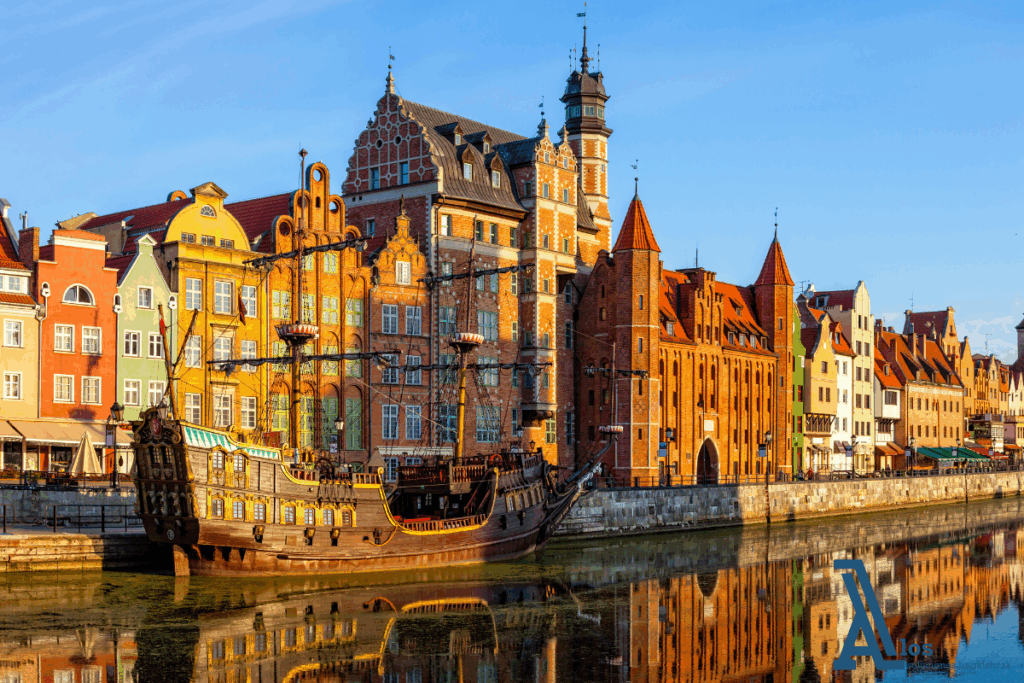
From the old town of Kraków to the castles of Malbork, by way of the Tatra mountains and the Baltic beaches, Poland offers surprising geographical and cultural diversity. It is a country with a strong identity, traditional festivals and a vibrant cultural life.
7. A labour market open to foreigners
The Polish government has relaxed visa and work permit policies in order to attract qualified foreign labour, especially in sectors such as IT, engineering, construction and healthcare. Many employers also value multilingualism.
8. An open outlook and a growing international community
Although traditionally conservative, Polish society has been opening up more and more to cultural diversity, particularly in university and technology cities. Warsaw, Kraków and Łódź are home to active international communities, exchange groups and support networks for foreigners.
Five keys to applying for a visa in Poland in 2025
1. Identify the type of visa you need
The first step is to understand which visa best suits your situation. As a member of the Schengen Area, Poland offers two main types of visa:
- Schengen visa (Type C): valid for short stays of up to 90 days within a 180-day period. It is used for tourism, business, transit or family visits. It does not allow you to work or to study formally.
- National visa (Type D): issued for longer stays (more than 90 days) and compulsory if your purpose is to study, work, carry out research or live in Poland for family reasons.
There are also other specific permits, such as the humanitarian visa, the visa for work placements and the au pair visa. Choosing the right type of visa is essential in order to avoid refusals or misunderstandings with the Polish consular authorities.
2. Prepare all your documents properly
A poorly documented visa application can mean refusal. The basic documentation includes:
- A valid passport (at least three months beyond your planned stay).
- A complete, signed visa application form.
- 1–2 recent biometric photographs.
- Evidence of the purpose of the trip (a university letter of admission, an employment contract, a family letter of invitation and so on).
- Proof of sufficient financial means (bank statements, grants and the like).
- Valid medical insurance for the Schengen Area (minimum cover of EUR 30,000).
- Flight and accommodation bookings, or a letter of invitation.
Important: make sure you have any required foreign-language documents translated into Polish or English. At Alos Soluciones Lingüísticas we can help you with professional sworn translation services.
3. Book your appointment early and keep an eye on deadlines
Visa procedures can take between 15 and 45 working days depending on the type of visa and the country you apply from. It is therefore advisable to:
- Book an appointment at the embassy or consulate at least two months before you travel.
- Check the available dates and specific requirements on the official website of the Polish consulate in your country.
- Use platforms such as e-konsulat to complete the process online where it is available.
If you live in a country with no Polish consulate, you may have to apply through a VFS Global centre or through the embassy of another Schengen country representing Poland.
4. Attend the interview and pay the relevant fees
At your consular appointment you will have to submit your documents and possibly take part in a short interview assessing the purpose of your trip, your financial means and your ties with your home country. Some key points:
- The Schengen visa fee is approximately 80 euros (40 euros for minors).
- For national visas, the fee can range between 60 and 90 euros, depending on the country and the type of application.
- In some cases (students on grants, researchers, minors, spouses of EU citizens) you may be exempt from payment.
Tip: take extra copies and keep a clear, consistent and confident manner throughout the interview.
5. Receive your visa and get ready for life in Poland
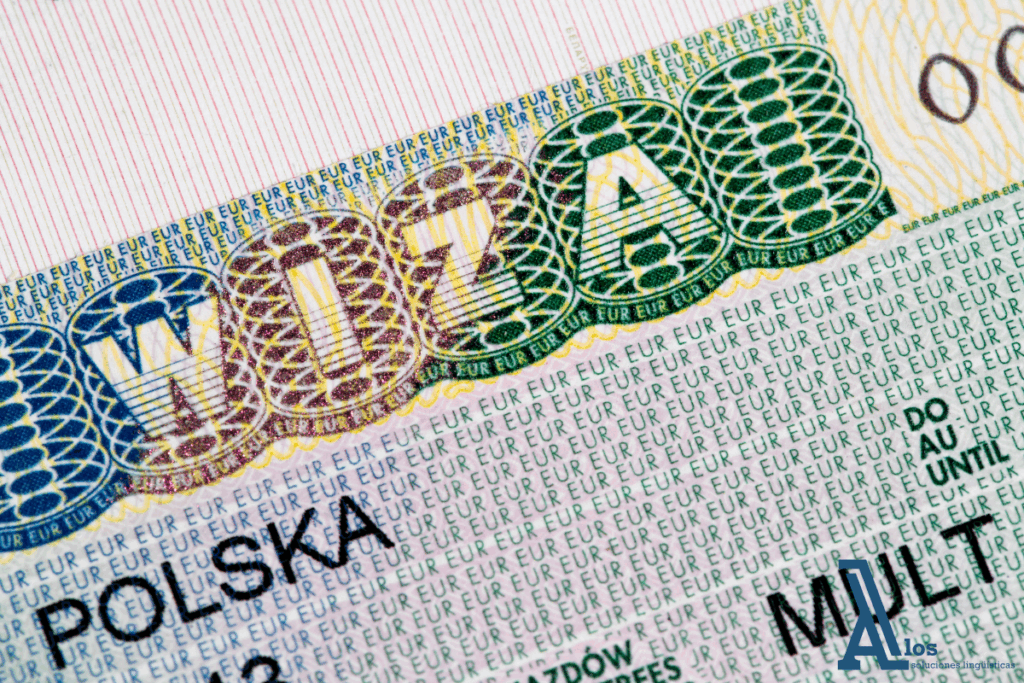
Once your application is approved, you will have to collect your visa in person. Check carefully that all the details are correct (name, dates, number of entries, type of visa and so on). From then on:
- You can start preparing for your move.
- Do not forget to register your residence at the local Foreigners’ Office within the first few days after you arrive if your stay exceeds 90 days.
- It is advisable to open a bank account in Poland, take out local medical insurance and apply for your PESEL (Polish identification number).
With a valid visa and good planning, every door will be open for you to start your time in Poland with peace of mind.
Types of visa for Poland: a full explanation
Applying for the right visa is key to ensuring your legal entry and stay in Poland. Below are the main types of visa available in 2025, with their uses, conditions and important notes.
1. Schengen visa (Type C)
Duration: up to 90 days within a 180-day period.
Purpose: tourism, family visits, business, taking part in trade fairs, short medical treatment.
Key requirements:
- Schengen medical insurance (minimum cover of €30,000).
- Proof of sufficient financial means.
- Accommodation and flight bookings.
Limitations:
It does not allow you to work or to take up formal study. It is the most common visa for short stays.
2. National visa (Type D)
Duration: more than 90 days, up to one year.
Purpose: study, work, family reunification, volunteering, work placements.
Key requirements:
- A document justifying the extended stay (letter of admission, employment contract and so on).
- Proof of accommodation in Poland.
- Private medical insurance or membership of the public system.
Advantages:
- The possibility of extending your residence from within Poland.
- The option of applying for a temporary residence card (karta pobytu).
- It can be combined with work permits.
3. Student visa
Type: D (national visa).
Specific requirements:
- A letter of acceptance from an accredited university or educational institution.
- Proof of payment of tuition fees or of a scholarship.
- Proof of maintenance funds (at least 800 PLN a month).
- A medical insurance certificate.
Note:
It allows you to study legally and, in some cases, to work part-time without an additional permit.
4. Work visa
Type: D (national visa)
Specific requirements:
- A valid employment contract or letter of offer.
- A work permit issued by a company registered in Poland (Type A, the most common).
- In some cases a “declaration of intent to employ” is accepted (a simplified route for certain countries).
Important note:
Some professions in high demand can obtain visas more quickly. It is worth checking whether your sector appears on the regional labour shortage lists.
5. Visa for work placements or volunteering (Erasmus+, ESC)
Type: D
Purpose: it allows you to take part in European programmes such as Erasmus+ or the European Solidarity Corps (ESC).
Requirements:
- A letter of acceptance from the programme.
- European or private health insurance.
- Proof of funding (grant, institutional support).
Advantage:
No additional work permit is required if it falls under an official agreement.
6. Humanitarian visa
Type: C or D, depending on the case
Purpose: granted in exceptional situations such as armed conflict, persecution or health emergencies.
Procedure:
It is handled at the authorities’ discretion and requires the support of NGOs or a diplomatic recommendation.
Note:
It is generally granted for protection reasons and can develop into refugee status or special residence.
7. Family reunification visa
Type: D
Purpose: it allows immediate family members (spouses, minor children) to join a Polish citizen or legal resident.
Requirements:
- Proof of the family relationship (officially translated certificates).
- Proof of the financial means of the family member living in Poland.
- Medical insurance.
Recommendation:
It is important to apply for this visa well in advance and to prepare the sworn translations properly.
8. Research or scientific visa
Type: D
Purpose: scientific activity or research at recognised institutions.
Requirements:
- A contract with the university or research centre.
- A statement of the aim of the project.
- Medical insurance and proof of financial resources.
Advantage:
This visa often gives access to accelerated processes under European cooperation programmes.
How do you know which visa you need?
It will depend on:
- The length of your stay.
- The purpose (study, work, tourism and so on).
- Your nationality and any existing bilateral agreements.
If in doubt, consult the official Polish visa checker or contact the relevant Polish consulate.
| Type of visa | Duration | Main purpose | Key requirements | Notes |
|---|---|---|---|---|
| Schengen visa (Type C) | Up to 90 days | Tourism, business, short visits | Schengen insurance, sufficient funds, accommodation booking | Does not allow work or formal study |
| National visa (Type D) | More than 90 days (up to 1 year) | Study, work, residence, reunification | Proof of purpose (study, employment and so on), medical insurance, financial means | Can be extended and can lead to temporary residence |
| Student visa | For the length of the course | University study, formal courses | Letter of acceptance, proof of funds, medical insurance | May allow part-time work depending on the programme |
| Work visa | Depends on the contract | Work at a company registered in Poland | Employment contract, work permit or employer’s declaration | Sectors such as technology and healthcare have swifter processes |
| Placement or volunteering visa | 3 to 12 months (depending on the programme) | Erasmus+, ESC, work placements | Programme letter, funding, medical insurance | No work permit required if handled under European agreements |
| Humanitarian visa | Variable | Protection on humanitarian grounds | Documentary evidence, support from an NGO or consulate | May develop into temporary residence or international protection |
| Family reunification visa | Depends on the resident family member | Joining a spouse, minor children or parents | Proof of family relationship, the resident’s resources, medical insurance | Requires official translations and registration at the Foreigners’ Office |
| Research or scientific visa | According to the length of the project | Research at a recognised university or centre | Research contract, project statement, medical insurance | Often has accelerated processes if it forms part of European or bilateral projects |
How to improve your chances of getting a Poland visa approved
Applying for a visa does not always guarantee approval. Although Poland is an accessible country for foreigners, the consular authorities are strict about meeting the requirements. These tips will help improve your chances:
1. Prepare all your documents in good time and in order
Include photocopies and sworn translations where needed, and check that dates and names match across all the forms.
2. Attach evidence of your ties with your home country
Showing that you have reasons to return home (work, study, family) is key if you are applying for a short-stay Schengen visa.
3. Do not lie about the purpose of the trip
Stating that you are travelling as a tourist and then trying to work illegally can lead to future bans. Be honest and apply for the right visa.
4. Take out good medical insurance
Avoid refusals caused by insurance that does not meet Schengen standards. It must cover at least 30,000 euros and be valid throughout the Schengen area.
5. Rely on professional advice
A common mistake is doing everything yourself without really knowing the procedures. At Alos Soluciones Lingüísticas we offer guidance on documentation, sworn translation and access to language courses tailored to each profile.
Professional translation and language training: the keys to a successful arrival in Poland
Applying for a Poland visa is a process that calls for planning, accurate documentation and, in many cases, solid language skills. Whether you are travelling for work, study or personal reasons, having correctly translated and prepared documents can make the difference between an application being approved and being refused. At Alos Soluciones Lingüísticas, we help you with professional sworn translationservices, valid for immigration, university and employment procedures before the Polish authorities.
What is more, although the official language is Polish, English is widely used in universities, companies and public administration, particularly in large cities such as Warsaw, Kraków and Gdansk. That is why we offer specialist English language courses for professionals and companies, designed to help you operate fluently from day one in your new surroundings.
If you are thinking of moving to Poland, you are not alone in the process. At Alos we offer you not only translation but also tailored training that will ease your integration and increase your academic and professional opportunities.
We invite you to read our related articles for more information:
- Criminal record certificate: when and why you need it in order to live outside Spain
- United Arab Emirates visa
- Taxes and taxation. What happens to your Spanish income tax if you move abroad?
Frequently asked questions (FAQ)
Citizens of the EU, the EEA and Switzerland do not need a visa for Poland. Spanish citizens can travel with just a valid national ID card or passport. For other countries, check the specific requirements with the Polish consulate.
EU citizens can stay indefinitely. Visitors from countries without a visa waiver agreement can stay up to 90 days within a 180-day period on a tourist visa.
Poland offers tourist, business, study, work, family reunification and transit visas. There is also the long-stay national visa (Type D) for stays of more than 90 days.
The short-stay Schengen visa costs €80 for adults and €40 for children aged 6–12. Children under 6 are exempt. Prices may vary according to the type of visa.
The standard processing time is 15 calendar days. In complex cases it can extend to 30–60 days. It is advisable to apply at least three weeks in advance.
You can apply at the Polish consulate in your country of residence, at authorised visa application centres (VFS Global) or at Polish embassies. Check the specific locations in your region.
You need a valid passport (at least three months’ validity), an application form, a biometric photograph, medical insurance, proof of accommodation, a travel itinerary, evidence of financial means and any documents specific to the type of visa.
Short-stay visas (Type C) generally cannot be extended except in exceptional circumstances. National visas (Type D) can be renewed if you meet the specific requirements.
The Polish Schengen visa allows you to travel in the 27 countries of the Schengen area for as long as the visa is valid, respecting the limit of 90 days in any 180.
If your visa is refused, you will receive a letter explaining the reasons. You can submit a new application correcting the problems identified, or appeal the decision under the established procedures.
Yes, travel medical insurance with minimum cover of €30,000 is compulsory; it must be valid throughout the Schengen area and cover medical costs and repatriation.
No, the tourist visa does not allow you to work in Poland. To work you need a specific work permit or a work visa, depending on your nationality and the type of employment.